













loader image

ESPE

Menu

DEGREE

Early Childhood Education

Select a campus

DEGREE

Bachelor’s Degree in Early Childhood Education

CES Resolution

RPC-SO-28-No.467-2023

DURATION

4 Years

MODALITY

Online

Academic Identity

Learn about the foundations of the program

Manage the implementation of course syllabi across academic programs and thesis projects, as well as guide the provision of support to meet student needs, through the application of agile, dynamic, and straightforward methods and procedures, in order to promote the development of outstanding academics, professionals, and researchers who are creative, humanistic, possess leadership skills, critical thinking, and a strong sense of civic responsibility. Article 52 of the Organic Regulation of Organizational Management by Processes of the Universidad de las Fuerzas Armadas – ESPE. RESOLUTION: ESPE-HCU-RES-2024-056, dated June 20, 2024.

“To be a leading university in knowledge and technology management within the national higher education system, with international prestige and recognized as a benchmark for the practice of ethical, civic, and service-oriented values to society.”

Organize learning environments based on the epistemological foundations of educational sciences, neuroscience, the comprehensive development of the individual, and the arts, addressing social, cultural, ecological, ancestral, and gender diversity at the local and national levels, through the formulation and/or management of projects.

Integrate knowledge through curricular adaptations, grounded in contemporary pedagogical, psychological, and didactic perspectives, within the ongoing dynamic between theory and practice, innovating models of education, care, and emotional support for children in early childhood, in order to enhance the transformation of the country’s cognitive and social framework.

Manage learning environments that engage students through action research across the various occupational fields of the program, strengthening specific competencies that contribute to learning processes for cognitive development, motor development, emotional growth, and playful expression, oriented toward respect for early childhood.

Develop, through processes of analysis and reflection throughout their education, metacognition, self-regulation, autonomy, leadership, and respect for cognitive, cultural, gender, and environmental diversity, as well as peace as an ethical commitment, in order to contribute to the fulfillment of the principles of Buen Vivir.

Program video

Experience studying Early Childhood Education

Discover daily life in our classrooms, laboratories, and academic spaces. Students, faculty, and researchers share their stories.

Learn about the foundations of the program

Profiles and outcomes

The professional we train and the competencies you will develop

In the professional training of graduates holding a Bachelor’s Degree in Early Childhood Education within the field of Educational Sciences, their work environment comprises the settings in which future professionals of the Early Childhood Education program will be employed. These settings may include:

  • Child Development Centers for Good Living (CIBV)
  • Growing with Our Children (CNH),
  • Child Development Centers (CDI),
  • Educational Units in the First Year of Basic Education – Preparatory Level
  • Reception Institutions for Early Childhood Care
  • Municipal Early Childhood Education Centers

  • Early Stimulation Centers
  • Play Centers (Ludotecas) – Hospital Educational Intervention
  • Demand for competencies in Early Childhood Education in areas such as advisory services for didactic materials, educational books, and learning environments.
  • Public and private health centers that provide care to pregnant women, for the development of prenatal education, parent education programs in educational institutions, foundations or NGOs, and educational institutions that support adolescent mother

What learning outcomes or achievements will enable the development of the capacities and attitudes of future professionals to strengthen their values related to relevance, bio-consciousness, responsible participation, honesty, and others?

-Develops values, attitudes, and qualities for Good Living that promote ethics and civic responsibility throughout the professional trajectory.

-Manages diverse professional fields and environments in an innovative manner, incorporating social entrepreneurship within the domain of educational knowledge.

– Development of sensitivity and critical analysis in response to works of art or artistic phenomena in auditory and visual manifestations.

– Applies leadership from a contextualized perspective.

– Critically analyzes the profession’s deontological protocols.

– Values professional education and practice as the foundation of their life plan.

-Recognizes and values early childhood education from the ancestral cultures of Zones 2 and 9.

Applies, in a relevant manner, the foundational principles of Early Childhood Education public policies within institutional, family, and community contexts.

Analyzes principles of child development to provide a theoretical foundation, based on theories, models, and paradigms of the teaching–learning process within socio-educational systems.

Integrates sociological, anthropological, psychopedagogical, and neurocognitive theories into the development and management of pedagogical models.

Designs, manages, and evaluates contextualized and inclusive curricular models, integrating media convergence for educational purposes in early childhood education.

Organizes and manages inclusive and collaborative learning communities, relevant to their context, that generate opportunities for the development of intercultural and democratic learning environments.

Uses communication resources and ICT to expand sources of information and socio-educational interactions in the creation of open, democratic, intercultural, and inclusive learning environments.

Organizes, interprets, constructs, and evaluates knowledge in a critical, creative, and integrated manner, oriented toward practice and metacognition.

Leads educational processes through engagement with the issues of individuals, systems, processes, and learning contexts that constitute the object of pedagogical knowledge.

Designs, plans, implements, and evaluates contextualized, flexible educational programs and projects adapted to the learning needs of educational subjects.

Organizes, interprets, constructs, and evaluates knowledge in a critical, creative, and integrated manner, oriented toward practice and metacognition.

Operationalizes the policies, laws, and regulations governing early childhood care and education established by the Ecuadorian State.

Analyzes the historicity of education, highlighting national and international pedagogical thought.

Systematizes procedures and techniques in the use of language for aesthetic, persuasive, and communicative purposes.

Develops processes of analysis, systems, and logic through electronic intelligence applied to the enhancement of teaching thinking.e.

Identifies alternative modalities for the use of technology in the evaluation and research of early childhood educational software and for educational needs.

Develops statistical thinking through the use of strategies and the interpretation of statistical representations, with argumentative capacity for problem-solving.

Demonstrates an entrepreneurial and innovative attitude.

Conducts a geopolitical assessment of the global and national context.

Diagnoses, understands, and intervenes through proposals and research in socio-educational phenomena, processes, and systems.

Designs, plans, implements, and evaluates contextualized, flexible educational programs and projects adapted to the learning needs of educational subjects.

Applies action research in the processes of diagnosis, design, planning, implementation, evaluation, and systematization of educational reality.

Curriculum Structure

Academic structure of the program

Current Curriculum

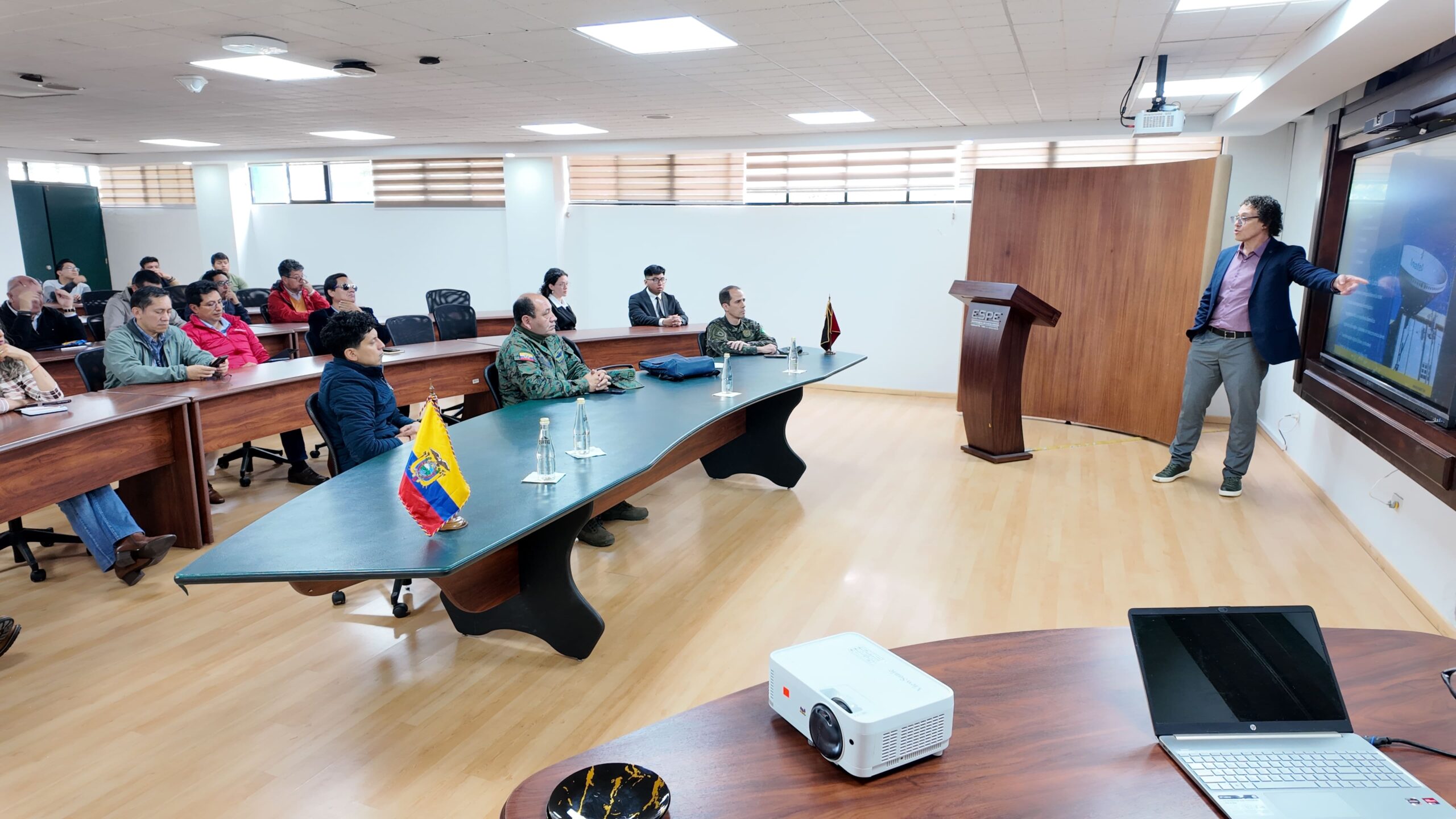
Gallery Gallery

Spaces, moments, and experiences that bring the program to life
Admissions and costs

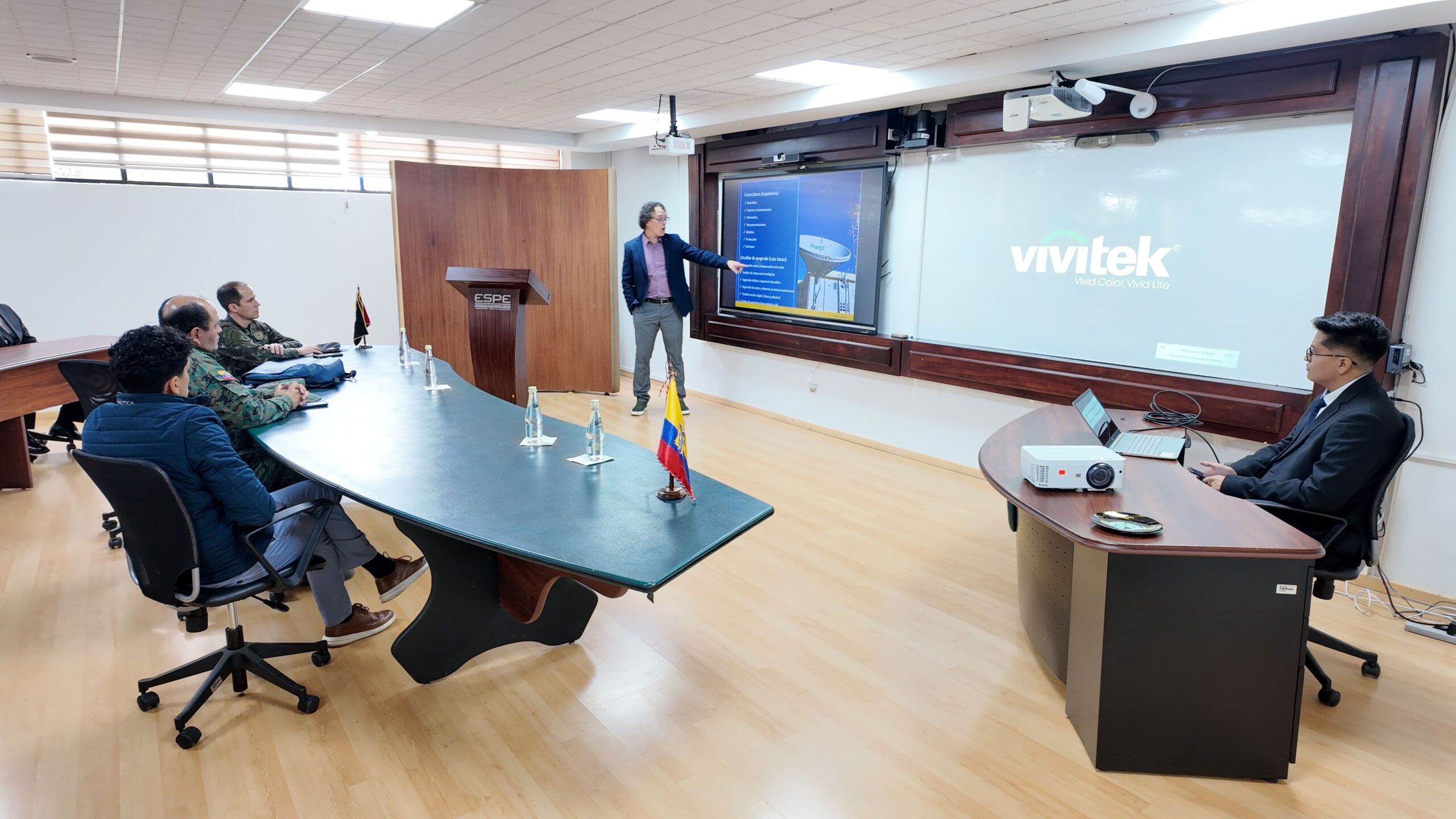
Spaces, moments, and experiences that bring the program to life
CES Resolution

RPC-SO-15-No 309-2020

Program Code

ISOF-SQ-2023

Accreditation

In process

Application Dates

March – April 2025 / August – September 2025

Program cost:

Article 356 of the Constitution of the Republic establishes, among other principles, that third-level public higher education shall be tuition-free, and that this gratuity is linked to the academic responsibility of students.

Begin your path in

Early Childhood Education

Join Universidad de las Fuerzas Armadas ESPE and become part of an

academic community of excellence with international reach.

DEGREE

Online Tourism

Select a campus

DEGREE

Bachelor’s Degree in Tourism

CES Resolution

RPC-SO-35-No-596-2023

DURATION

4 Years

MODALITY

Online

Academic Identity

Learn about the foundations of the program

To educate outstanding professionals capable of effectively managing and addressing the challenges of sustainable tourism development, with awareness of global processes and the resulting intercultural integration, grounded in humanistic, ethical, and moral values committed to society, articulating the public and private sectors to position the country as a destination of excellence.

To be leaders at the national and Latin American levels in the comprehensive training of professionals in tourism management, contributing to the new demands of the global environment through research and innovation, within the parameters of ethical sustainability and governance.

To train tourism professionals with a strong personal and ethical identity, capable of integrating theoretical, methodological, and technological knowledge for the management, research, and innovation of tourism activities, promoting sustainable development, interculturality, and respect for ancestral knowledge, with a critical perspective, leadership, and social commitment in local, national, and international contexts.

Strengthen the implementation of sustainable tourism activities: Develop competencies to plan, organize, and deliver tourism services, ensuring professional practice aligned with current trends.

Optimize the operation of tourism services: Implement management tools that contribute to the effective delivery of tourism services.

Design and innovate contextualized tourism proposals: Develop innovative tourism products and projects, aligned with the territorial context and sociocultural dynamics, that contribute to local development through the participation of sector stakeholders.

Promote ethical, inclusive, and sustainable tourism management: Integrate cultural, social, economic, and environmental diversity into decision-making, developing sustainable tourism projects based on research, critical thinking, leadership, and commitment to the responsible development of the sector.

Program video

Experience studying Tourism

Discover daily life in our classrooms, laboratories, and academic spaces. Students, faculty, and researchers share their stories.

Learn about the foundations of the program

Profiles and outcomes

The professional we train and the competencies you will develop

The tourism professional is trained to plan, organize, direct, and evaluate tourism projects and services, promoting the responsible use of natural, cultural, and heritage resources, with the aim of fostering local, regional, and national development. They possess a strong ethical, analytical, and critical foundation, enabling them to design and manage innovative tourism products, as well as administer companies and/or organizations within the tourism sector with criteria of quality, competitiveness, and sustainability.

Based on their capacities, attitudes, and values:
Strengthens their personal and professional identity and cultivates self-esteem; develops critical thinking, deductive reasoning, and the use of analogies, thereby shaping cognitive structures and affective development.
– Applies ethical, spiritual, and humanistic principles, inclusive of diverse worldviews, diversity of abilities, and interculturality
-Respects knowledge within the ancestral and sustainable tourism context of different regions.
– Critically embraces historical changes and fosters openness to the new, the creative, and the diverse.
– Complies with the regulations established within the national and international legal framework governing tourism activities.
Operates within multidisciplinary teams with assertive communication, engaged in negotiation and conflict management to resolve problems in the tourism field.
– Manages tourism activities with ethics, leadership, responsibility, and quality.
Based on the theories, conceptual systems, methods, and languages for the integration of knowledge, the profession, and research:
-Organizes and integrates knowledge, identifying updated and specialized concepts and theories within their field of training. Possesses a general culture pertinent to their profession, including the use of ICTs and the application of information-gathering techniques for research.
-Develops, analyzes, and evaluates the quality of resources, services, ecosystems, and their components through applied research processes in tourism activities.
-Possesses knowledge of the social, cultural, economic, and political aspects of the community, enabling the management of innovative public–private projects for destination development.
– Applies principles of sustainability in sensitive natural areas through environmental interpretation and education; recognizes, respects, and values ancestral knowledge and the country’s heritage richness, and acknowledges their own identity.
– Understands the components of the tourism system through observation and characterizes tourism systems using techniques in tourism operations, management, entrepreneurship, and research, in compliance with sustainability standards.
-Identifies opportunities and shortcomings in tourism activity through characterization and diagnosis using technological tools, while respecting sustainability standards.
– Demonstrates skills and capacities for information management, research, and intervention in processes of tourism operations, management, and research.
– Integrates ancestral knowledge, interculturality, and gender equity of peoples in relation to different technological applications.
-Uses logical, critical, and creative thinking for the understanding, explanation, integration, and communication of knowledge within tourism.
-Undertakes entrepreneurship and innovation across diverse scenarios of tourism activity.
– Communicates, through a thesis, ethnography, or comprehensive examination, the design, development, and evaluation of a tourism management process or the creation of tourism products within the framework of sustainability.
– Systematically applies national and/or international policies, enabling them to manage global tourism trends.

In relation to the management of professional and research models, protocols, processes, and procedures:
Resolves problems arising within tourism operations through knowledge of the tourism potential of areas of influence; implements administrative and operational processes to ensure quality in the tourism system.
– Contributes to the development of new sustainable public policies with ethics and commitment, for the implementation of strategic tourism events and projects that support the positioning of the country’s tourist destinations.

1. Execute tourism activities considering criteria of quality, safety, and sustainability, in a planned, systematic, and reflective manner

2. Implement techniques and procedures for the operation of tourism services, ensuring efficiency, effectiveness, and regulatory compliance in their delivery.

3. Design innovative tourism proposals aligned with the territorial context that contribute to local development and can be implemented with tourism stakeholders.

4. Value economic, cultural, social, and environmental diversity in the tourism context, integrating ethical principles and sector knowledge for inclusive and responsible decision-making.

5. Develop sustainable tourism projects that respond to the real needs of the environment, integrating knowledge of planning, management, innovation, and sustainability; applying research and critical thinking to propose creative and viable solutions, with leadership, professional ethics, and commitment to the responsible development of tourism.

Curriculum Structure

Academic structure of the program

Current Curriculum

Outdated Curriculum

Gallery Gallery

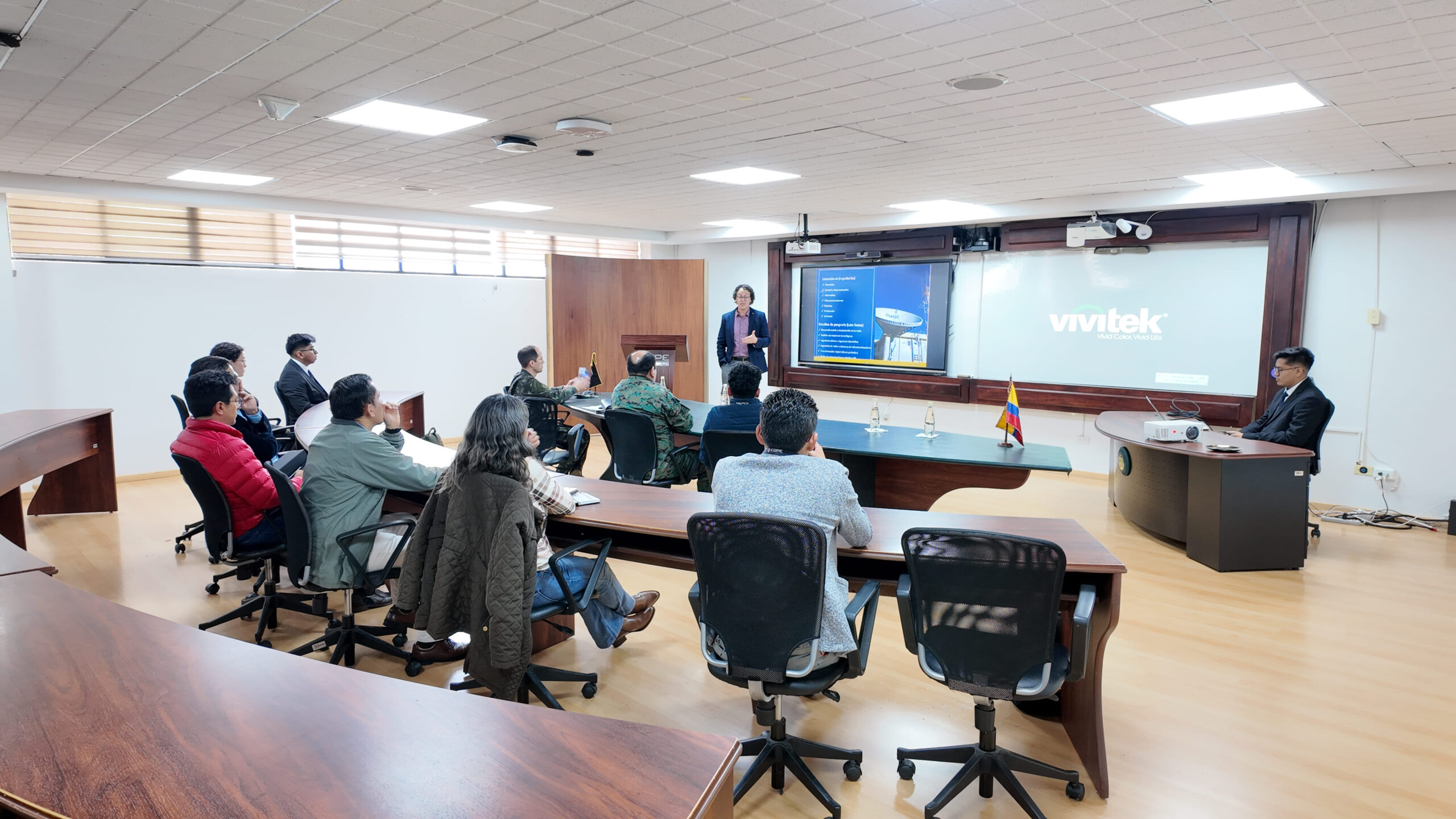
Spaces, moments, and experiences that bring the program to life
Admissions and costs

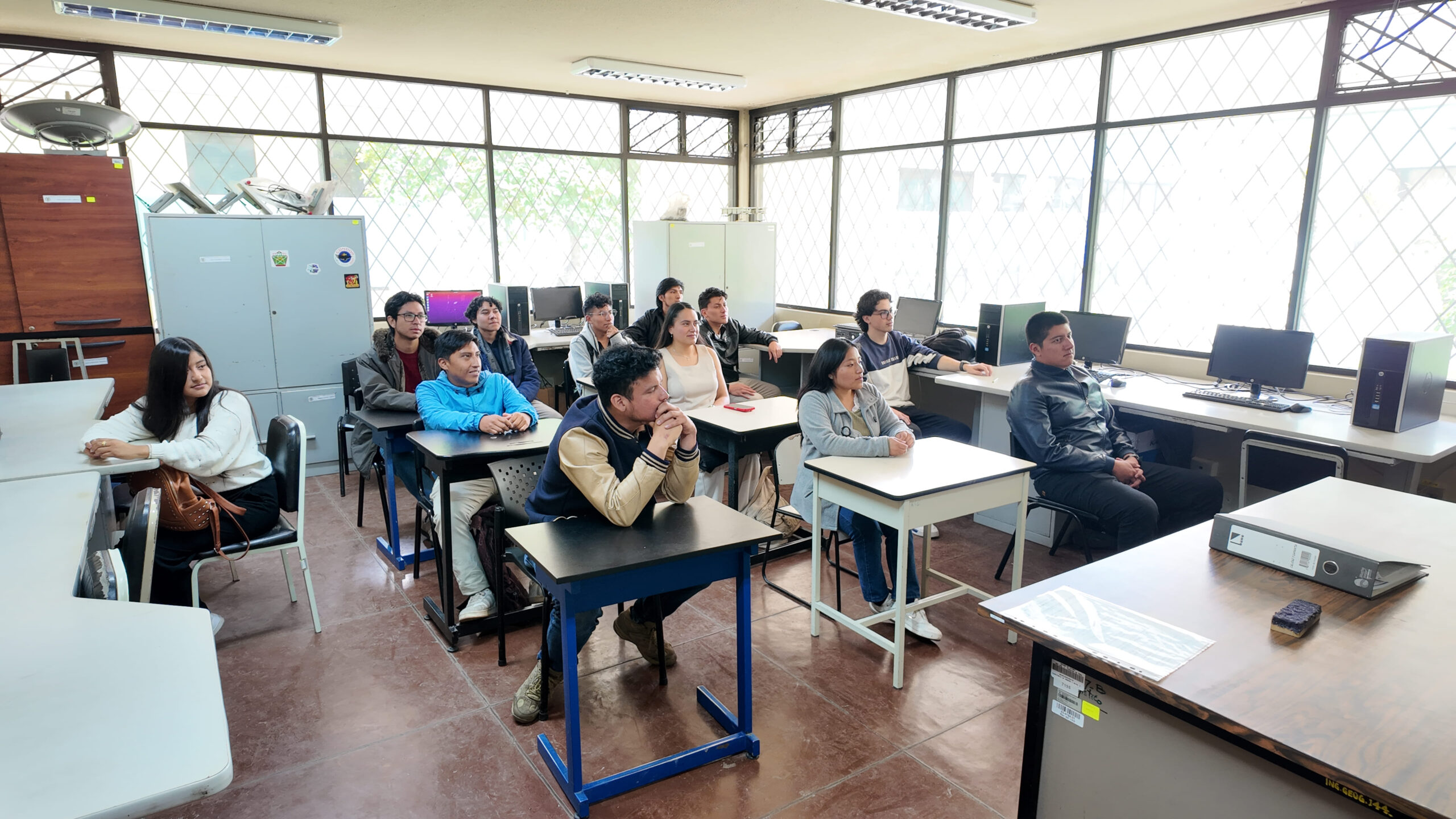
Spaces, moments, and experiences that bring the program to life
CES Resolution

RPC-SO-15-No 309-2020

Program Code

ISOF-SQ-2023

Accreditation

In process

Application Dates

March – April 2025 / August – September 2025

Program cost:

Article 356 of the Constitution of the Republic establishes, among other principles, that third-level public higher education shall be tuition-free, and that this gratuity is linked to the academic responsibility of students.

Begin your path in

Turismo

Join Universidad de las Fuerzas Armadas ESPE and become part of an

academic community of excellence with international reach.

DEGREE

Economy

Select a campus

DEGREE

Economist

CES Resolution

RPC-SO-35-No.596-2023

DURATION

4 Years

MODALITY

Online

Academic Identity

Learn about the foundations of the program

To provide society with economic professionals trained through the use of modern educational tools, committed to the social and productive development of the country and capable of finding scientific solutions to current economic problems.

By 2030, to be the leading Online Economics degree in Ecuador, a benchmark for managing knowledge and technology, training ethical and competent economists, with national and international prestige and commitment to service to society.

The professionals of the Economics career of the University of the Armed Forces -ESPE are trained in excellence and ethics, who have been prepared in the knowledge and theoretical skills to analyze, explain, investigate and synthesize current socioeconomic problems, through the construction of socioeconomic models and applying mathematical, statistical, methodological and computer instruments. in order to understand society and the interaction of its actors.

Program video

Live the experience of studying Economics

Discover daily life in our classrooms, laboratories, and academic spaces. Students, faculty, and researchers share their stories.

Learn about the foundations of the program

Profiles and outcomes

The professional we train and the competencies you will develop

Graduates in Economics from the University of the Armed Forces (ESPE) will be able to fully practice their profession in five specific areas:

● In the public sector as a designer, evaluator or analyst of public policies or investment projects or social projects, through the application of theoretical and practical tools for the analysis of qualitative and quantitative data. As well as in institutions for the generation of statistical information and national accounts.

● In the private sector as a business advisor on economic and market issues, both national and international, investment decision-making and productive structure for the maximization of benefits and cost reduction.

● In the Popular and Solidarity Economy sector as a manager of projects for the development, strengthening and insertion of organizations in this sector based on the principles of solidarity and cooperativism.

● In non-governmental organizations as a consultant for social projects operating in the country under the framework of international cooperation and support for the development of vulnerable sectors in the different regions of the country.

In the field of research and higher education that promotes the application of new economic trends and practices in issues related to the environment for the sustainable development of the economy; food sovereignty practices and the strengthening of intellectual capital.

It highlights the importance of promoting universal values, such as justice, equity, and social inclusion, to achieve meaningful personal growth. In addition, the need to apply the principles, rights and guarantees of citizenship established in the Constitution of the Republic is emphasized. Dignity, freedom and respect for cultural and ethnic diversity are valued, recognizing their relevance in society. Likewise, emphasis is placed on the importance of acting with social responsibility, considering ethical and economic aspects, and focusing on human well-being.

It highlights the need to understand and adapt to social and political changes affecting economic institutions and organizations. In addition, the importance of having leadership skills to motivate others and achieve work objectives successfully is highlighted. The importance of mastering the theoretical foundations and laws that govern the economic sciences is mentioned, which allows a descriptive understanding of the socioeconomic reality in its structure and functioning. It also highlights the importance of identifying paradigmatic shifts and relevant trends in the environment in order to develop a forward-looking view of the world and the profession.

The ability to interpret and analyze the methodology of Political Economy to propose, design, execute and evaluate economic and social policies is highlighted. The importance of innovation and the ability to adapt to a competitive environment for the development of a country or organization is recognized. In addition, it is emphasized that knowledge and information management are the true sources of wealth in nations and are applied in the companies and organizations of the new economy. Mention is made of effective professional communication, teamwork, the use of computer and mathematical tools, as well as the investigation of the economic reality to propose pertinent solutions to social and economic problems.

In summary, the importance of promoting universal values, adapting to social and political changes, mastering the theoretical and methodological foundations of economics, interpreting and analyzing the methodology of Political Economy, and applying knowledge in the development of economic and social policies is emphasized. It also highlights the need for leadership, effective communication, teamwork, use of computer and mathematical tools, research and analysis of the economic reality to address current economic and social challenges.

Critically analyze economic situations with intermediate micro and macroeconomic models, considering their assumptions and limitations, and evaluating their usefulness for interpreting market dynamics and economic policy decisions.

Integrate econometric tools, strategic game theory models, accounting structures, and institutional approaches to analyze complex economic phenomena and inform decisions in real contexts.

Analyze relationships between institutions, economic decisions, and market structures, applying advanced quantitative methods to interpret evidence and inform public and private decisions.

Analyze, apply, and evaluate economic policies using econometric tools, macroeconomic models, and development approaches to interpret evidence and support economic policy decisions aimed at growth, equity, and stability.

Evaluate innovative, social, solidarity-based and territorial economic models in global environments, applying critical approaches to propose sustainable solutions aimed at equitable development.

Curriculum Structure

Academic structure of the program

Current Curriculum

Gallery Gallery

Spaces, moments, and experiences that bring the program to life

Admissions and costs

Spaces, moments, and experiences that bring the program to life

CES Resolution

RPC-SO-15-No 309-2020

Program Code

ISOF-SQ-2023

Accreditation

In process

Application Dates

March – April 2025 / August – September 2025

Program cost:

Article 356 of the Constitution of the Republic establishes, among other principles, that third-level public higher education shall be tuition-free, and that this gratuity is linked to the academic responsibility of students.

Begin your path in

Economy

Join Universidad de las Fuerzas Armadas ESPE and become part of an

academic community of excellence with international reach.