

























Center for Studies and Strategic Thinking
Analysing the present to design the future
Application Requirements
Review Historical
Our Center for Studies and Strategic Thinking, arose as a response to the need of the Joint Command to have an organization that is exclusively dedicated to developing and consolidating the necessary knowledge for the exercise of management functions and for the planning of national security and defense, being created by order of the Rectorate 2012-034-ESPE-a-3 of February 9, 2012, signed by the then Rector of the ESPE, Mr. Grab. Carlos Rodríguez.
CESPE serves as a center for studies and research and is responsible for preparing studies and analyses in those aspects that are of interest to the Ministry of Defense, the Joint Command and/or the Force Commands. Although the Center is not an entity for the formulation or execution of public policies and its work is of an academic nature, which allows the formulation of proposals to facilitate and nurture the work of decision-makers, which can be presented and debated in democratic forums and open to free debate.
Publications Research
Aerospace Education in Ecuador: Proposals for the Inclusion of Academic Programs and Technical Training in Universities and Technical Schools
January 2024
International Collaborations in Space: evaluation of potential collaborations with space agencies of other countries for mutual benefit in research and development.
February 2024
ANALYSIS OF THE TRAINING, TRAINING AND IMPROVEMENT COURSES OF ECUADORIAN AIR FORCE PERSONNEL.
January 2023
The Economics of Defense, its conceptualization in developed (hegemonic) countries, in the regional, neighborhood and national case
January 2023
"Strategic intelligence in determining national interests"
January 2023
THE NATIONAL INTEREST AS A KEY ELEMENT OF NATIONAL SECURITY
January 2023
NOTES ON NATIONAL SECURITY AND SECURITY ENVIRONMENT IN ECUADOR
February 2023
COMPARATIVE ANALYSIS OF THE ON-THE-JOB TRAINING COURSES (AET) CARRIED OUT IN THE FAE IN RELATION TO OTHER AIR FORCES.
February 2023
"Ecuador's Intelligence System"
February 2023
Conceptualization of Defense Economics for the national case, from the academic perspective, UFAESPE, (dept. of Security and Defence, CEAC) and its relationship with the open and circular economy, green economy and blue economy for National Defence, R+D+i
February 2023
FORMULATION OF A PROPOSAL FOR THE UPDATING OF TRAINING, TRAINING AND IMPROVEMENT COURSES FOR ECUADORIAN AIR FORCE PERSONNEL
March 2023
Proposal for the efficient use of resources allocated to defense. Considerations from the political, strategic and strategic military level, (contributions from the Undersecretary of Development and JEMI)
March 2023
Intelligence for Public Safety: Intelligence for Public Order and Citizen Security
April 2023
Identification of prospective studies in the field of Defence Economics in the region and in the country in view of the possibility of regional integration in the field of Defence Economy.
April 2023
NATIONAL SECURITY POLICY AND STRATEGY (THEORETICAL FRAMEWORK)
April 2023
ANALYSIS OF THE LEGAL FRAMEWORK AVAILABLE FOR COMPREHENSIVE NATIONAL SECURITY
May 2023
Analysis of the factors contributing to the development and autonomy of the defense economy (alternative sources of financing)
May 2023
Intelligence for State Security: Intelligence for National Defense, and Intelligence for Military Defense
May 2023
Methodological guide for the formulation of a State Public Security Strategy with a comprehensive approach (Proposal).
June 2023
Methodological Guide for the Formulation of a Public Security and State Policy with a Comprehensive Approach (Proposal).
June 2023
Public and State Security Strategy with a Comprehensive Approach for Ecuador (Proposal)
July 2023
Public Security and State Policy with a Comprehensive Approach (Proposal).
July 2023
Methodological Guide for National Defense Planning. (Proposal)
August 2023
Conceptual bases for the Public Security and State system. (Proposal)
August 2023
Geopolitics: Theory and Method
September 2023
Challenges of Strategic Intelligence in the face of transnational threats. Publication: Strategic Intelligence for Public and State Security.
September 2023
The DIAF as a factor in enhancing the defence industry.
October 2023
Study of threats and risk factors to comprehensive security: Characterization of threats and risk factors to comprehensive security.
October 2023
Flagship projects developed by the National Defense Industry and the Armed Forces: Army, Navy, Air Force
October 2023
Your specialist source of consultation
Books
The Center for Studies and Strategic Thinking of the University of the Armed Forces – ESPE presents a collection of books that are fundamental to understanding contemporary challenges in defense, international relations, geopolitics, and regional security. These works, written by national and international academics and specialists, address everything from the national defense industry, Ecuadorian oceanopolitics and maritime interests in the Asia-Pacific, to the conflict in Gaza, the war between Russia and Ukraine and the complex Latin American reality marked by inequality and insecurity.
Each book offers a rigorous and accessible analysis that connects the reader with major global trends, but from a local and Latin American perspective, often absent in traditional narratives. Whether you’re looking to understand Ecuador’s role on the geopolitical chessboard, reflect on the future of regional security, or delve deeper into the conflicts reshaping the world order, this library is a must-have starting point.
Discover, download and share these books designed for demanding readers and engaged citizens.
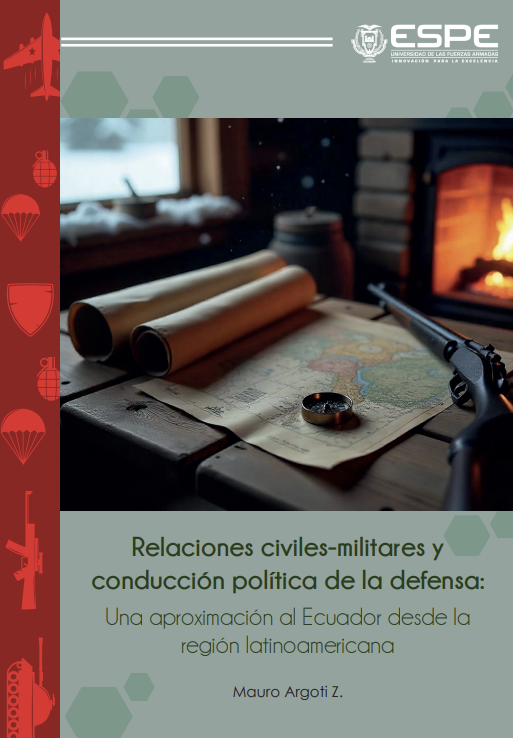
Civil-military relations and political conduct of defence: An approach to Ecuador from the Latin American region
Mauro Argoti
Defence or the military, as this area is usually adjective, has played a preponderant role over the centuries in the configuration and development of States, and even in that of pre-State societies. Their participation was not restricted only to guaranteeing the survival of political communities in the face of threats that came from outside their domains, but also assumed ─because it was thought necessary─ an omnipresent character in most activities, even in the most elementary ones that were carried out in everyday life; this, while other instances were structured that gradually assumed the diversity of functions that are required for state management. National defence is a good that always materialises as a public function, and sometimes, as a public service. Under either of the two criteria of use, its character is eminently instrumental, because through this means, which is one among others available to a nation, it is sought to concretize in an endless strategic horizon, a part of the objectives of security.
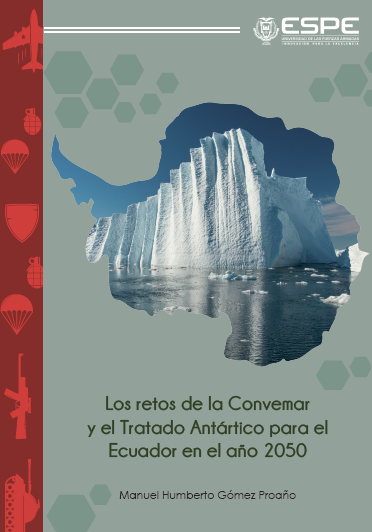
The challenges of UNCLOS and the Antarctic Treaty for Ecuador in 2025
Humberto Gómez
This book examines the governance of the seas, oceans, coasts, and Antarctica, highlighting the importance of the 1982 United Nations Convention on the Law of the Sea (UNCLOS) and the 1959 Antarctic Treaty. It focuses on how these instruments, initially based on customary law and now on positive law, have evolved to regulate the use of these regions. The author argues that understanding oceanopolitical factors is crucial, especially for countries such as Ecuador, whose presence in Antarctica is considered a strategic geopolitical and oceanopolitical positioning.
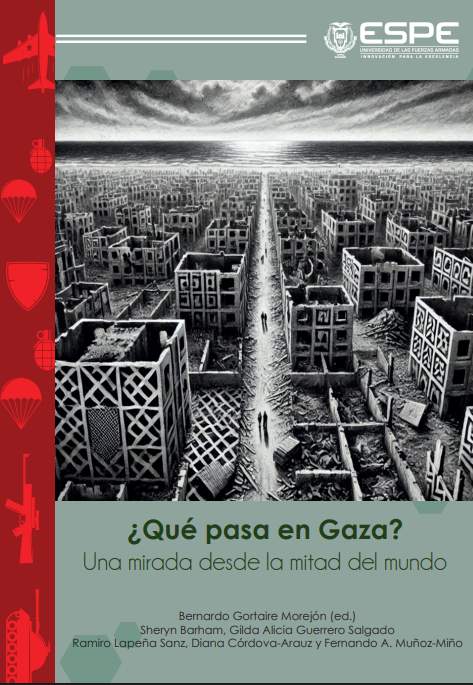
What is happening in Gaza? A view from the middle of the world
Bernardo Gortaire Morejón
In the future, many will ask: What happened in Gaza? Most likely, most of the answers are sought from direct views of the Middle East and also from traditional Western sources. However, Ecuador has also observed one of the darkest episodes in the history of humanity. From an academic perspective, the authors of this book analyze the history, conjuncture, and future scenarios of the crisis that Palestine and Israel have faced for decades. The reader of this text will find several answers and raise new doubts that are usually absent from orthodox discussion.
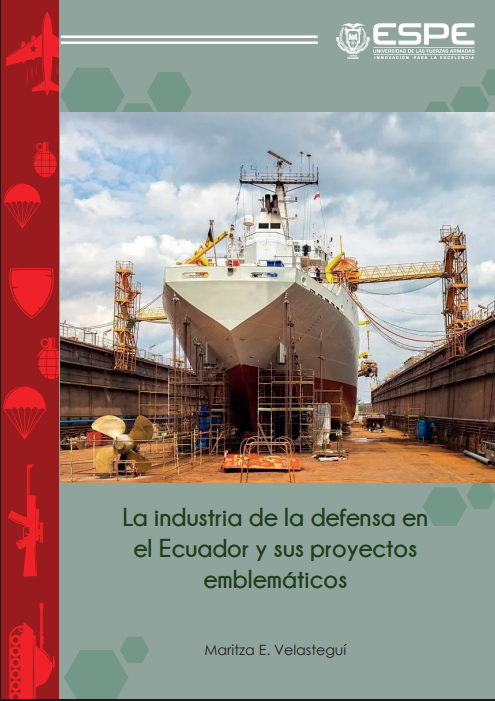
The defense industry in Ecuador and its emblematic projects
Maritza Velasteguí
The book intends to arouse the interest of the public in general and of the security society in particular, in a strategic sector such as the defence industry. This sector must be rescued not only as part of a defense asset; but as a strategic economic sector essential for national development. The defence industrial fabric represents in other countries the step towards research, technology and innovation, under the so-called R+D+i model, which is the beginning towards the production and new technological innovation of products generated to strengthen Defence and National Security. Without this adoption towards dual production of defense, both national development and the exit from technological dependence of the security sector would be delayed, avoiding taking the great step towards a more complete and integrating composition of Ecuador with neighboring countries and the region, in order to expand positive interdependence to achieve the objectives of security and defense as a South American bloc.
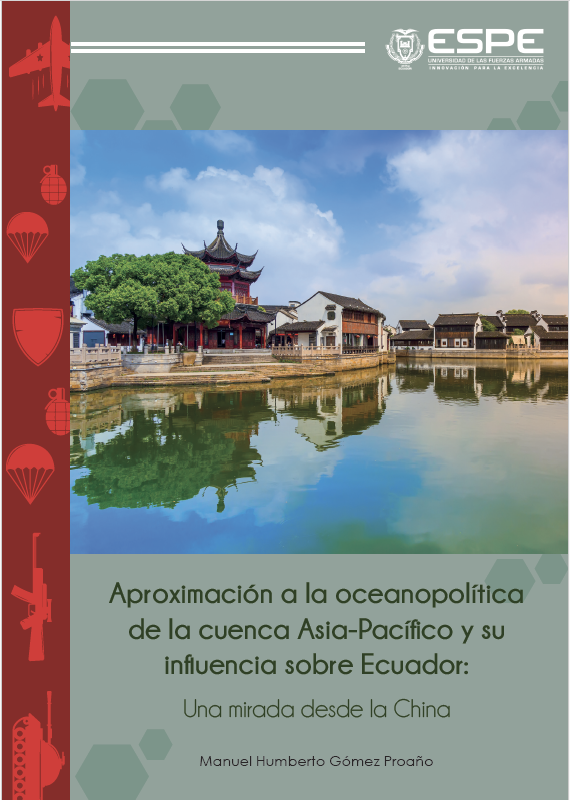
Approach to the Oceanopolitics of the Asia-Pacific Basin and its Influence on Ecuador: A view from China
Humberto Gómez
This paper addresses the importance of understanding the geography of Asia and its implications for the maritime interests of Pacific Rim countries. It discusses China’s influence and its quest for global hegemony, as well as rivalry with the United States. It also reflects on the need for sustainable use of marine resources and examines the challenges related to fisheries and China’s influence in the region.
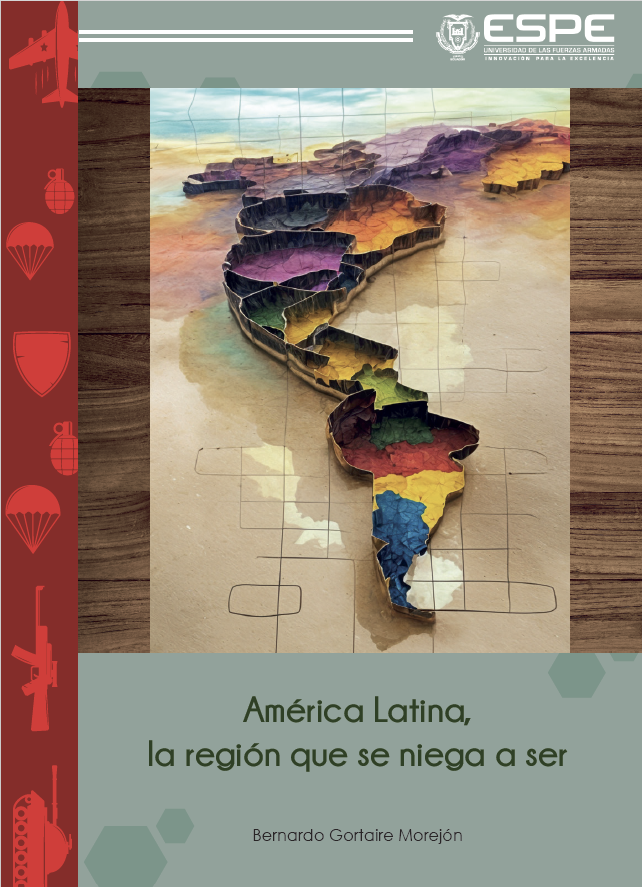
Latin America, the region that refuses to be
Bernardo Gortaire Morejón
This work tries to decipher the complex realities of Latin America. To this end, an analysis of the socioeconomic situation is carried out, understanding endemic inequality as one of the starting points of the complexity of the regional scenario. Discussions are addressed about political actors, their agendas and their permanent weaknesses that lead to the existence of a semi-permanent malaise. And it reflects on the cruel scenario of insecurity in which groups outside the law have benefited from the weakness of the states in the region.
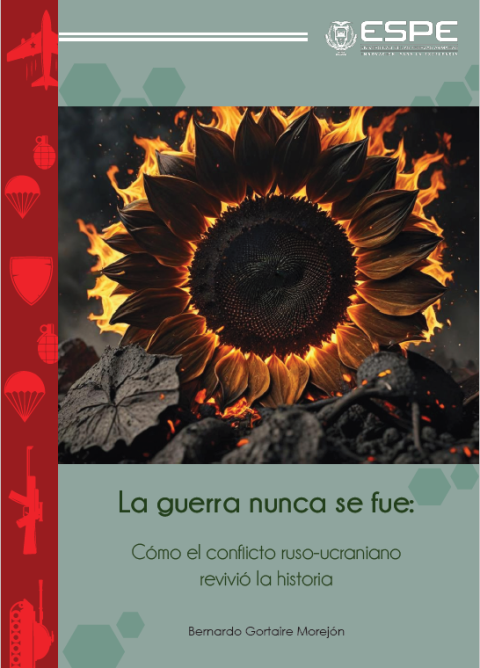
The war never went away: How the Russian-Ukrainian conflict revived history
Bernardo Gortaire Morejón
This book breaks the fence of discussion reserved for the major players in international politics, and provides a perspective from the developing world. Through a historical analysis, and the comparative study of the leadership profiles of Vladimir Putin and Volodimir Zelensky, this text seeks to provide its readers with greater clarity to understand the origins of this war.
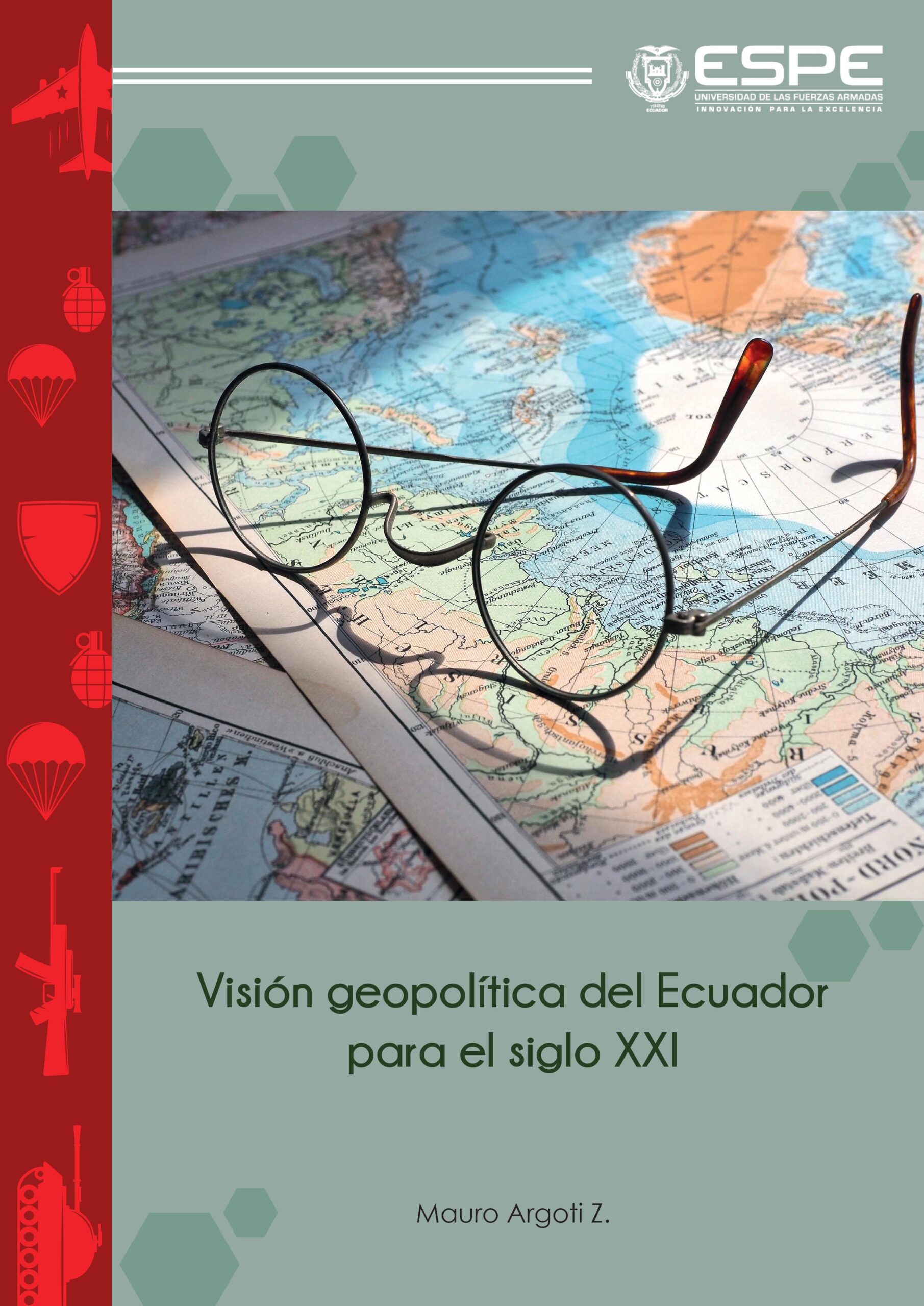
Geopolitical vision of Ecuador for the 21st century
Mauro Argoti
Geopolitics, previously marginalized after World War II, has experienced a significant resurgence, known as “the return of geopolitics.” This renaissance is attributed to the transformations in the global environment that have highlighted the relevance of geopolitics for strategic decision-making in States, based on an in-depth analysis of their realities and potentialities. An understanding of history and geography is crucial to place a country in its spatial and temporal context, allowing for an effective projection into the future. The case of Ecuador, with its rich trajectory from the Aboriginal Era to Republican life, illustrates how geopolitical analysis can influence political planning and management. The establishment of a solid geopolitical vision is essential for States to shape and materialize national projects, guide strategic decisions and face challenges. The countries that have integrated geopolitical thinking have managed to be protagonists on the international stage, consolidating themselves as relevant actors.
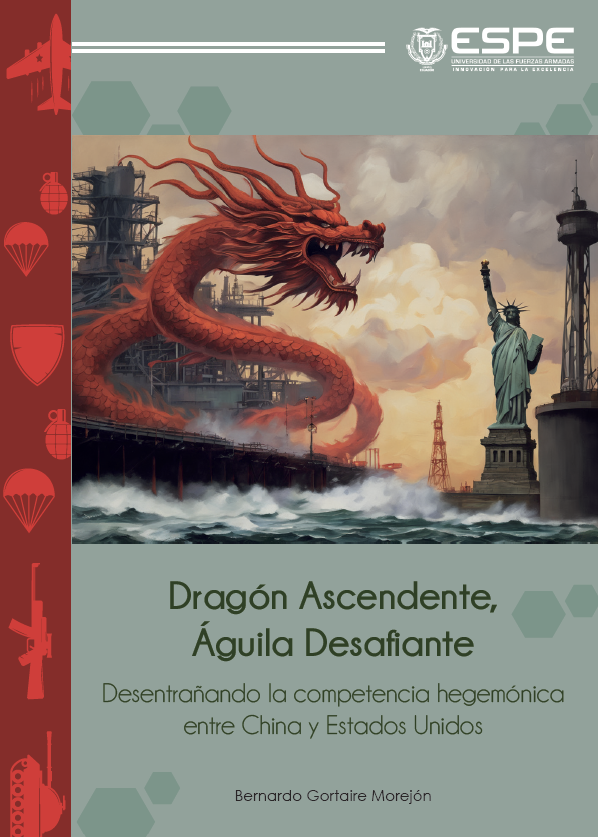
Rising Dragon, Defiant Eagle Unraveling the hegemonic competition between China and the United States
Bernardo Gortaire Morejón
Since the fall of the Soviet Union, the United States has occupied global hegemony almost without challenge. However, the People’s Republic of China has demonstrated in recent decades its intention to break with unilateral imaginaries and disruptively enter the global stage, not only as another force, but as a potential leader. Despite this, the United States is far from giving up its space easily. This challenge to hegemony includes the agendas that involve the future of the majority of the human species.
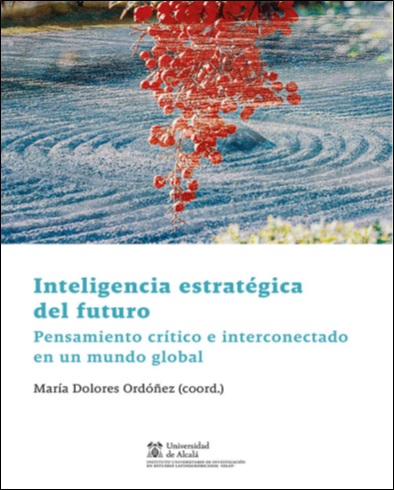
Strategic intelligence of the future Critical and interconnected thinking in a global world
María Dolores Ordóñez
What are the responsibilities of entities and decision-makers in the strategic sphere? What new methodologies should analysts adopt? What doctrines need to be updated or overcome? What scenarios do you have to face? This book, which was born from the constant concern to ally academic reflection with the reality that is happening
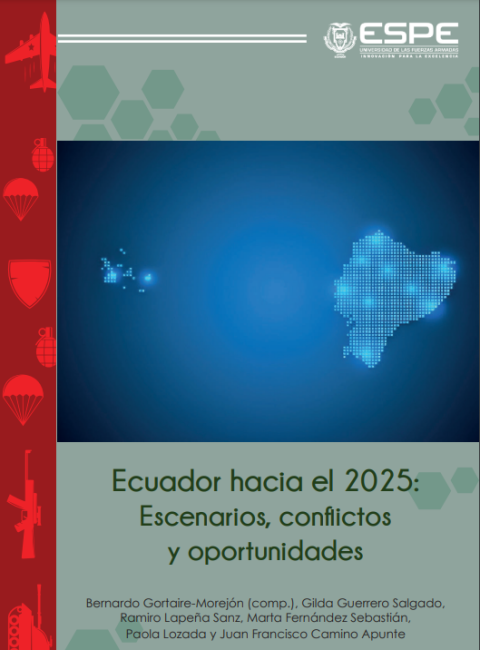
Ecuador by 2025: Scenarios, conflicts and opportunities
Bernardo Gortaire Morejón
Uncertainty seems to be linked to the reality of Ecuador as an inseparable element. Between the weakness of its formal institutions, the pressure of illegal actors, and the constant change of the international system, the country faces severe conjunctural and structural challenges that demand broad control on the part of decision-makers and citizens in order to embark on the best possible course. In this sense, the book “Ecuador towards 2025: Scenarios, Conflicts and Opportunities” compiles a series of analyses from different perspectives of Political Science, security studies and International Relations to give a diverse and holistic panorama that sheds light on the reality of the country. This effort by the Center for Studies and Strategic Thinking (CESPE) seeks to become a solid contribution to Ecuador in the search for better solutions and full understanding of the strategic landscape.
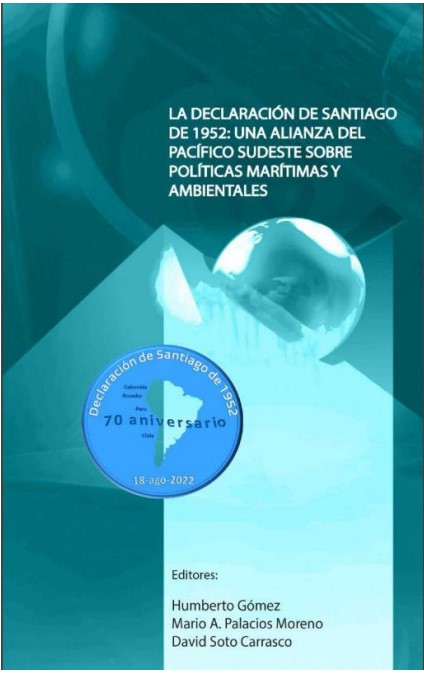
The Declaration of Santiago of 1952: A Southeast Pacific Alliance on Maritime and Environmental Policies
Humberto Gómez
This paper expresses concepts and provides precise information on what the Declaration of Santiago has been for the Southeast Pacific Region to date and some ideas of what should be the work of the Permanent Commission of the South Pacific (CPPS) in its capacity as an intergovernmental instrument for the coordination of maritime policies of Chile. Colombia, Ecuador and Peru, and how academia could support this strategic alliance, today more valid and necessary than ever.
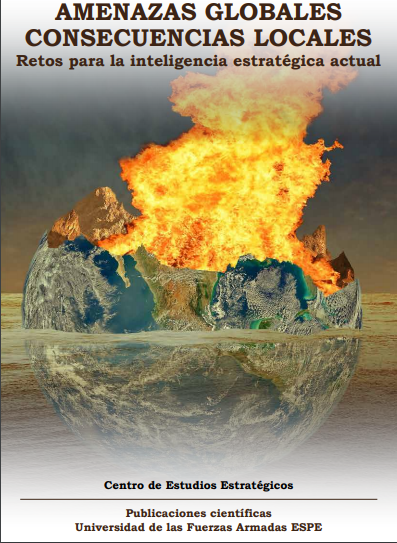
Global Threats Local Consequences Challenges for today's strategic intelligence
This book contributes to the task of reducing the levels of uncertainty related to the events that can occur and endanger a country, a region and its inhabitants, is increasingly complex. The way in which States today must define their threats and their security policies is crossed by multiple conditions and variables that result from complicated examinations, forcing them to redesign their institutions, the training of their security and defense agents and, therefore, rethink their role within a given region and the globe in general.
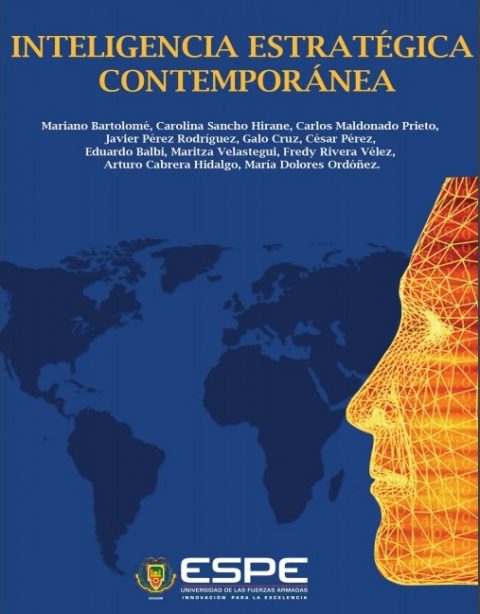
Contemporary Strategic Intelligence
This book addresses the development of strategic intelligence in South America, with emphasis on its incipient but growing study in Ecuador. Through contributions from experts from Argentina, Chile and Ecuador, contemporary security and defense challenges are analyzed, proposing methodological approaches adapted to the regional reality. The work seeks to consolidate an academic community that strengthens knowledge about strategic intelligence, integrating historical, social and cultural dimensions to respond to emerging threats, and serve as a reference for researchers, decision-makers and professionals in the area.
Geopolitics and South American Strategy Academic Perspectives
This book fulfills the purpose of promoting strategic thinking and staging an Ecuadorian perspective on the central issues of security and defense, presents the work “South American Strategy and Geopolitics: Academic Perspectives”, which incorporates the reflections of 9 academics of different nationalities and perspectives, also corresponding to different generational spaces.
The pulse of our academic community
Newsletters News
Newsletters 2025
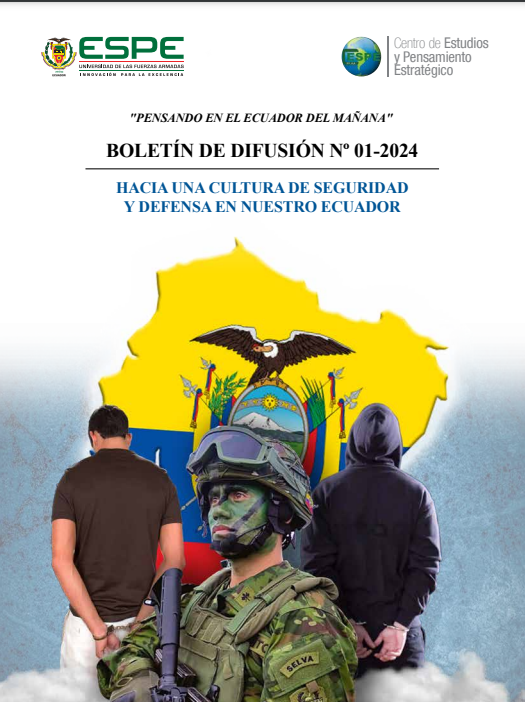
Newsletters 2024
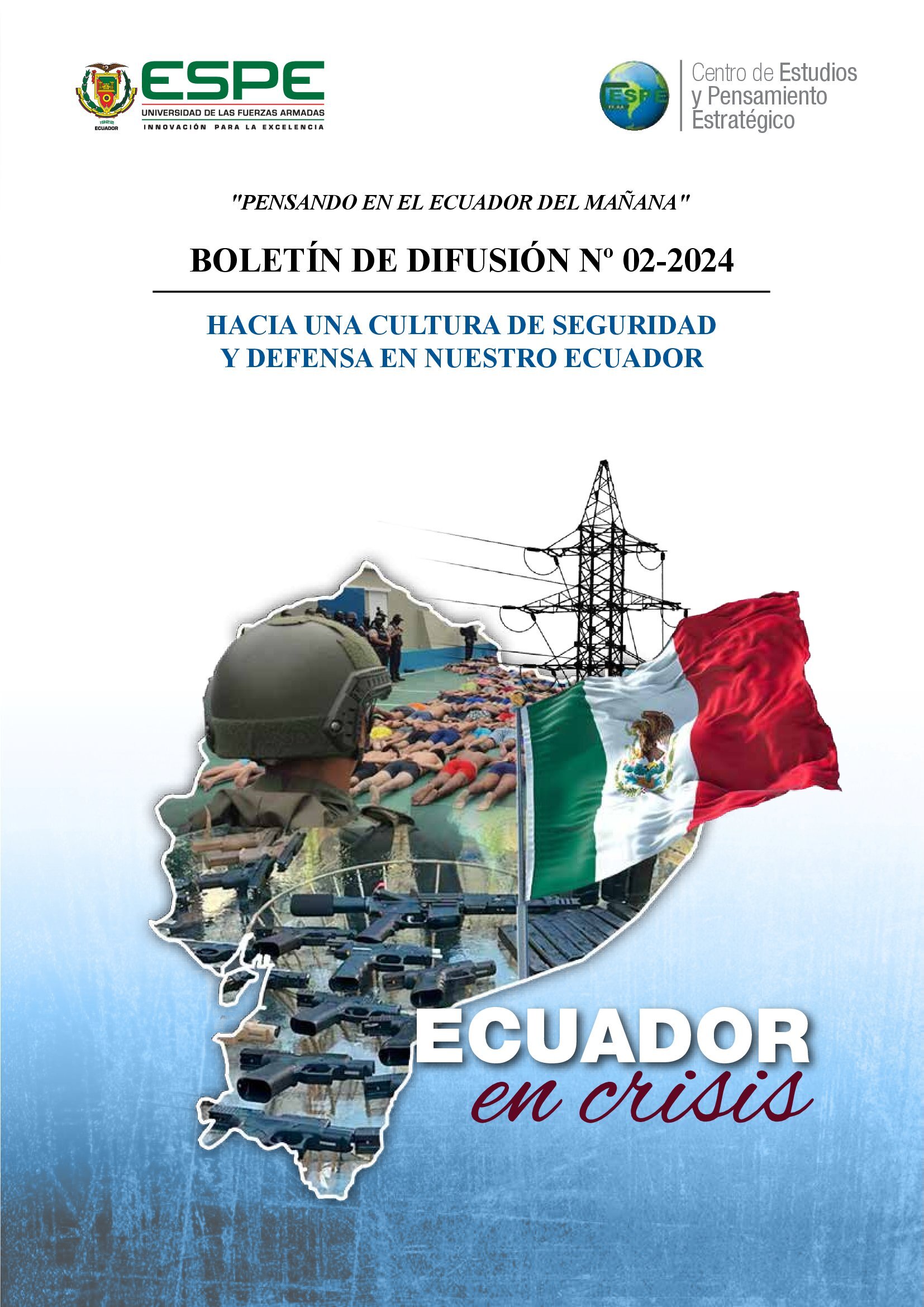
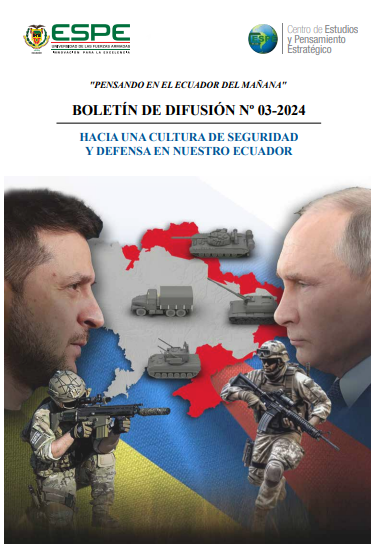

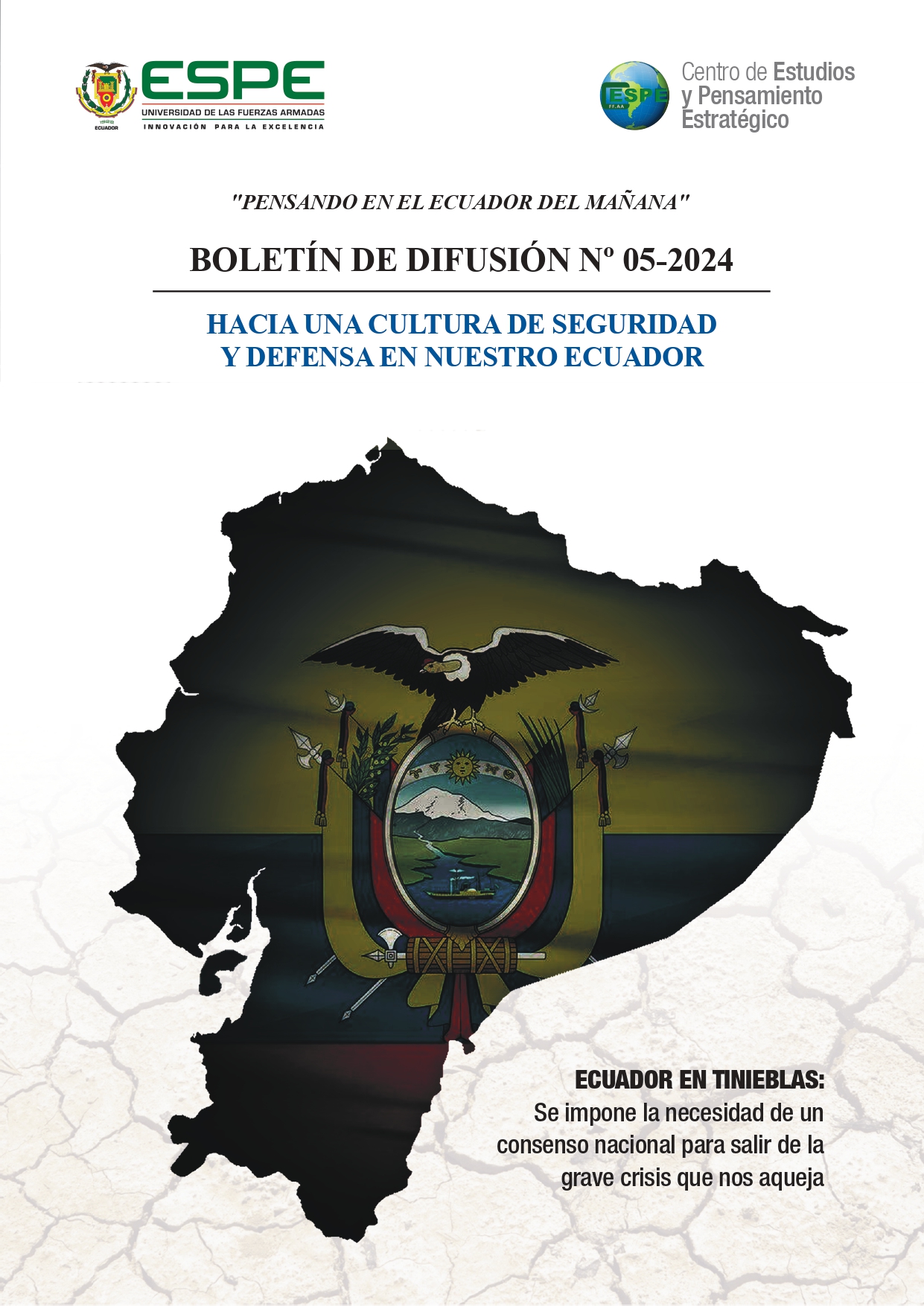
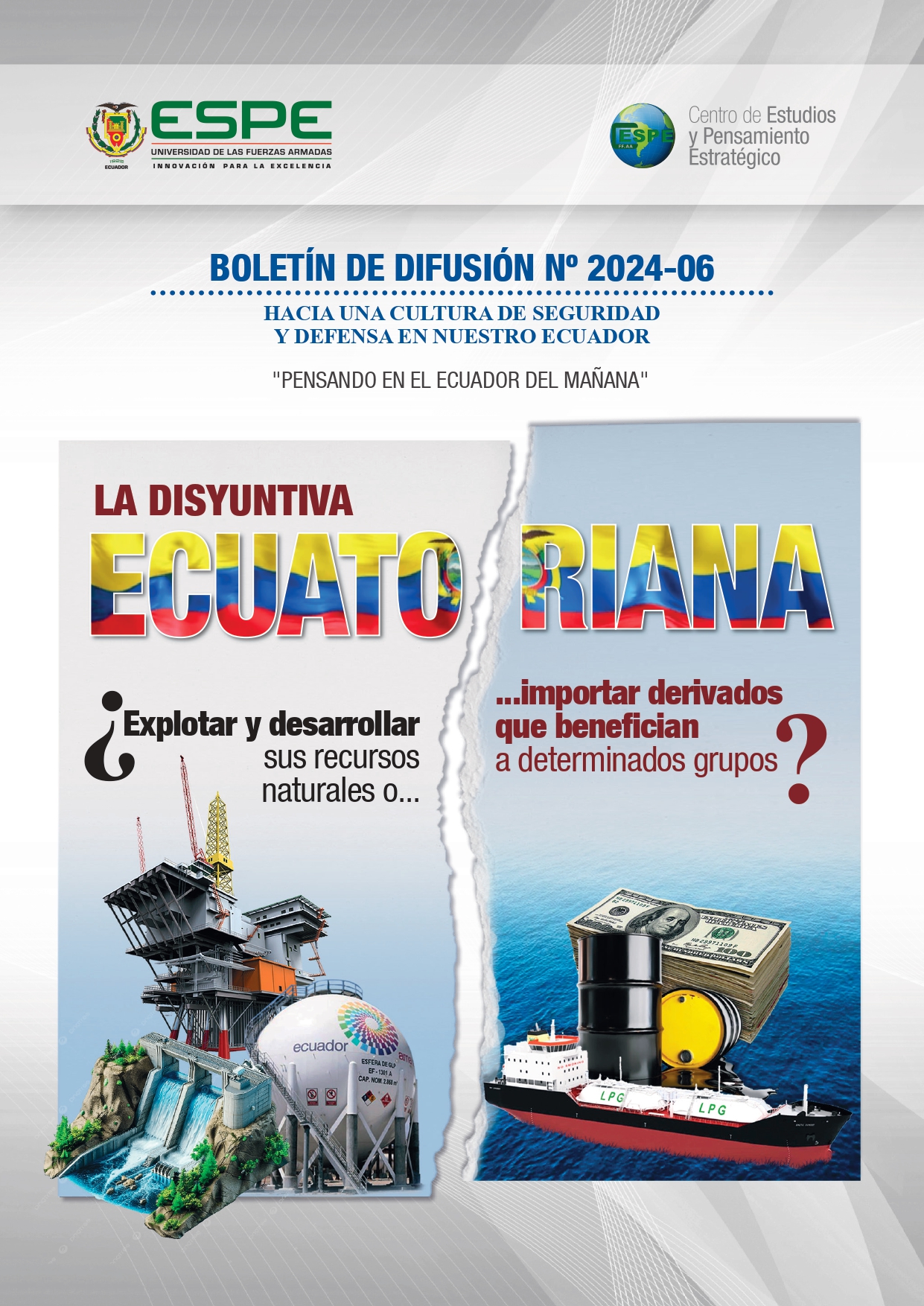
Newsletters 2023
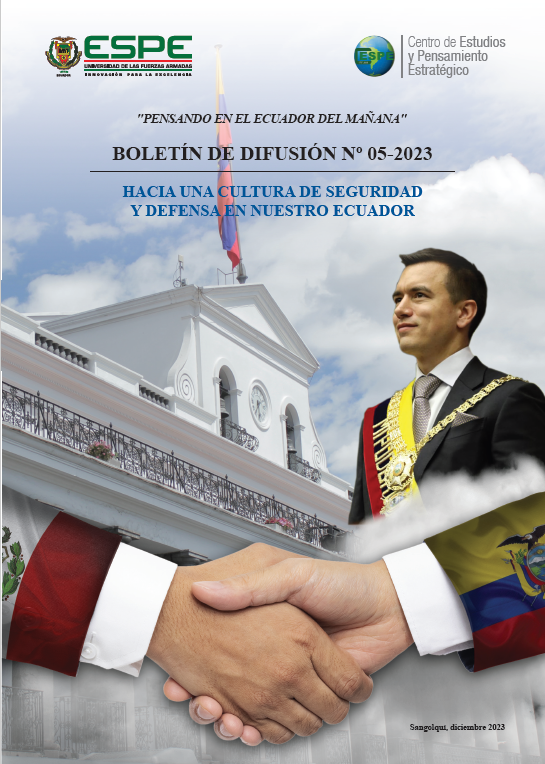
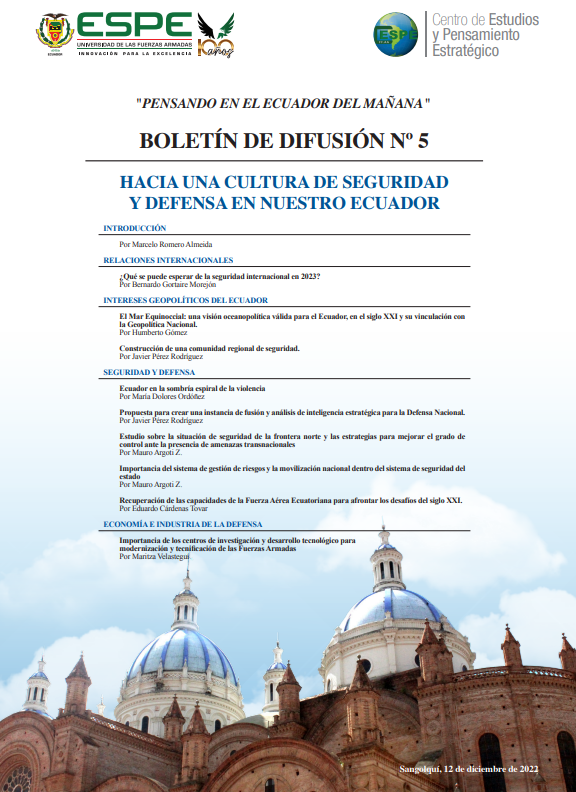
Newsletter No 2023 – 5