









ESPE

Menu

DEGREE

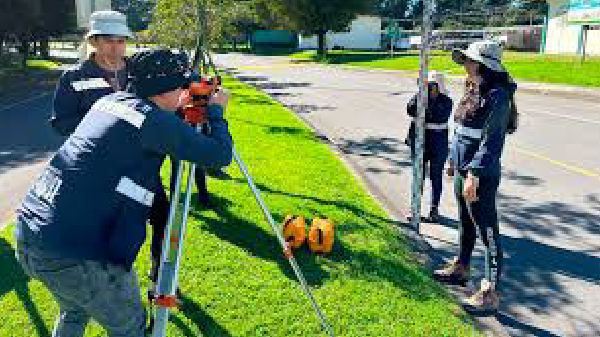
Higher University Technology in Safety and Prevention of Occupational Risks

Select a campus

DEGREE

Higher University Technologist in Occupational Safety and Risk Prevention

CES Resolution

RPC-SO-43-No.655-2025

DURATION

3 years

MODALITY

On-campus

Academic Identity

Learn about the foundations of the program

To train University Technologists of excellence, creative, humanistic with leadership capacity to solve problems in workplace safety, psychosocial risks, industrial hygiene and applied ergonomics, with technical professional judgment and social responsibility, to promote safe and healthy work environments.

By 2030, to be a benchmark in the training of higher university technologists in occupational safety and risk prevention, recognized nationally for their high technical level with ethical, civic, and community service values.

To train professionals qualified to identify, analyze, evaluate, and manage occupational risks in various productive sectors, ensuring safety and health, with technical and practical competencies that enable the implementation of preventive and corrective measures, based on Ecuadorian legal regulations and standards, to reduce workplace accidents, occupational diseases, and improve working conditions in the country. Additionally, it focuses on promoting a culture of safety and well-being in the work environment.

To develop in students technical competencies for the identification, measurement, and evaluation of occupational risks through the application of methodologies, instruments, and current standards, enabling the diagnosis of unsafe conditions and risk factors in different work environments.

To strengthen the capacity to design, implement, and supervise occupational risk prevention programs, integrating technical, administrative, and personal protection control measures, in accordance with Ecuadorian legal regulations and international occupational safety and health standards.

To foster the training of professionals with critical thinking and a preventive approach, capable of promoting an organizational safety culture through training, awareness, and continuous improvement processes that contribute to workplace well-being and the reduction of accidents and occupational diseases.

Program video

Experience studying Higher University Technology in Occupational Safety and Risk Prevention

Discover daily life in our classrooms, laboratories, and academic spaces. Students, faculty, and researchers share their stories.

Learn about the foundations of the program

Profiles and outcomes

The professional we train and the competencies you will develop

  • To develop competencies and attitudes that enable the future technologist to improve quality of life, the work environment, safety, and sustainability, emphasizing respect for life, physical integrity, and the safety of individuals, and valuing the work environment as a space to protect.
  • To promote a sociocultural transformation oriented toward creating safer, healthier, and more supportive work environments, based on ethical, innovative practice committed to research, respect for cultural diversity, and ancestral knowledge.
  • To participate in responsible actions that protect people and the environment, acting autonomously, collaboratively, and supportively in implementing strategies to reduce occupational risks and improve safety.
  • To act with responsibility, empathy, and respect, integrating ethical and bioethical principles in safety management, defending the rights of workers and vulnerable groups in the workplace.
  • To actively participate in projects and programs aimed at improving workplace safety, aligning with sustainable development and accident prevention strategies, combining ethical, legal, intercultural, gender, and equity knowledge to manage innovative projects that improve safety and quality of life in the work environment.
  • To integrate values of continuous improvement through constant learning and the application of the scientific method in their professional field.

The graduate profile of the Occupational Safety and Risk Prevention program comprises the set of integrated knowledge organized coherently and consistently oriented toward understanding the various problems and thematic areas of the profession’s object. To this end, the knowledge and skills that students must deepen are selected in a theoretical-practical relationship, with the purpose of developing competencies that will be applied in the workplace. These are detailed below:

  • To implement agile management methodologies (5S) integrated with digital tools for classification, order, cleanliness, standardization, and discipline, contributing to the reduction of accidents and occupational diseases, and improving operational efficiency.
  • To apply industrial safety standards, protocols, and procedures, in accordance with current legislation, ensuring safe conditions in operations and production processes.
  • To apply standardized methodologies and appropriate technologies in the identification, measurement, analysis, evaluation, and control of occupational risks, promoting continuous improvement in occupational safety and health management systems.
  • To monitor the requirements of regulatory entities related to workplace safety, ensuring regulatory compliance and strengthening the preventive culture in organizations.
  • To record and interpret standardized risk matrices, identifying hazards in different work environments and proposing appropriate corrective and preventive measures.
  • To apply emerging technologies and specialized software for risk management, preparation of technical reports, and data analysis in workplace safety.

Apply methods and methodologies for risk identification

Design and apply safety management models

Develop and implement safety protocols

Optimize risk prevention processes

Implement emergency response procedures

Develop research capabilities for workplace safety

Develop continuous improvement procedures in OSH

Train and educate personnel in safety procedures

Monitor and evaluate processes through safety audits

Curriculum Structure

Academic structure of the program

Current Curriculum

Gallery Gallery

Spaces, moments, and experiences that bring the program to life
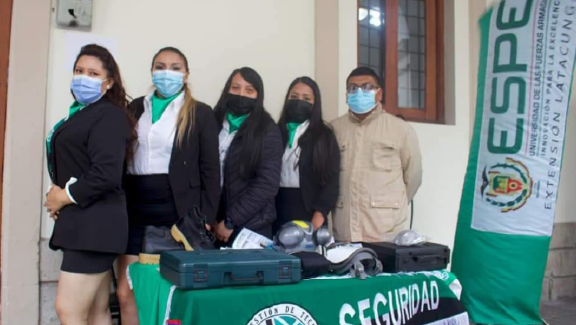
Admissions and costs

Spaces, moments, and experiences that bring the program to life
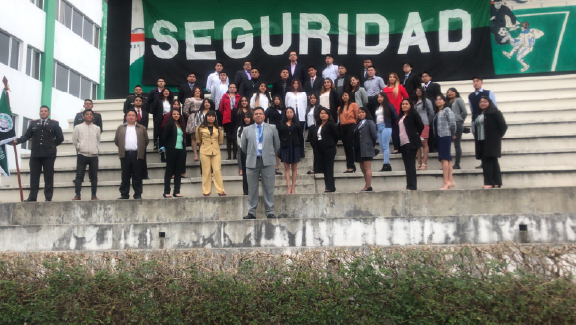
CES Resolution

RPC-SO-15-No 309-2020

Program Code

ISOF-SQ-2023

Accreditation

In process

Application Dates

March – April 2025 / August – September 2025

Program cost:

Article 356 of the Constitution of the Republic establishes, among other principles, that third-level public higher education shall be tuition-free, and that this gratuity is linked to the academic responsibility of students.

Begin your path in

Higher University Technology in

Occupational Safety and Risk Prevention

Join Universidad de las Fuerzas Armadas ESPE and become part of an

academic community of excellence with international reach.

DUAL TRAINING

Nautical Sciences

Select a campus

DEGREE

Merchant Marine Officer

CES Resolution

RPC-SO-44-No.7 97 -2019

DURATION

4 Years

MODALITY

Dual

Academic Identity

Learn about the foundations of the program

Manage the education of seafarers and fishing personnel through the delivery of courses, training certificates, professional development, instruction, and specialization programs based on a high-quality academic model, in accordance with the requirements of the maritime authority, in order to contribute to safety and security in aquatic environments.

To be a leading institution at the regional level in the education and training of seafarers and fishing personnel, grounded in strong professional values and principles, committed to the development of the national and international maritime sector.

To train professionals in the Bachelor’s Degree in Nautical Sciences, with a qualification as Merchant Marine Officers, capable of providing professional technical assistance on board and contributing to maritime transport safety, respect for State sovereignty, and improved access to international and tourism markets. This is achieved through the planning, analysis, management, and evaluation of safe navigation of a merchant vessel, as well as the vessel’s logistical operations to and from port, ensuring the efficient operation of main and auxiliary onboard systems and the coordination of cargo handling processes in port. The objective is to contribute to the safety of human life at sea, the protection of property, the preservation of the marine environment, and the development of the national maritime sector within a framework of safety, quality, and environmental responsibility.

To manage the operation of a merchant vessel in a safe, integrated, and sustainable manner, both at sea and in port.

To address requirements related to maritime transport safety and vessel logistics both at sea and in port, respect for State sovereignty, the development of multimodal transport in response to global supply chain demands, and advances in science and technology in navigation and port logistics.

To conduct real or simulated tests on various types of vessels and port facilities, including state-of-the-art systems; to simulate the vessel’s structural resistance during cargo handling operations; and to evaluate potential emergency situations.

To promote leadership, teamwork, discipline, and responsibility, as well as the development of community engagement projects, in order to contribute to the safety of human life at sea and the conservation of the marine environment.

Program video

Experience what it’s like to study Merchant Marine Officer

Discover daily life in our classrooms, laboratories, and academic spaces. Students, faculty, and researchers share their stories.

Learn about the foundations of the program

Profiles and outcomes

The professional we train and the competencies you will develop

Development of critical thinking skills to handle complex situations and find solutions to routine and emergency problems. Respect and support for the conservation of the marine environment Comply with national and international regulations on safe navigation. Applies regulations related to the safety of human life at sea, the vessel, and the environment. Develops discipline, professional ethics, demonstrates proactiveness, and applies the principles of leadership and teamwork in the scale of institutional values for their personal and professional training and fulfillment of institutional objectives. Solves problems in the maritime transport and port logistics sector by forming multidisciplinary teams, accurately and promptly.

The Merchant Marine Officer program fosters values and principles focused on leadership, teamwork, esprit de corps, discipline, and responsibility, while respecting interculturality and gender equity, as well as the exercise of citizens’ rights within a universal mindset that contributes to the advancement of human rights. The Merchant Marine Officer, through their professional practice, will strengthen these principles and values by being closely linked to the transport of goods and passengers under a global regulatory framework, complying with international legislation, ensuring the safety of human life at sea, and protecting the marine environment. In doing so, they contribute to national development based on the principle of solidarity, respecting cultural roots and traditions, and applying critical and creative judgment to maintain high standards in the execution of the country’s maritime activities.

Development of critical thinking skills to handle complex situations and find solutions to routine and emergency problems.

Respect for and support of the conservation of the marine environment.

Complies with national and international regulations for safe navigation.

Applies regulations related to the safety of human life at sea, the vessel, and the environment.

Develops discipline and professional ethics, demonstrates proactivity, and applies the principles of leadership and teamwork within the framework of institutional values for personal and professional development and the achievement of institutional objectives.

Solves problems in the maritime transport and port logistics sector by forming multidisciplinary teams, with precision and promptness.

Curriculum Structure

Academic structure of the program

Current Curriculum

Curriculum 2019 (No Longer in Force)

Program Teachers

Meet those who will guide you

Gallery Gallery

Spaces, moments, and experiences that bring the program to life
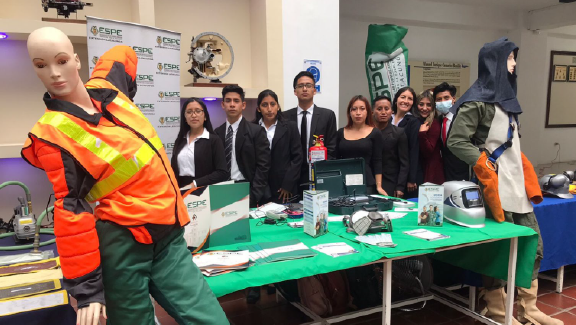
Admissions and costs

Spaces, moments, and experiences that bring the program to life
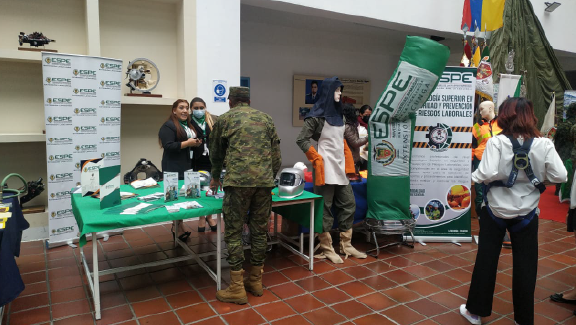
Acreditacion Chile

CES Resolution

RPC-SO-15-No 309-2020

Program Code

ISOF-SQ-2023

Accreditation

In process

Application Dates

March – April 2025 / August – September 2025

Program cost:

Article 356 of the Constitution of the Republic establishes, among other principles, that third-level public higher education shall be tuition-free, and that this gratuity is linked to the academic responsibility of students.

Begin your path in

Aeronautical Sciences

Join Universidad de las Fuerzas Armadas ESPE and become part of an

academic community of excellence with international reach.

DEGREE

International Relations

Select a campus

DEGREE

Bachelor’s Degree in International Relations

CES Resolution

RPC-SO-07-No.116-2022

DURATION

4 Years

MODALITY

On-campus

Academic Identity

Learn about the foundations of the program

To train outstanding professionals and researchers in International Relations—creative, humanistic, with leadership skills, critical thinking, and a strong sense of civic responsibility—committed to contributing to national development and addressing the needs of society and the Armed Forces.

To be an International Relations program recognized at the national and regional levels for excellence in academic training, knowledge production, and its contribution to the analysis and management of global affairs, strategically supporting the strengthening of security and defense, in alignment with the ethical, civic, and community service values that guide the Armed Forces University ESPE.

To train graduates in International Relations with integrity, critical thinking, analytical breadth, and academic rigor, committed to the primacy of the State’s interests. To prepare professionals capable of analyzing the international context by identifying actors and processes—particularly those related to security—and of designing strategies and plans at the political-strategic level. All of this is grounded in the integration of basic and advanced theoretical and practical knowledge of the discipline, aimed at achieving national objectives.

a. Knowledge:

To organize learning environments based on the epistemological foundations and fundamental principles of International Relations, as well as the fields of security, conflict, and cooperation among States, applying the postulates of political science, economics, history, and law. This is achieved through processes that enable students to demonstrate integrity, critical thinking, breadth of perspective, and academic rigor, prioritizing the interests of the State over individual interests.

b. Relevance:

To integrate the dynamics of theory and practice through the design of research and projects involving advanced analytical assessment of strategic and security components, aiming to identify conflict-related processes associated with decision-making in strategic and international security sectors, in order to contribute to the transformation of the country’s cognitive and social framework.

c. Learning:

To manage learning environments that enable students to bridge theory and practice, designing analytical scenarios that integrate commercial, political, and cultural ties—and their consequences at the national and international levels—from a strategic and geopolitical perspective.

d. Interculturality:

To integrate the International Relations program with the community and societal stakeholders, addressing social, cultural, ecological, ancestral, and gender diversity through the practical application of development theories, as an ethical commitment.

Program video

Experience what it’s like to study International Relations

Discover daily life in our classrooms, laboratories, and academic spaces. Students, faculty, and researchers share their stories.

Learn about the foundations of the program

Profiles and outcomes

The professional we train and the competencies you will develop

The Bachelor’s graduate in International Relations from the Armed Forces University ESPE is a well-rounded professional with a solid academic background, critical thinking, and a strategic vision, oriented toward understanding and managing international phenomena. They possess the ability to analyze the global environment by identifying actors, dynamics, and political, economic, and security groups, with an emphasis on those that impact national defense and the interests of the State.

Has the competencies to design, implement, and evaluate strategies and policies in the political-strategic field, as well as to provide advisory support in decision-making within public institutions, international organizations, and entities related to security and defense. Their education integrates theoretical and practical knowledge of International Relations, along with advanced analytical and methodological tools.

They are characterized by leadership, professional ethics, civic commitment, and a vocation for service, contributing to national development, the country’s international projection, and the preservation of security and State sovereignty.

Describes and analyzes reality based on the fundamental principles of International Relations, linking fields such as security, conflict, and cooperation among States, as well as the principles of political science, economics, and law; demonstrating integrity, critical thinking, breadth of perspective, and academic rigor, prioritizing national interests over individual ones.

Designs analytical scenarios that incorporate aspects related to trade relations and their consequences at both national and international levels, from a strategic and geopolitical perspective; demonstrating integrity, critical thinking, breadth of perspective, and academic rigor, prioritizing national interests over individual ones.

Designs research and projects involving advanced analytical assessment of strategic and security components, through the identification of conflict-related processes associated with decision-making in strategic and international security sectors; demonstrating integrity, critical thinking, breadth of perspective, and academic rigor, prioritizing national interests over individual ones.

Recognizes the fundamental principles of International Relations through the comparison of theoretical models and the development of basic analyses of actors and general processes from an exploratory approach, using the State and International Organizations as units of analysis.

Describes, through a deductive approach, the basic processes and actors of the international system using theoretical and conceptual frameworks from International Relations, political science, and administration, based on inference and the outcomes of community engagement.

Provides a general characterization of conflict-related processes in the international system by linking security, law, and development, using a deductive approach derived from the core principles of the discipline’s main subfields.

Designs a basic analytical model that enables the interpretation and evaluation of decisions and strategies in the fields of foreign policy and international political economy.

Designs an intermediate model for analysis and projection to improve specific aspects within Ecuador’s foreign policy decision-making process, through project management and evaluation under a methodological framework.

Designs an analytically valuable scenario that links aspects related to trade relations and their consequences for Ecuador’s interests, from a strategic and geopolitical perspective.

Designs an action plan based on advanced theoretical concepts and perspectives in geopolitics, security, and defense, aimed at optimizing decision-making in the political-strategic sector.

Designs an action plan based on advanced theoretical concepts and perspectives in peace and conflict studies, regionalism, and negotiation, aimed at optimizing decision-making in the political-strategic sector.

Designs, implements, and evaluates strategic plans associated with the conflict dynamics of Ecuador’s regional and neighboring environment, aimed at structurally improving analysis and decision-making processes in the political-strategic sphere.

Designs, implements, and evaluates strategic plans related to conflict processes in South America and emerging threats, aimed at structurally improving analysis and decision-making processes in the political-strategic sphere.

Curriculum Structure

Academic structure of the program

Current Curriculum

Gallery Gallery

Spaces, moments, and experiences that bring the program to life
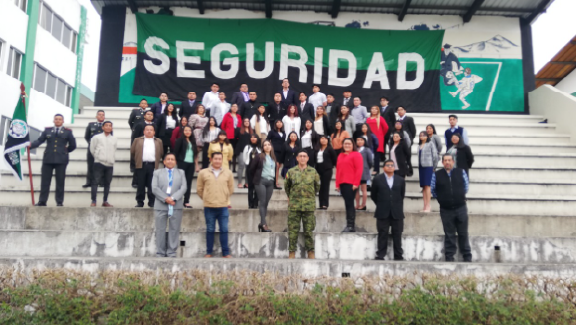
Admissions and costs

Spaces, moments, and experiences that bring the program to life

CES Resolution

RPC-SO-15-No 309-2020

Program Code

ISOF-SQ-2023

Accreditation

In process

Application Dates

March – April 2025 / August – September 2025

Program cost:

Article 356 of the Constitution of the Republic establishes, among other principles, that third-level public higher education shall be tuition-free, and that this gratuity is linked to the academic responsibility of students.

Begin your path in

International Relations

Join Universidad de las Fuerzas Armadas ESPE and become part of an

academic community of excellence with international reach.
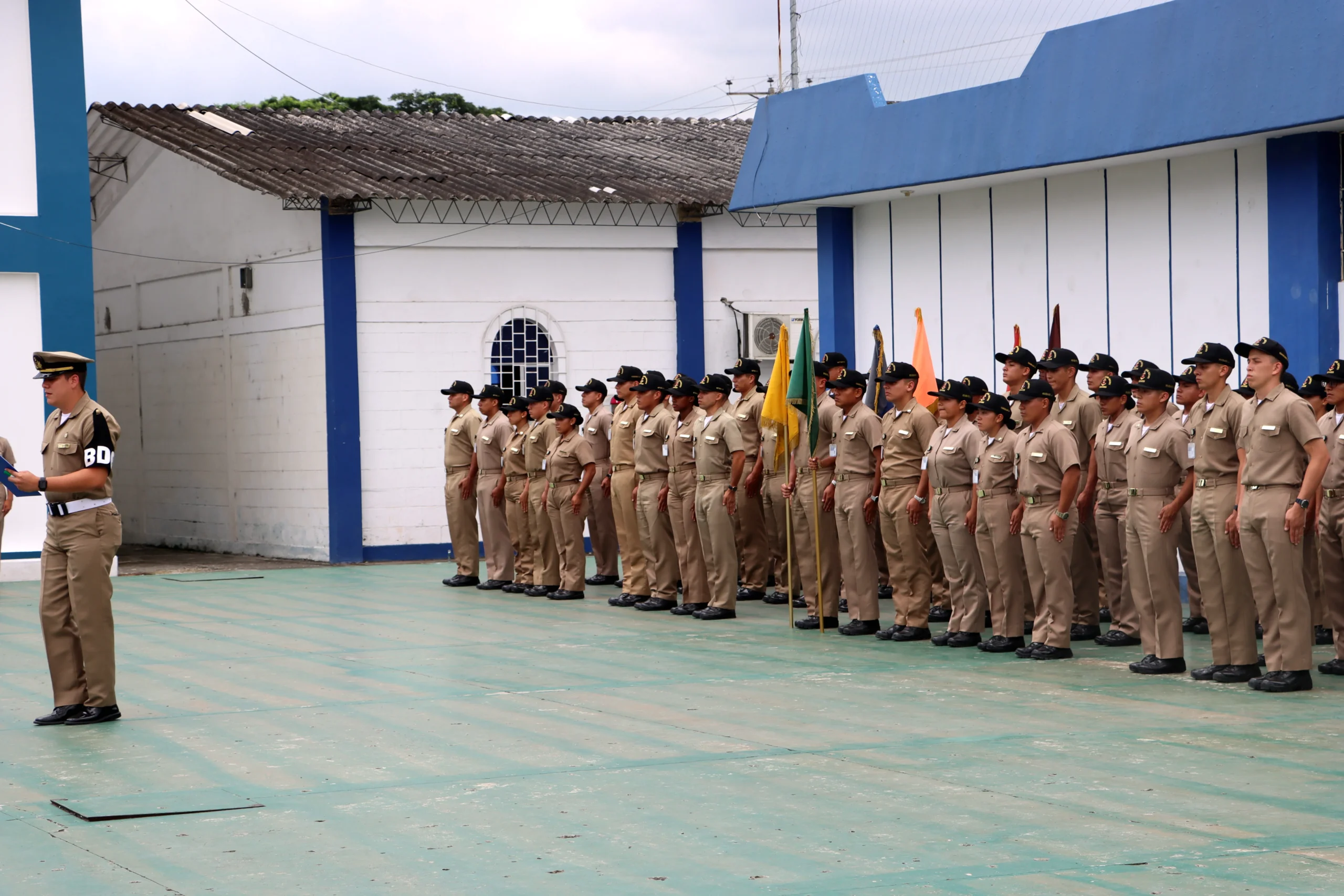
DEGREE

Early Childhood Education

Select a campus

DEGREE

Bachelor’s Degree in Early Childhood Education

CES Resolution

RPC-SO-28-No.467-2023

DURATION

4 Years

MODALITY

Online

Academic Identity

Learn about the foundations of the program

Manage the implementation of course syllabi across academic programs and thesis projects, as well as guide the provision of support to meet student needs, through the application of agile, dynamic, and straightforward methods and procedures, in order to promote the development of outstanding academics, professionals, and researchers who are creative, humanistic, possess leadership skills, critical thinking, and a strong sense of civic responsibility. Article 52 of the Organic Regulation of Organizational Management by Processes of the Universidad de las Fuerzas Armadas – ESPE. RESOLUTION: ESPE-HCU-RES-2024-056, dated June 20, 2024.

“To be a leading university in knowledge and technology management within the national higher education system, with international prestige and recognized as a benchmark for the practice of ethical, civic, and service-oriented values to society.”

Organize learning environments based on the epistemological foundations of educational sciences, neuroscience, the comprehensive development of the individual, and the arts, addressing social, cultural, ecological, ancestral, and gender diversity at the local and national levels, through the formulation and/or management of projects.

Integrate knowledge through curricular adaptations, grounded in contemporary pedagogical, psychological, and didactic perspectives, within the ongoing dynamic between theory and practice, innovating models of education, care, and emotional support for children in early childhood, in order to enhance the transformation of the country’s cognitive and social framework.

Manage learning environments that engage students through action research across the various occupational fields of the program, strengthening specific competencies that contribute to learning processes for cognitive development, motor development, emotional growth, and playful expression, oriented toward respect for early childhood.

Develop, through processes of analysis and reflection throughout their education, metacognition, self-regulation, autonomy, leadership, and respect for cognitive, cultural, gender, and environmental diversity, as well as peace as an ethical commitment, in order to contribute to the fulfillment of the principles of Buen Vivir.

Program video

Experience studying Early Childhood Education

Discover daily life in our classrooms, laboratories, and academic spaces. Students, faculty, and researchers share their stories.

Learn about the foundations of the program

Profiles and outcomes

The professional we train and the competencies you will develop

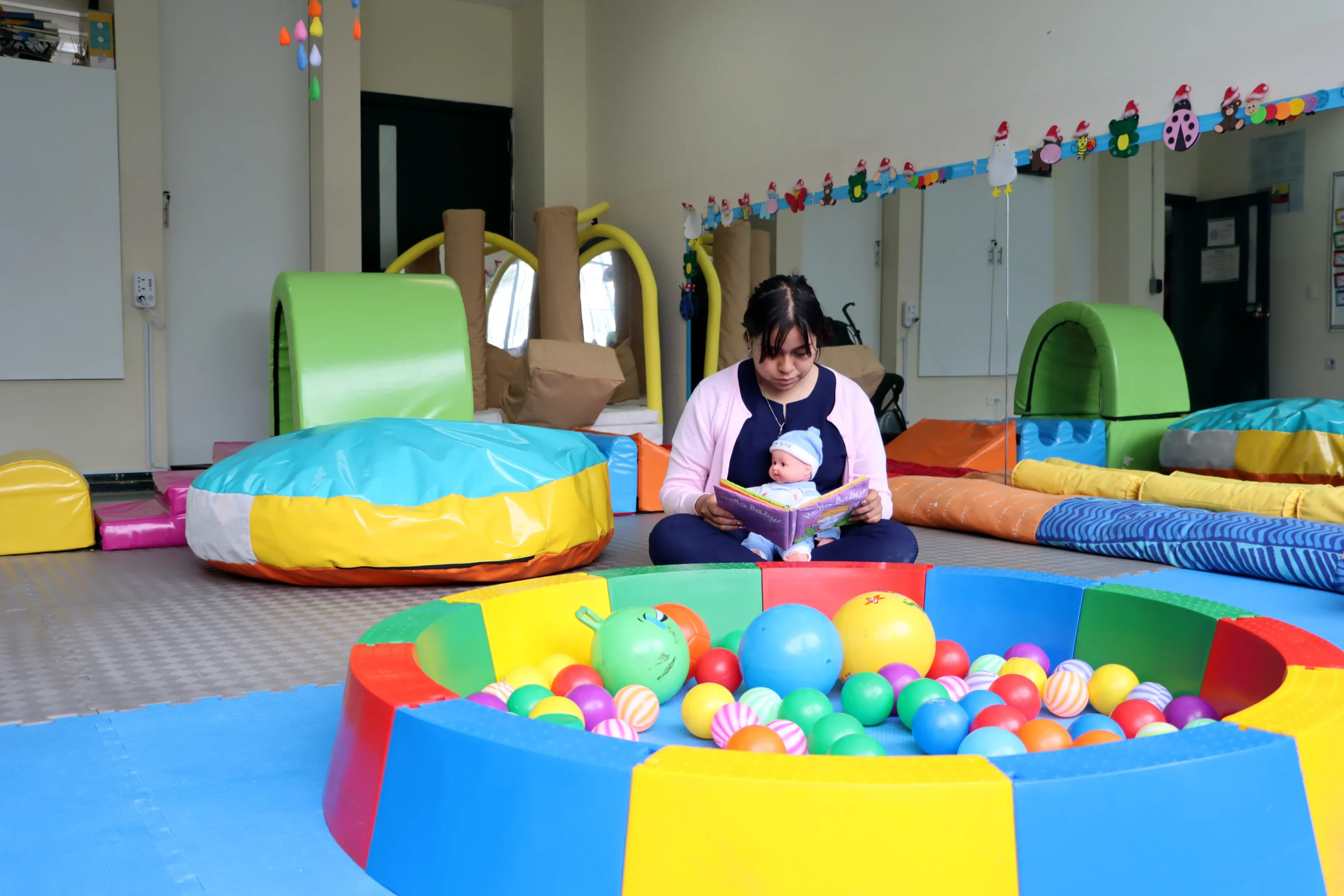
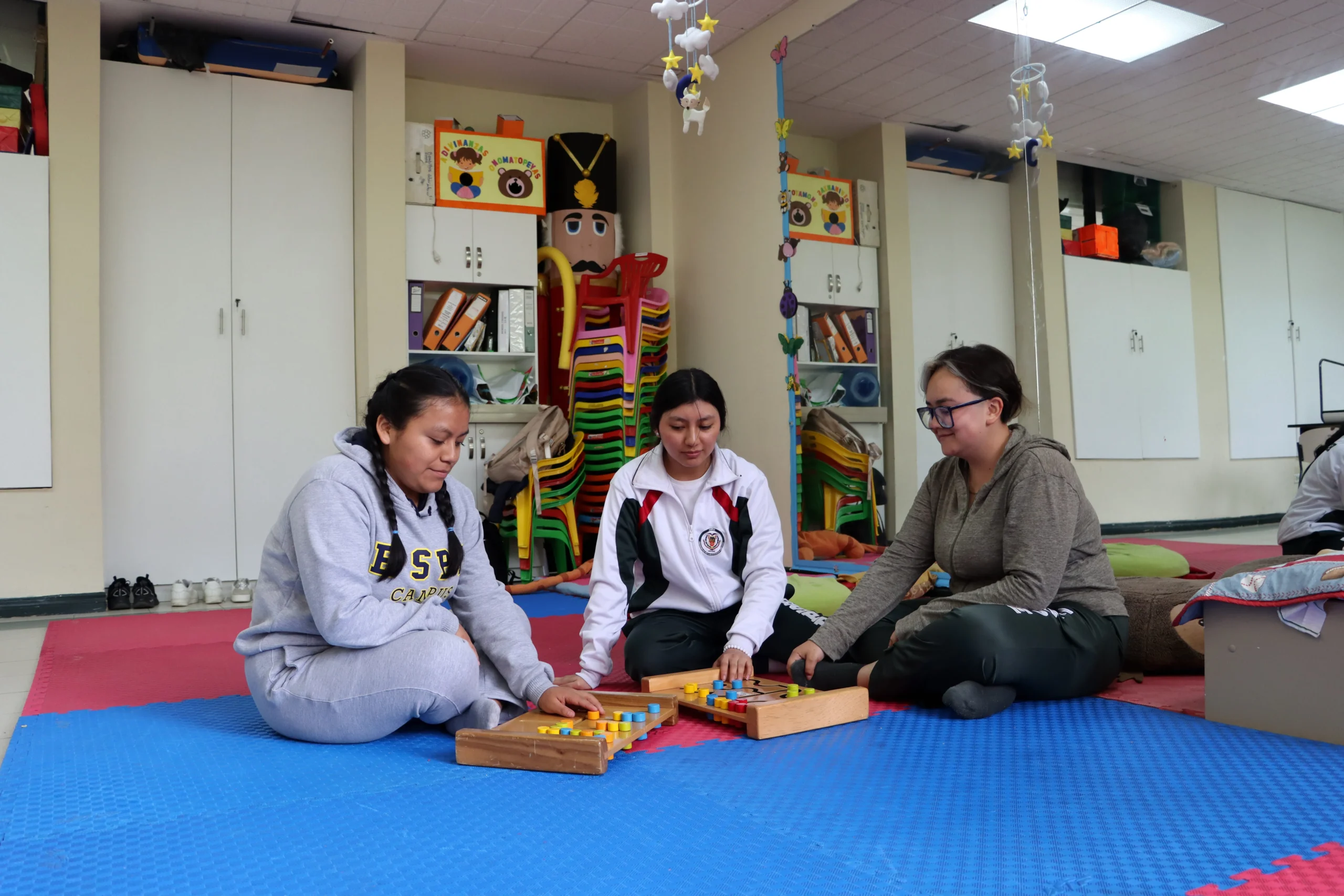
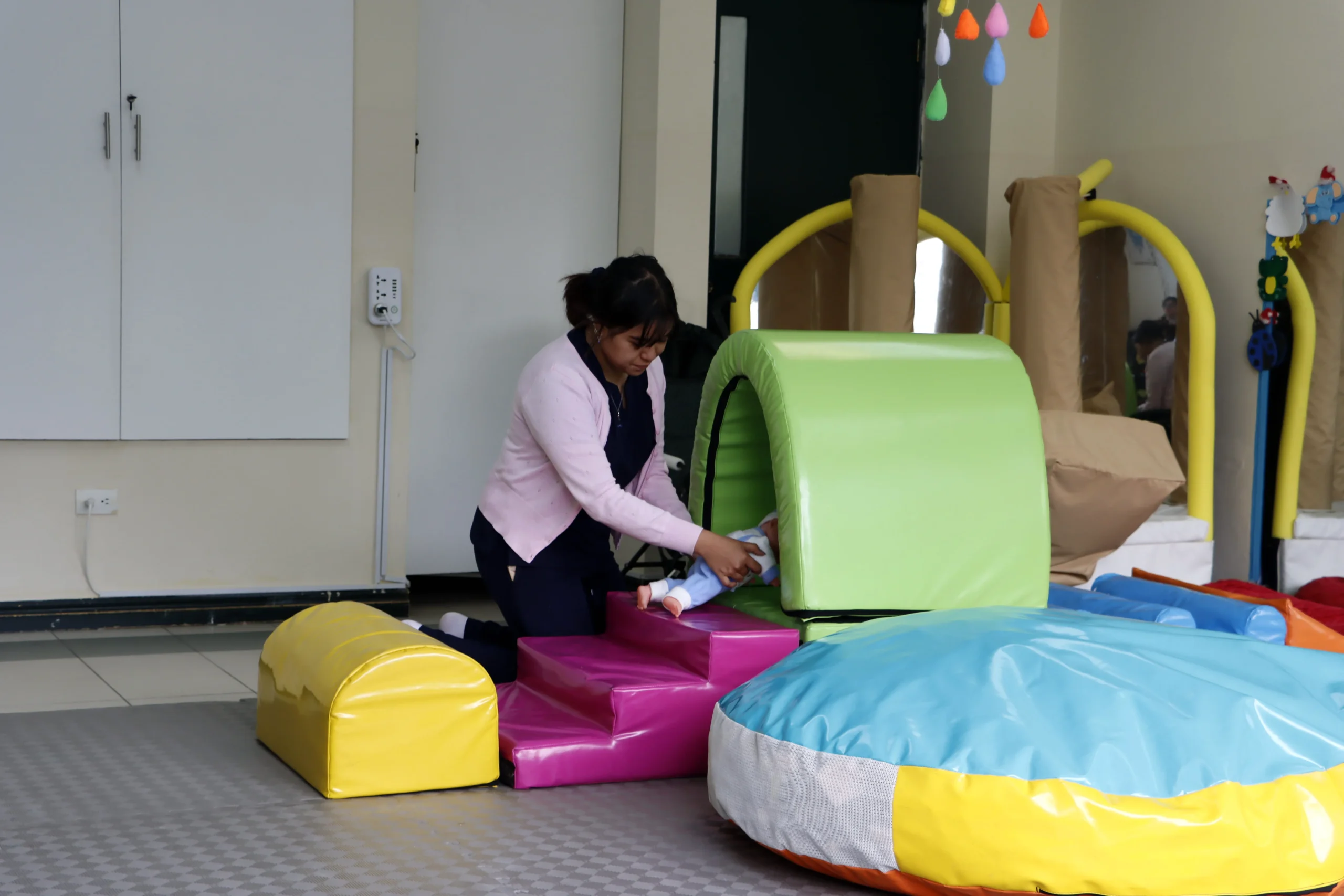
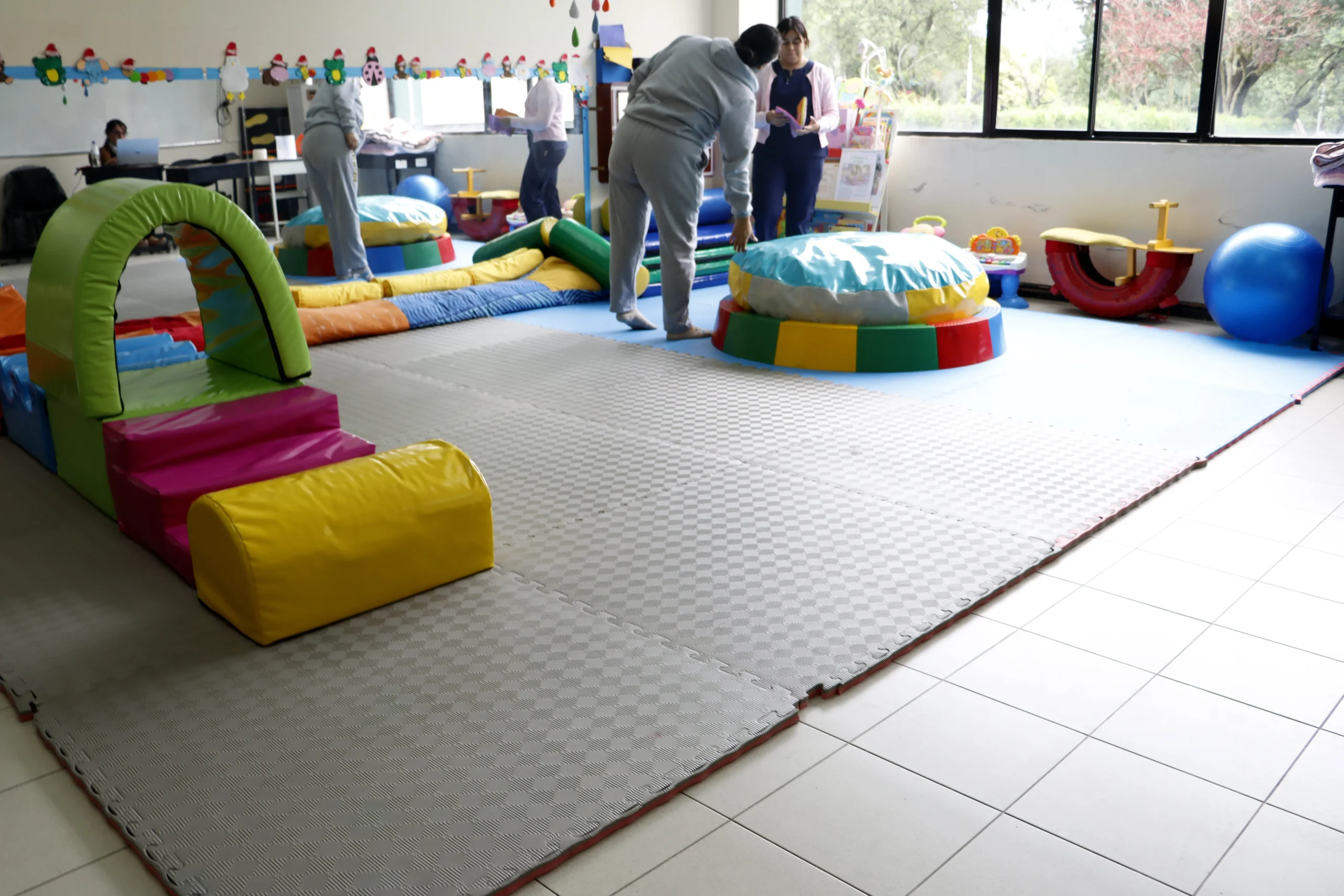
In the professional training of graduates holding a Bachelor’s Degree in Early Childhood Education within the field of Educational Sciences, their work environment comprises the settings in which future professionals of the Early Childhood Education program will be employed. These settings may include:

  • Child Development Centers for Good Living (CIBV)
  • Growing with Our Children (CNH),
  • Child Development Centers (CDI),
  • Educational Units in the First Year of Basic Education – Preparatory Level
  • Reception Institutions for Early Childhood Care
  • Municipal Early Childhood Education Centers

  • Early Stimulation Centers
  • Play Centers (Ludotecas) – Hospital Educational Intervention
  • Demand for competencies in Early Childhood Education in areas such as advisory services for didactic materials, educational books, and learning environments.
  • Public and private health centers that provide care to pregnant women, for the development of prenatal education, parent education programs in educational institutions, foundations or NGOs, and educational institutions that support adolescent mother

What learning outcomes or achievements will enable the development of the capacities and attitudes of future professionals to strengthen their values related to relevance, bio-consciousness, responsible participation, honesty, and others?

-Develops values, attitudes, and qualities for Good Living that promote ethics and civic responsibility throughout the professional trajectory.

-Manages diverse professional fields and environments in an innovative manner, incorporating social entrepreneurship within the domain of educational knowledge.

– Development of sensitivity and critical analysis in response to works of art or artistic phenomena in auditory and visual manifestations.

– Applies leadership from a contextualized perspective.

– Critically analyzes the profession’s deontological protocols.

– Values professional education and practice as the foundation of their life plan.

-Recognizes and values early childhood education from the ancestral cultures of Zones 2 and 9.

Applies, in a relevant manner, the foundational principles of Early Childhood Education public policies within institutional, family, and community contexts.

Analyzes principles of child development to provide a theoretical foundation, based on theories, models, and paradigms of the teaching–learning process within socio-educational systems.

Integrates sociological, anthropological, psychopedagogical, and neurocognitive theories into the development and management of pedagogical models.

Designs, manages, and evaluates contextualized and inclusive curricular models, integrating media convergence for educational purposes in early childhood education.

Organizes and manages inclusive and collaborative learning communities, relevant to their context, that generate opportunities for the development of intercultural and democratic learning environments.

Uses communication resources and ICT to expand sources of information and socio-educational interactions in the creation of open, democratic, intercultural, and inclusive learning environments.

Organizes, interprets, constructs, and evaluates knowledge in a critical, creative, and integrated manner, oriented toward practice and metacognition.

Leads educational processes through engagement with the issues of individuals, systems, processes, and learning contexts that constitute the object of pedagogical knowledge.

Designs, plans, implements, and evaluates contextualized, flexible educational programs and projects adapted to the learning needs of educational subjects.

Organizes, interprets, constructs, and evaluates knowledge in a critical, creative, and integrated manner, oriented toward practice and metacognition.

Operationalizes the policies, laws, and regulations governing early childhood care and education established by the Ecuadorian State.

Analyzes the historicity of education, highlighting national and international pedagogical thought.

Systematizes procedures and techniques in the use of language for aesthetic, persuasive, and communicative purposes.

Develops processes of analysis, systems, and logic through electronic intelligence applied to the enhancement of teaching thinking.e.

Identifies alternative modalities for the use of technology in the evaluation and research of early childhood educational software and for educational needs.

Develops statistical thinking through the use of strategies and the interpretation of statistical representations, with argumentative capacity for problem-solving.

Demonstrates an entrepreneurial and innovative attitude.

Conducts a geopolitical assessment of the global and national context.

Diagnoses, understands, and intervenes through proposals and research in socio-educational phenomena, processes, and systems.

Designs, plans, implements, and evaluates contextualized, flexible educational programs and projects adapted to the learning needs of educational subjects.

Applies action research in the processes of diagnosis, design, planning, implementation, evaluation, and systematization of educational reality.

Curriculum Structure

Academic structure of the program

Current Curriculum

Gallery Gallery

Spaces, moments, and experiences that bring the program to life

Admissions and costs

Spaces, moments, and experiences that bring the program to life

Acreditacion Chile

CES Resolution

RPC-SO-15-No 309-2020

Program Code

ISOF-SQ-2023

Accreditation

In process

Application Dates

March – April 2025 / August – September 2025

Program cost:

Article 356 of the Constitution of the Republic establishes, among other principles, that third-level public higher education shall be tuition-free, and that this gratuity is linked to the academic responsibility of students.

Begin your path in

Early Childhood Education

Join Universidad de las Fuerzas Armadas ESPE and become part of an

academic community of excellence with international reach.
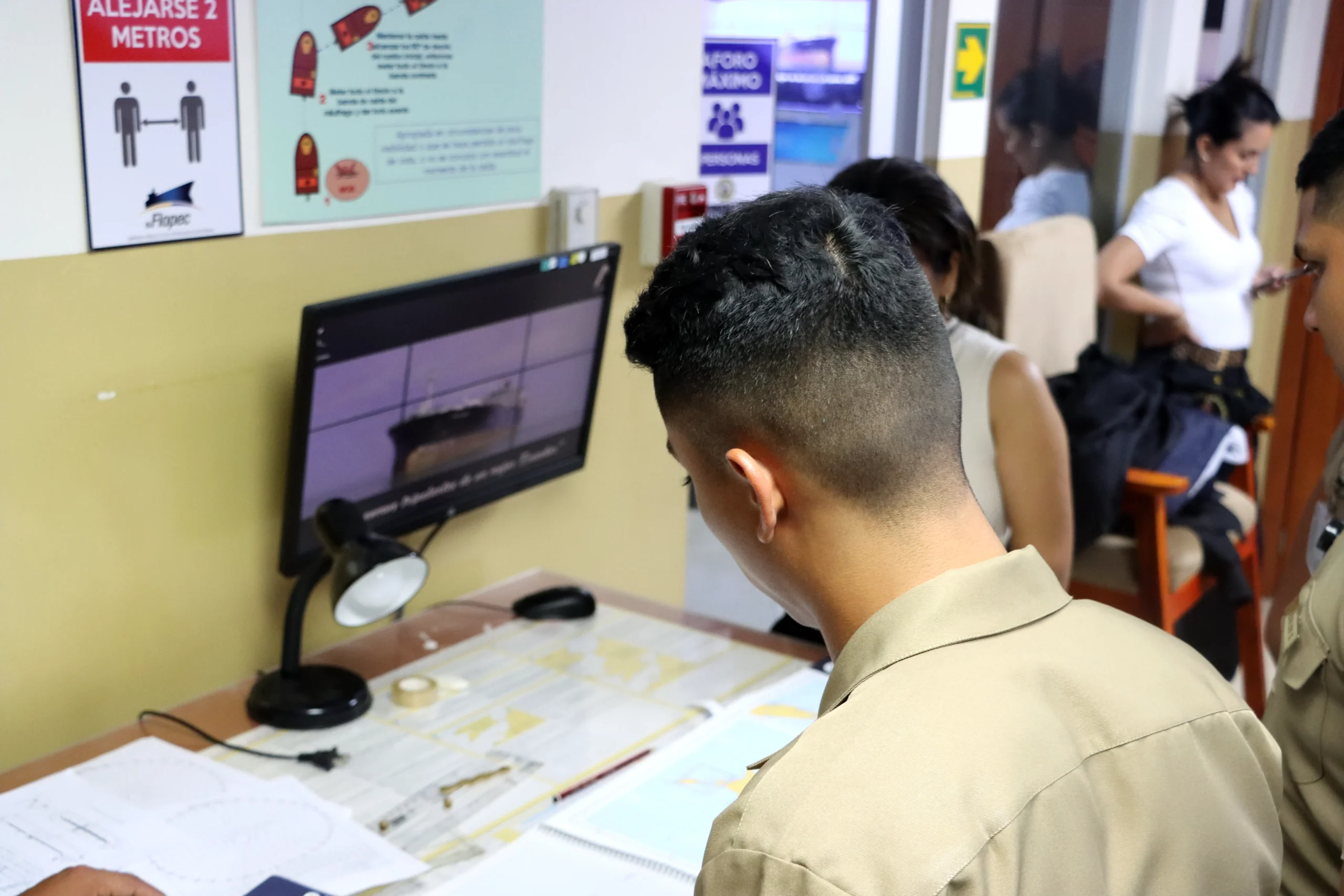
DEGREE

Civil Engineering

Select a campus

DEGREE

Civil Engineer

CES Resolution

RPC-SO-09_No. 086-2020

DURATION

4 Years

MODALITY

On-campus

Academic Identity

Learn about the foundations of the program

To train Civil Engineers capable of designing, executing, and evaluating processes related to the production of goods and services in an integral manner, capable of promoting community development through participation in projects and works, protecting the environment and carrying out their activities with leadership, professional ethics, and fostering technological innovation.

By 2025, to be recognized as a program that contributes to national development, with active participation in projects, research, and community outreach for the solution of social problems.

To train Civil Engineers, capable of applying the basic sciences in the models, designs, construction, direction and supervision in the theoretical, technological, research, methodological and instrumental fields according to the advances, trends and innovations of the science and technology of the career, to solve problems in the areas of structures, hydrosanitary, roads, projects and new, traditional, small and medium-sized assets, intelligent and/or self-sustainable, which respond to the needs of society and culture in a critical, creative way, in harmony with the economic, financial and environmental aspects of current regulations.

1. To knowledge and learning

Conceive, calculate, design, implement, and operate civil works projects in the areas of structures, roads and field, hydro-sanitary systems, projects, and construction throughout the training process, through a flexible curriculum centered on student learning, and incorporating an early approach to the profession through field visits, laboratory and field activities, as well as outreach actions through project proposals and execution that allow for the practical application of knowledge in a real context, with an ethical attitude, harmonizing technical, economic, financial, and environmental aspects with current regulations.

2. To relevance

Respond to the need for basic infrastructure, housing, sanitation, drinking water systems, sewerage, and roads, and contribute technical solutions to the destructive action of natural disasters, such as earthquakes, river flooding, landslides, and collapses, allowing for the improvement of citizens' living conditions through safe, comfortable, sustainable, and self-sufficient projects.

3. To learning processes

Develop competencies in students so that when conceiving, calculating, designing, implementing, and operating civil works projects in the areas of structures, roads and field, hydro-sanitary systems, projects, and construction, they are flexible, capable of contributing to innovation and creativity, and able to face uncertainties; they are interested in lifelong learning and prepared for it, with social sensitivity and communication skills; to work in teams, and to assume responsibilities for research and the application of new technologies.

4. To integral citizenship

Integrate management, innovation, research, and outreach in the projects undertaken, respecting interculturality, gender focus, participation, and ancestral knowledge, in pursuit of improving the population's quality of life.

Program video

Experience studying Civil Engineering

Discover daily life in our classrooms, laboratories, and academic spaces. Students, faculty, and researchers share their stories.

Learn about the foundations of the program

Profiles and outcomes

The professional we train and the competencies you will develop

The activities of a civil engineer are closely linked to the development of society and its economic growth. They are focused on civil works in the fields of:

  • Planning
  • Execution
  • Control
  • Administration
  • Operation
  • Maintenance

The graduate of the Civil Engineering program will be capable of solving problems, calculating, designing, constructing, auditing, planning, managing, advising, and researching in the areas of Structures; Roads and Field; Hydro-sanitary Systems; Projects and Construction, through the application of fundamental basic sciences, technical construction standards, and the use of cutting-edge technology; always acting with technical criteria, ethics, honesty, discipline, responsibility, and strict application of quality criteria.

Identifies the physical-geographical reality and the intrinsic characteristics of construction materials, respecting the surroundings and the environment of the areas of influence; characterizes materials from physical, chemical, and mechanical perspectives, applying practices based on scientific rigor, technical standards, and logical reasoning, using technical-practical language.

Prepares plans with graphical representation of Civil Engineering components and elements, in strict compliance with current regulations, using technical language and applying physical and mathematical theories, laws, principles, and concepts; performs analysis in the process of soil and deposit formation; recognizes the influence of increased moisture on soil behavior and calculates geostatic and surface-transmitted stresses to the soil; uses iterative modeling methods for the analysis and design of hydraulic works, respecting the economy, culture, environment, beliefs, and user requirements.

Calculates and designs essential structures in strict compliance with current regulations to guarantee safety and economy; through the planning, administration, and control of works and projects, integrating knowledge from the different areas of Civil Engineering.

Formulates, designs, and develops Civil Engineering projects, distributing activities, allocating resources, and utilizing technological innovations with the application of technical, legal, financial, and environmental regulations.

Develops earthquake-resistant projects using horizontal diaphragms, shear walls, energy dissipators, and seismic isolators; likewise, examines structures built with biomaterials using finite models and proposes the application of innovative biological, mechanical, and structural fundamentals.

Interprets and solves real-world problems by applying research methods, scientific methods, technological tools, and various information sources in national and foreign languages, with honesty, responsibility, teamwork, and respect for intellectual property.

Demonstrates leadership qualities and an entrepreneurial spirit for the management of business and social projects in the public and private sectors; and promotes a culture of environmental conservation in professional and social practice.

Applies knowledge of basic sciences and Civil Engineering sciences; analyzes, plans, designs, constructs, supervises, and evaluates Civil Engineering works; prevents and evaluates risks in civil works, as well as identifies, assesses, and implements the most appropriate technologies.

Curriculum Structure

Academic structure of the program

Current Curriculum

Gallery Gallery

Spaces, moments, and experiences that bring the program to life

Admissions and costs

Spaces, moments, and experiences that bring the program to life

Acreditacion EUR ACE

CES Resolution

RPC-SO-15-No 309-2020

Program Code

ISOF-SQ-2023

Accreditation

In process

Application Dates

March – April 2025 / August – September 2025

Program cost:

Article 356 of the Constitution of the Republic establishes, among other principles, that third-level public higher education shall be tuition-free, and that this gratuity is linked to the academic responsibility of students.

Begin your path in

Civil Engineering

Join Universidad de las Fuerzas Armadas ESPE and become part of an

academic community of excellence with international reach.
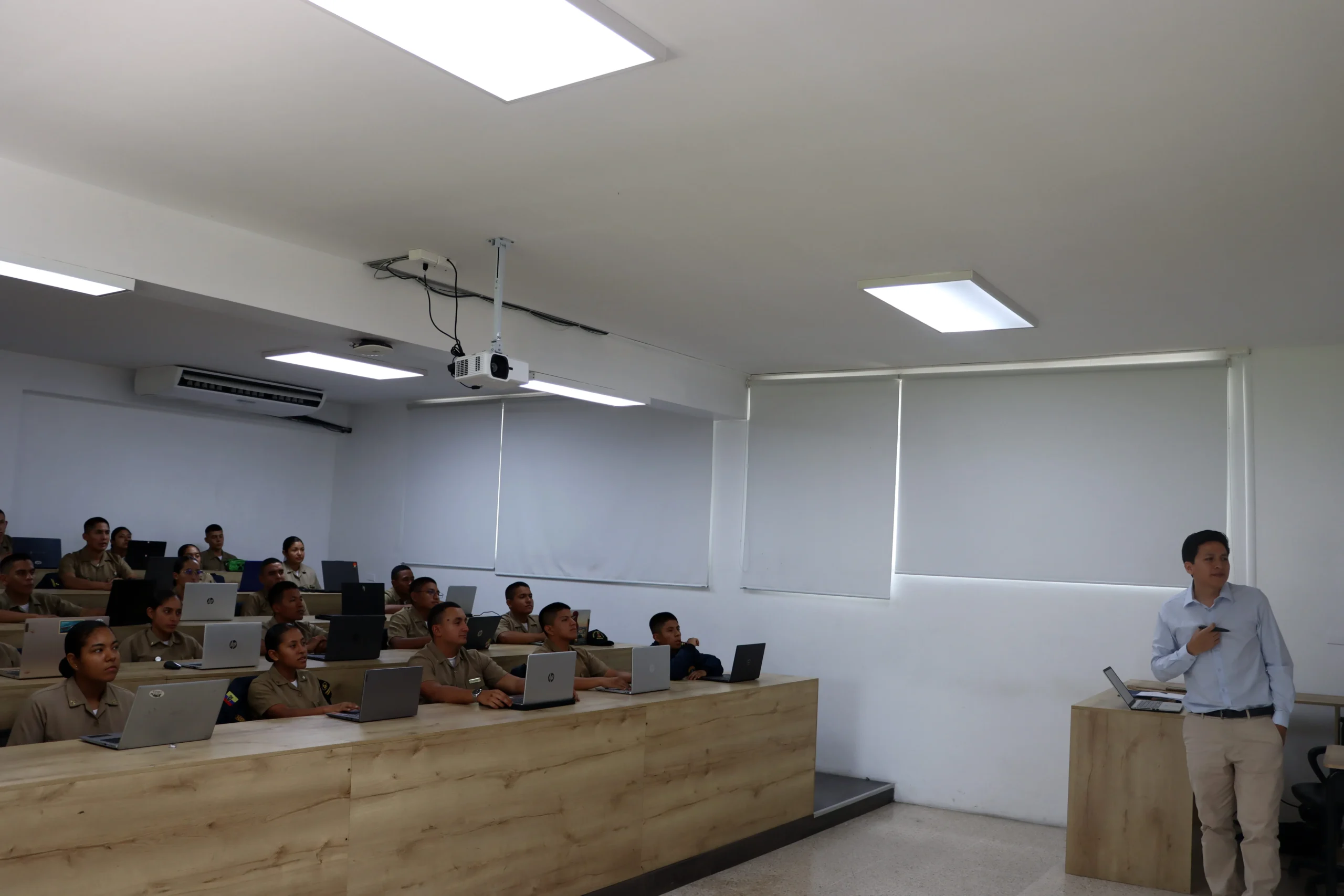
DEGREE

Online Tourism

Select a campus

DEGREE

Bachelor’s Degree in Tourism

CES Resolution

RPC-SO-35-No-596-2023

DURATION

4 Years

MODALITY

Online

Academic Identity

Learn about the foundations of the program

To educate outstanding professionals capable of effectively managing and addressing the challenges of sustainable tourism development, with awareness of global processes and the resulting intercultural integration, grounded in humanistic, ethical, and moral values committed to society, articulating the public and private sectors to position the country as a destination of excellence.

To be leaders at the national and Latin American levels in the comprehensive training of professionals in tourism management, contributing to the new demands of the global environment through research and innovation, within the parameters of ethical sustainability and governance.

To train tourism professionals with a strong personal and ethical identity, capable of integrating theoretical, methodological, and technological knowledge for the management, research, and innovation of tourism activities, promoting sustainable development, interculturality, and respect for ancestral knowledge, with a critical perspective, leadership, and social commitment in local, national, and international contexts.

Strengthen the implementation of sustainable tourism activities: Develop competencies to plan, organize, and deliver tourism services, ensuring professional practice aligned with current trends.

Optimize the operation of tourism services: Implement management tools that contribute to the effective delivery of tourism services.

Design and innovate contextualized tourism proposals: Develop innovative tourism products and projects, aligned with the territorial context and sociocultural dynamics, that contribute to local development through the participation of sector stakeholders.

Promote ethical, inclusive, and sustainable tourism management: Integrate cultural, social, economic, and environmental diversity into decision-making, developing sustainable tourism projects based on research, critical thinking, leadership, and commitment to the responsible development of the sector.

Program video

Experience studying Tourism

Discover daily life in our classrooms, laboratories, and academic spaces. Students, faculty, and researchers share their stories.

Learn about the foundations of the program

Profiles and outcomes

The professional we train and the competencies you will develop

The tourism professional is trained to plan, organize, direct, and evaluate tourism projects and services, promoting the responsible use of natural, cultural, and heritage resources, with the aim of fostering local, regional, and national development. They possess a strong ethical, analytical, and critical foundation, enabling them to design and manage innovative tourism products, as well as administer companies and/or organizations within the tourism sector with criteria of quality, competitiveness, and sustainability.

Based on their capacities, attitudes, and values:
Strengthens their personal and professional identity and cultivates self-esteem; develops critical thinking, deductive reasoning, and the use of analogies, thereby shaping cognitive structures and affective development.
– Applies ethical, spiritual, and humanistic principles, inclusive of diverse worldviews, diversity of abilities, and interculturality
-Respects knowledge within the ancestral and sustainable tourism context of different regions.
– Critically embraces historical changes and fosters openness to the new, the creative, and the diverse.
– Complies with the regulations established within the national and international legal framework governing tourism activities.
Operates within multidisciplinary teams with assertive communication, engaged in negotiation and conflict management to resolve problems in the tourism field.
– Manages tourism activities with ethics, leadership, responsibility, and quality.
Based on the theories, conceptual systems, methods, and languages for the integration of knowledge, the profession, and research:
-Organizes and integrates knowledge, identifying updated and specialized concepts and theories within their field of training. Possesses a general culture pertinent to their profession, including the use of ICTs and the application of information-gathering techniques for research.
-Develops, analyzes, and evaluates the quality of resources, services, ecosystems, and their components through applied research processes in tourism activities.
-Possesses knowledge of the social, cultural, economic, and political aspects of the community, enabling the management of innovative public–private projects for destination development.
– Applies principles of sustainability in sensitive natural areas through environmental interpretation and education; recognizes, respects, and values ancestral knowledge and the country’s heritage richness, and acknowledges their own identity.
– Understands the components of the tourism system through observation and characterizes tourism systems using techniques in tourism operations, management, entrepreneurship, and research, in compliance with sustainability standards.
-Identifies opportunities and shortcomings in tourism activity through characterization and diagnosis using technological tools, while respecting sustainability standards.
– Demonstrates skills and capacities for information management, research, and intervention in processes of tourism operations, management, and research.
– Integrates ancestral knowledge, interculturality, and gender equity of peoples in relation to different technological applications.
-Uses logical, critical, and creative thinking for the understanding, explanation, integration, and communication of knowledge within tourism.
-Undertakes entrepreneurship and innovation across diverse scenarios of tourism activity.
– Communicates, through a thesis, ethnography, or comprehensive examination, the design, development, and evaluation of a tourism management process or the creation of tourism products within the framework of sustainability.
– Systematically applies national and/or international policies, enabling them to manage global tourism trends.

In relation to the management of professional and research models, protocols, processes, and procedures:
Resolves problems arising within tourism operations through knowledge of the tourism potential of areas of influence; implements administrative and operational processes to ensure quality in the tourism system.
– Contributes to the development of new sustainable public policies with ethics and commitment, for the implementation of strategic tourism events and projects that support the positioning of the country’s tourist destinations.

1. Execute tourism activities considering criteria of quality, safety, and sustainability, in a planned, systematic, and reflective manner

2. Implement techniques and procedures for the operation of tourism services, ensuring efficiency, effectiveness, and regulatory compliance in their delivery.

3. Design innovative tourism proposals aligned with the territorial context that contribute to local development and can be implemented with tourism stakeholders.

4. Value economic, cultural, social, and environmental diversity in the tourism context, integrating ethical principles and sector knowledge for inclusive and responsible decision-making.

5. Develop sustainable tourism projects that respond to the real needs of the environment, integrating knowledge of planning, management, innovation, and sustainability; applying research and critical thinking to propose creative and viable solutions, with leadership, professional ethics, and commitment to the responsible development of tourism.

Curriculum Structure

Academic structure of the program

Current Curriculum

Non-Current Curriculum

Gallery Gallery

Spaces, moments, and experiences that bring the program to life

Admissions and costs

Spaces, moments, and experiences that bring the program to life

ACBSP Photoroom Accreditation

CES Resolution

RPC-SO-15-No 309-2020

Program Code

ISOF-SQ-2023

Accreditation

In process

Application Dates

March – April 2025 / August – September 2025

Program cost:

Article 356 of the Constitution of the Republic establishes, among other principles, that third-level public higher education shall be tuition-free, and that this gratuity is linked to the academic responsibility of students.

Begin your path in

Turism

Join Universidad de las Fuerzas Armadas ESPE and become part of an

academic community of excellence with international reach.
DEGREE

Advanced University Technology in Electricity

Select a campus

DEGREE

University Higher Technologist in Electricity

CES Resolution

RPC-SO-49-No.742-2025

DURATION

3 years

MODALITY

On-campus

Academic Identity

Learn about the foundations of the program

To train university higher technologists in electricity with strong technical, technological, and ethical competencies, capable of executing the installation, operation, maintenance, and optimization of electrical systems, contributing to sustainable development, energy efficiency, and the modernization of the country’s electrical sector.

To be a leading technological program at the national level in the training of human talent in electricity, recognized for its academic quality, engagement with society and the productive sector, and its contribution to sustainable energy development, through the integration of innovative technologies and continuous improvement processes.

To train university higher technologists in electricity with a high level of competencies to execute, operate, and maintain electrical systems in diverse environments, applying technical, regulatory, and safety procedures, integrating innovative and sustainable technologies that contribute to the development of the energy sector.

To develop in students the knowledge and skills required for the installation, operation, and maintenance of electrical systems, distribution networks, and electrical equipment.

To ensure the application of technical standards and safety protocols in the management of electrical installations and systems.

To promote the use of modern technologies such as automation, digital tools, and artificial intelligence in electrical processes.

To promote energy efficiency and the use of renewable energy sources in electrical systems, contributing to environmental protection.

To strengthen practical training through collaboration with companies in the electrical, industrial, and energy sectors.

To train students to diagnose faults and apply technical solutions in electrical systems.

To promote values of responsibility, professional ethics, and commitment to social and community development.

Program video

Experience the opportunity of studying a University Higher Technology program in Electricity

Discover daily life in our classrooms, laboratories, and academic spaces. Students, faculty, and researchers share their stories.

Learn about the foundations of the program

Profiles and outcomes

The professional we train and the competencies you will develop

Graduates of the University Higher Technology program in Electricity will be competent professionals capable of executing installation, operation, maintenance, and coordination tasks for electrical systems, applying technical and regulatory procedures that ensure the safety, efficiency, and sustainability of electrical infrastructure.

The University Higher Technologist in Electricity will be a highly qualified professional capable of installing, operating, maintaining, and optimizing electrical systems, ensuring their efficiency, safety, and sustainability. Depending on their specialization pathway, they may work in various strategic fields within the electrical sector.

Specialization Pathway in Maintenance and Operation of Electrical Infrastructure:

The professional will be prepared for the installation, operation, and maintenance of electrical networks, distribution lines, and substations, applying advanced preventive and corrective maintenance methodologies.

In addition, they will be capable of managing electrical infrastructure through the use of innovative technologies and control systems, ensuring the reliability and continuity of power supply in industrial, commercial, and urban environments.

Installation and operation of renewable energy generation plants:

The professional specializes in the installation, operation, and maintenance of clean energy generation systems, with an emphasis on hydroelectric, solar, and wind. It will be able to integrate these technologies into the electricity grid, optimising its efficiency and contributing to the sustainable energy transition.

In addition, they will apply energy efficiency strategies and environmental regulations to promote the responsible use of energy resources in industrial and community projects.

In both pathways, the technologist will demonstrate skills in the application of electrical regulations, project management, and the use of digital tools for the monitoring and control of electrical systems, thereby contributing to the country’s technological and energy development; additionally, they will be distinguished by their ability to work in teams, provide leadership in conventional and alternative electrical projects, promote sustainability and innovation, and actively contribute to the development of the energy sector and the country’s electrical infrastructure.

To develop knowledge in electrical fundamentals, electromagnetism, and power systems to design and maintain electrical infrastructure in accordance with international standards.

To operate and optimize electrical networks and substations, as well as the installation and operation of renewable generation plants with AI-based maintenance.

To apply automation (PLC, SCADA) and digital tools (CAD, georeferencing).

To manage electrical projects with a focus on energy efficiency and safety.

To diagnose faults and propose innovative solutions, complying with international standards and promoting safety and sustainability.

Curriculum Structure

Academic structure of the program

Current Curriculum

Gallery Gallery

Spaces, moments, and experiences that bring the program to life

Admissions and costs

Spaces, moments, and experiences that bring the program to life

CES Resolution

RPC-SO-15-No 309-2020

Program Code

ISOF-SQ-2023

Accreditation

In process

Application Dates

March – April 2025 / August – September 2025

Program cost:

Article 356 of the Constitution of the Republic establishes, among other principles, that third-level public higher education shall be tuition-free, and that this gratuity is linked to the academic responsibility of students.

Begin your path in

University Higher Technology

in Electricity

Join Universidad de las Fuerzas Armadas ESPE and become part of an

academic community of excellence with international reach.
DEGREE

University Higher Technology in Electronics and Telecommunications

Select a campus

DEGREE

University Higher Technologist in Electronics and Telecommunications with a Specialization Pathway in Networking and Network Securit

DEGREE

University Higher Technologist in Electronics and Telecommunications with a Specialization Pathway in Optical Networks

CES Resolution

RPC-SO-49-No.742-2025

DURATION

3 years

MODALITY

On-campus

Academic Identity

Learn about the foundations of the program

To train technological professionals in Electronics and Telecommunications with strong technical, scientific, and ethical preparation, capable of implementing, operating, maintaining, and adapting electronic and telecommunications infrastructures, contributing to technological development, digital transformation, and reducing the connectivity gap in the country.

By 2030, the Electronics and Telecommunications program will be recognized at the regional and national levels for training highly competent university technologists with a practical approach, capacity for innovation, and strong links to the productive sector, contributing to the development of smart networks, advanced connectivity, and Ecuador’s digital transformation.

To train university higher technologists in Electronics and Telecommunications with competencies to implement, operate, maintain, and optimize electronic and telecommunications systems, ensuring the continuity, security, and efficiency of technological services across different productive sectors.

To develop competencies in the installation, configuration, and maintenance of telecommunications networks.

To strengthen skills in electronic systems applied to technological infrastructure.

To provide training in optical networks, mobile networks, and emerging technologies such as IoT and 5G.

To apply network monitoring, automation, and management tools.

To implement cybersecurity best practices within telecommunications environments.

To foster technical analysis and problem-solving in electronic and communication systems.

To promote applied research and technological innovation.

Program video

Experience the Advanced University Technology program in Electronics and Telecommunications.

Discover daily life in our classrooms, laboratories, and academic spaces. Students, faculty, and researchers share their stories.

Learn about the foundations of the program

Profiles and outcomes

The professional we train and the competencies you will develop

The Associate of Science in Electronics and Telecommunications is a professional with technical, scientific, and ethical training, oriented toward the implementation, integration, operation, supervision, and maintenance of electronic systems, telecommunications networks, and technological solutions.

Possesses an advanced university technology degree that enables high levels of technical autonomy and professional judgment, participating in the execution, support, and integration of technological projects across various industrial sectors.

Its scope of work focuses on the following areas:

  • Maintenance of electronic and telecommunications systems, ensuring the operational readiness, continuity, and reliability of equipment and technological infrastructure.
  • Integration of electronic security systems, home automation, building automation, and IoT, linking devices, sensors, and technology platforms to create smart solutions.
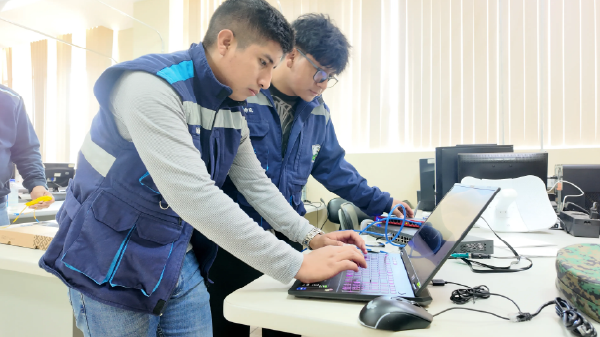
  • Deployment and maintenance of telecommunications systems, including fiber-optic networks and wireless systems.
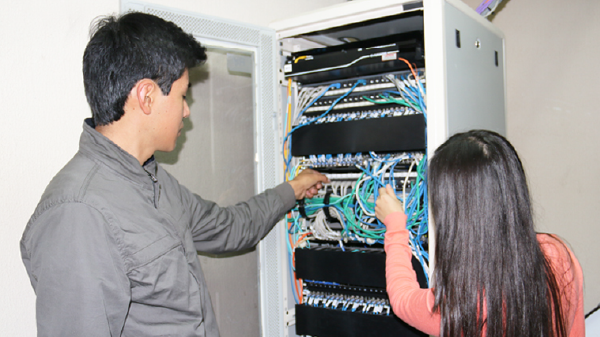
  • Planning, implementation, deployment, administration, and monitoring of data networks in corporate and residential environments, both wired and wireless.

You can work as a specialized technician, technology solutions integrator, network operator, electronic security assistant, or entrepreneur in the field of telecommunications and applied electronics.

Graduates of the Electronics and Telecommunications program are professionals with technical, scientific, and ethical training who are capable of analyzing, planning, implementing, integrating, operating, supervising, and maintaining electronic systems, telecommunications networks, and electronic security solutions, in accordance with national and international standards.

His training enables him to develop comprehensive technological solutions that combine electronics, data networks, and telecommunications, with a practical approach focused on problem-solving in the manufacturing, industrial, and social sectors.

As a Senior University Technologist, he is qualified to work on systems of greater technical complexity, particularly in the integration of technologies and the support of technology infrastructure projects.

It is capable of:

  • Perform preventive and corrective maintenance on electronic and telecommunications systems, ensuring the operational continuity of equipment and infrastructure.
  • Implement and integrate electronic security, home automation, building automation, and IoT systems, linking physical devices with communication networks.
  • Deploy and maintain telecommunications infrastructure, including fiber-optic networks and wireless systems.
  • Plan, implement, manage, and monitor corporate and residential data networks, both wired and wireless (Wi-Fi).
  • Install, configure, and maintain electronic equipment, network devices, and telecommunications systems.
  • Diagnose and troubleshoot faults in electronic systems, networks, and telecommunications services using specialized technical methodologies.
  • Manage networks using protocols, standards, and best practices, including infrastructure-level security (network security).
  • Monitor and optimize the performance of networks and systems using management and monitoring tools.
  • Participate in the planning, implementation, and technical support of projects in electronics, telecommunications, and networking.
  • Apply automation, programming, and data analysis tools to efficiently manage technology infrastructure.

Alignment with the Learning Paths

The graduate profile is enhanced through two areas of specialization:

  • Networking and Network Security: focused on the administration, operation, and protection of network infrastructures.
  • Optical Networks: focused on the deployment, operation, and maintenance of fiber-optic networks.

Configure, deploy, operate, and maintain data network infrastructures, applying standards, protocols, and security controls to ensure operational reliability, scalability, and data protection.

Install telecommunications infrastructure while taking into account regulations, emerging technologies, and installation methodologies to ensure service continuity.

Repair and integrate electronic systems into telecommunications infrastructure, ensuring their proper operation, security, and compatibility with data transmission networks.

Install and maintain power and backup systems for telecommunications infrastructure, adhering to electrical regulations and ensuring energy efficiency and operational safety.

Install optical networks by applying principles of light transmission, signal propagation, and multiplexing techniques to improve the capacity, efficiency, and reliability of telecommunications infrastructure.

Apply network monitoring and automation tools to the operation of emerging telecommunications systems.

Curriculum Structure

Academic structure of the program

Current Curriculum

Gallery Gallery

Spaces, moments, and experiences that bring the program to life

Admissions and costs

Spaces, moments, and experiences that bring the program to life

CES Resolution

RPC-SO-15-No 309-2020

Program Code

ISOF-SQ-2023

Accreditation

In process

Application Dates

March – April 2025 / August – September 2025

Program cost:

Article 356 of the Constitution of the Republic establishes, among other principles, that third-level public higher education shall be tuition-free, and that this gratuity is linked to the academic responsibility of students.

Begin your path in

University Higher Technology

in Electronics and Telecommunications

Join Universidad de las Fuerzas Armadas ESPE and become part of an

academic community of excellence with international reach.

DEGREE

Advanced Technology in Networks and Telecommunications

Select a campus

DEGREE

Senior Technician in Networking and Telecommunications

CES Resolution

RPC-S0-15-No.302-2020

DURATION

2 years

MODALITY

On-campus

Academic Identity

Learn about the foundations of the program

To train professionals to meet society’s demands regarding information and communication technologies, contributing to the development of the country’s productive sector through the implementation of optical communication systems, networking and telecommunications equipment, and the use of tools that ensure the integrity, confidentiality, and reliability of information in public and private institutions.

By 2026, the Advanced Technology Program in Networking and Telecommunications will be a regional leader in training technical professionals in the field of ICT, recognized for its academic quality, practical approach, ties to the industry, and ability to adapt to technological trends in networking, telecommunications, and information security.

To train advanced network and telecommunications technicians with the skills to implement, manage, and maintain technological infrastructure, ensuring the efficient, secure, and reliable operation of communication systems in public and private organizations.

Develop skills in the installation and configuration of wired and wireless data networks.

Provide training in the administration and support of network equipment and services.

Strengthen skills in telecommunications systems and optical communications.

Apply best practices for computer security in network environments.

To foster entrepreneurial skills in the technology sector.

Promote the use of technological tools to ensure the availability and reliability of information.

Program video

Vive la experiencia de estudiar Tecnología Superior en Redes y Telecomunicaciones

Discover daily life in our classrooms, laboratories, and academic spaces. Students, faculty, and researchers share their stories.

Learn about the foundations of the program

Profiles and outcomes

The professional we train and the competencies you will develop

A Senior Network and Telecommunications Technologist may work as:

  • Network and Telecommunications Support Technician.
  • Installer of structured cabling systems and wireless solutions.
  • Technical Assistant in Network Server Administration.
  • Computer Network Installer and Administrator.
  • Technical Assistant in Optical Communications Systems.
  • Technical Supervisor for Network and Telecommunications Projects.
  • IT Security Assistant.
  • Mobile app development assistant.
  • Entrepreneur or manager of your own technology company.

Graduates of this program will be professionals with a solid technical background, capable of:

  • Implement, manage, and maintain data networks and telecommunications systems.
  • Apply technical criteria to solve problems related to technology infrastructure.
  • Ensure the safe and efficient operation of information systems.
  • Join multidisciplinary teams in the technology sector.
  • Act with ethical responsibility and a commitment to the development of the social and economic environment.
  • Adapt to technological changes and continue their professional development.

Formar profesionales de nivel Tecnológico Superior en Redes y Telecomunicaciones, mediante el desarrollo de competencias que permitan solucionar problemas de conectividad utilizando las tecnologías de la información y comunicación, para garantizar la integridad, confidencialidad y disponibilidad de la información.

Curriculum Structure

Academic structure of the program

Current Curriculum

Non-Current Curriculum

Gallery Gallery

Spaces, moments, and experiences that bring the program to life

Admissions and costs

Spaces, moments, and experiences that bring the program to life

CES Resolution

RPC-SO-15-No 309-2020

Program Code

ISOF-SQ-2023

Accreditation

In process

Application Dates

March – April 2025 / August – September 2025

Program cost:

Article 356 of the Constitution of the Republic establishes, among other principles, that third-level public higher education shall be tuition-free, and that this gratuity is linked to the academic responsibility of students.

Begin your path in

Advanced Technology in Networks and Telecommunications

Join Universidad de las Fuerzas Armadas ESPE and become part of an

academic community of excellence with international reach.
DEGREE

Advanced Automotive Mechanics Technology

Select a campus

DEGREE

Advanced Technician in Automotive Mechanics

CES Resolution

RPC-SO-15-No.302-2020

DURATION

2 years

MODALITY

On-campus

Academic Identity

Learn about the foundations of the program

To train outstanding automotive technology professionals who are well-rounded, possess leadership skills, critical thinking abilities, and a strong sense of civic responsibility; by developing the skills needed to install, maintain, repair, and optimize the performance of automotive systems to high standards of quality and productivity in accordance with national and international standards; and to provide and implement solutions to community problems, thereby promoting the comprehensive development of Ecuador.

To be a national leader in knowledge management and in the training of automotive technology professionals within the National Higher Education System, upholding national quality standards and accreditation through the practice of ethical and civic values, in service to society and its sustainable development.

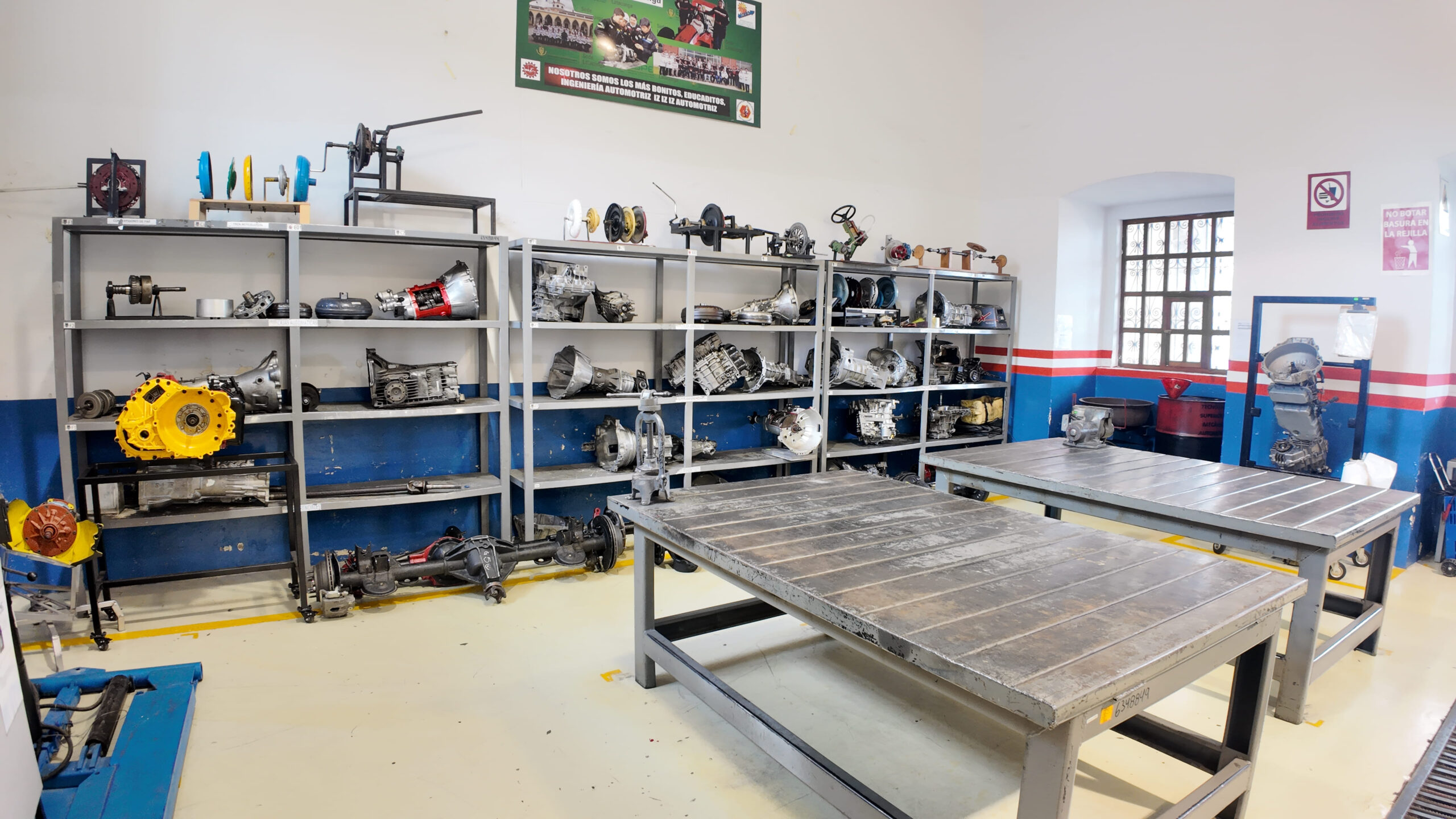
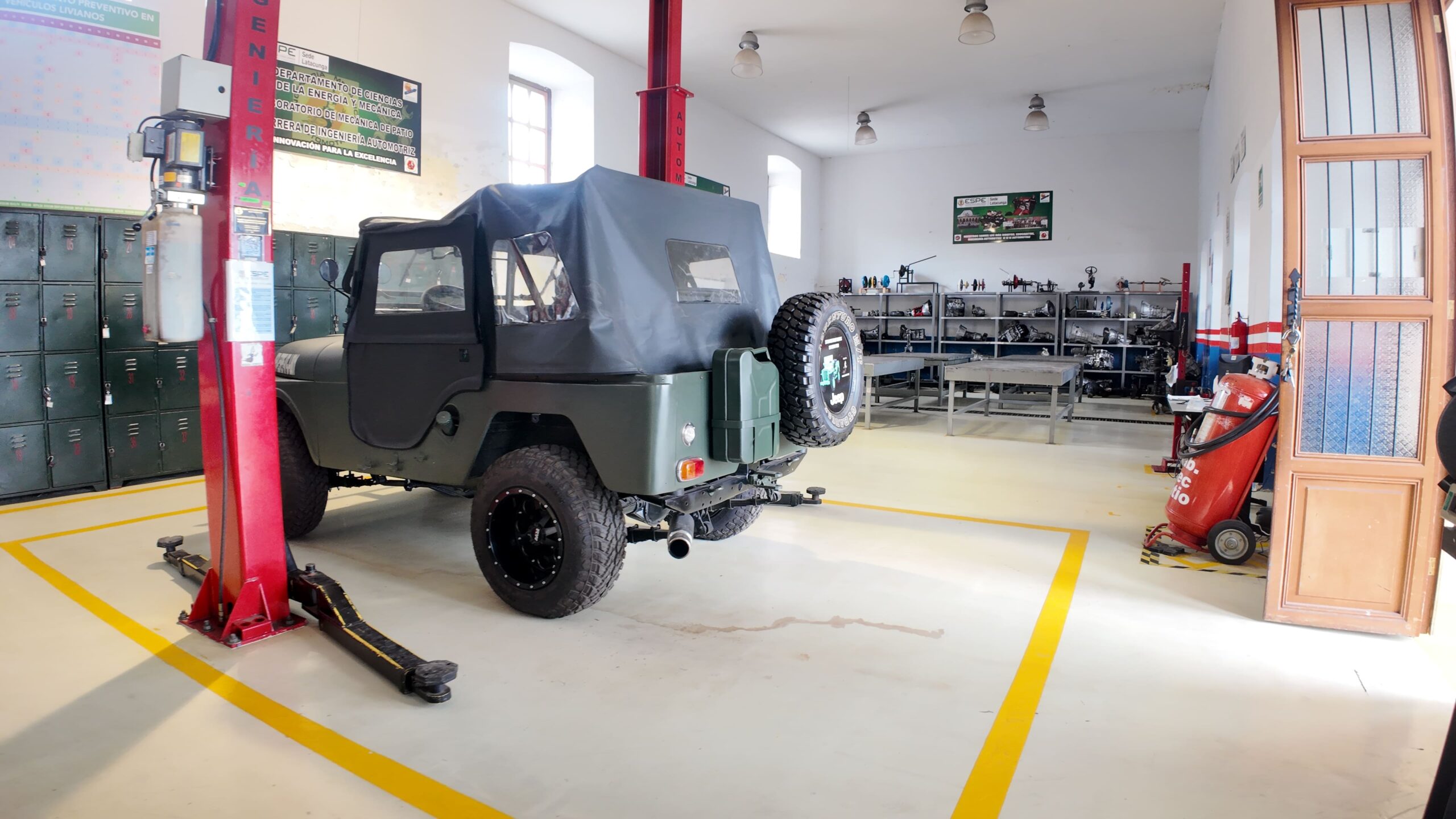
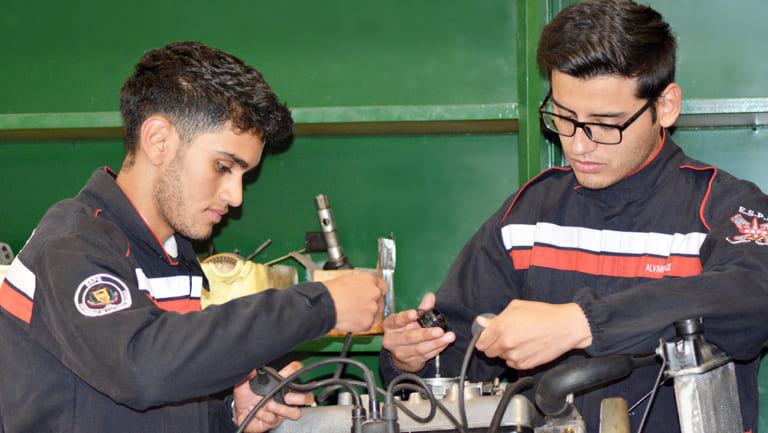
To train automotive mechanics who are qualified and skilled to install, maintain, and repair automotive systems through a well-rounded education in technical, scientific, and humanities subjects, while promoting teamwork, so that they can apply their knowledge and develop their skills in the workplace.

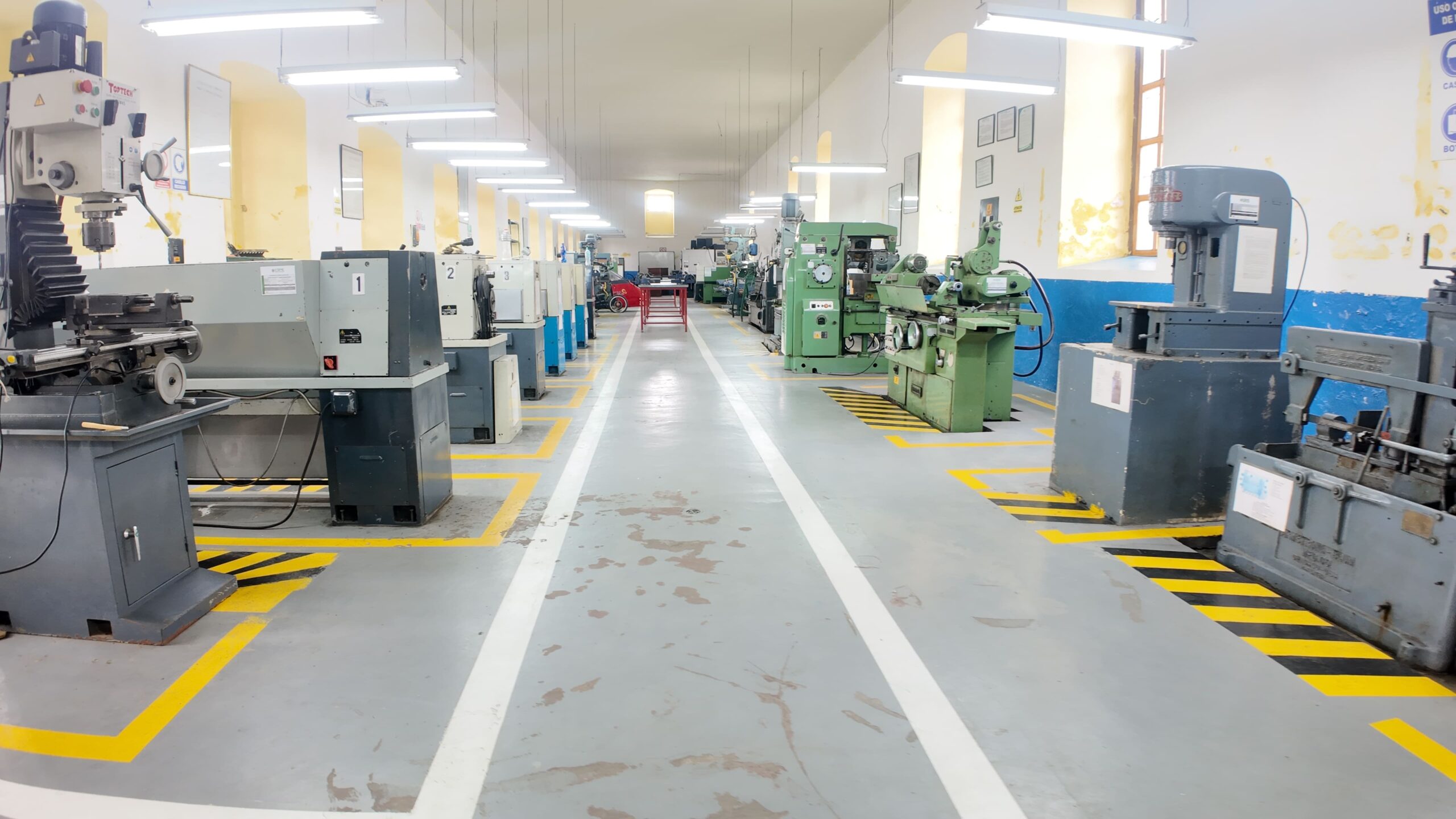
Develop and implement maintenance and repair plans by applying knowledge of the use of machinery and tools in various technical areas related to the automotive industry.

Use automotive diagnostic equipment to properly perform maintenance in the areas of mechanics, electrical and electronic systems, hydraulics, pneumatics, and hybrid technology, thereby contributing to the field of mechanics at the regional level in Zone 3.

Conduct pre-professional internships and community engagement projects as part of the theoretical and practical training process, aimed at developing skills and competencies in real-world work settings, in collaboration with public and private automotive institutions and organizations within the production sector.

Implement research processes grounded in traditional, scientific, and technical knowledge as applied to the automotive field, in order to improve mechanical diagnostic and maintenance procedures.

Program video

Vive la experiencia de estudiar Tecnología Superior en Mecánica Automotríz

Discover daily life in our classrooms, laboratories, and academic spaces. Students, faculty, and researchers share their stories.

Learn about the foundations of the program

Profiles and outcomes

The professional we train and the competencies you will develop

The professional profile for the Advanced Automotive Mechanics Technology program consists of the specific competencies identified in the labor market study, which enable students to succeed in the workforce through participation in community engagement projects and pre-professional internships in real-world automotive technology settings.

Automotive Maintenance Technician

  • Plan basic preventive and corrective maintenance for the mechanical, hydraulic, and pneumatic systems of vehicles in general.
  • Installs and repairs automotive electrical and electronic systems, ensuring high-quality work to optimize and/or adapt these systems to various automotive applications in accordance with environmental requirements, while complying with applicable standards.
  • Oversees the complete or partial disassembly of motor vehicles, interpreting blueprints and manuals for maintenance and repair.
  • Repairs or replaces defective components or parts of the systems found in vehicles.
  • Interprets technical drawings, diagrams, and specialized information in accordance with standards and specifications.
  • Applies technical standards for quality and industrial/environmental safety.

Automotive Machining Technician

  • Plan, execute, and innovate processes for the machining of components prone to wear in an internal combustion engine, such as cylinders, valves, crankshafts, main bearings, cylinder heads, and flywheels.

Auto Body Repair Technician

  • Coordinates and oversees maintenance, repairs, and finishing work on both metal and non-metal body panels found across the entire vehicle lineup.
  • Builds and repairs high-quality mechanical components to optimize and/or adapt them to different systems in accordance with the requirements of the environment, while complying with the relevant standards.
  • As a grinding technician, apply methods and processes to maximize the performance of internal combustion engines (Otto, Atkinson, and Diesel cycles) in order to reduce toxic pollutants produced by the industrial sector, working professionally in compliance with existing environmental regulations.
  • Implements plans in accordance with their role as an automotive maintenance technician, with responsibility for automotive mechanics, electrical systems, electronics, hydraulics, pneumatics, and hybrid technology, to ensure optimal performance in the sector and achieve quality and productivity levels in line with national and international standards.
  • As a body repair technician, the technician is capable of building and repairing high-quality mechanical components to optimize and/or adapt them to different systems in accordance with environmental requirements, while complying with the relevant standards.
  • As a maintenance technician, he installs and repairs automotive electrical and electronic systems, ensuring high-quality work to optimize and/or adapt these systems to various automotive applications in accordance with environmental requirements, while complying with the relevant standards.

Develops and implements maintenance and repair plans by applying knowledge of the use of machinery and tools in various technical areas related to the automotive industry.

Utiliza equipos de diagnóstico automotriz para la correcta realización de mantenimientos aplicados a las áreas de mecánica, eléctrica – electrónica, hidráulica, neumática y tecnología híbrida, para contribuir al campo detallado de la Mecánica a nivel regional en la zona 3.

Realiza prácticas pre profesionales y proyectos de vinculación con la sociedad en el proceso de formación teórico-práctico, orientadas a desarrollar habilidades y competencias, en escenarios laborales reales, vinculados a instituciones y organismos automotrices públicos y privados de los sistemas productivos.

Implement research processes grounded in traditional, scientific, and technical knowledge as applied to the automotive field, in order to improve mechanical diagnostic and maintenance procedures.

Curriculum Structure

Academic structure of the program

Current Curriculum

Non-Current Curriculum

Gallery Gallery

Spaces, moments, and experiences that bring the program to life

Admissions and costs

Spaces, moments, and experiences that bring the program to life

CES Resolution

RPC-SO-15-No 309-2020

Program Code

ISOF-SQ-2023

Accreditation

In process

Application Dates

March – April 2025 / August – September 2025

Program cost:

Article 356 of the Constitution of the Republic establishes, among other principles, that third-level public higher education shall be tuition-free, and that this gratuity is linked to the academic responsibility of students.

Begin your path in

Advanced Automotive Mechanics Technology

Join Universidad de las Fuerzas Armadas ESPE and become part of an

academic community of excellence with international reach.
This site is registered on wpml.org as a development site. Switch to a production site key to remove this banner.