






ESPE

Menu

DEGREE

Online Tourism

Select a campus

DEGREE

Bachelor’s Degree in Tourism

CES Resolution

RPC-SO-35-No-596-2023

DURATION

4 Years

MODALITY

Online

Academic Identity

Learn about the foundations of the program

To educate outstanding professionals capable of effectively managing and addressing the challenges of sustainable tourism development, with awareness of global processes and the resulting intercultural integration, grounded in humanistic, ethical, and moral values committed to society, articulating the public and private sectors to position the country as a destination of excellence.

To be leaders at the national and Latin American levels in the comprehensive training of professionals in tourism management, contributing to the new demands of the global environment through research and innovation, within the parameters of ethical sustainability and governance.

To train tourism professionals with a strong personal and ethical identity, capable of integrating theoretical, methodological, and technological knowledge for the management, research, and innovation of tourism activities, promoting sustainable development, interculturality, and respect for ancestral knowledge, with a critical perspective, leadership, and social commitment in local, national, and international contexts.

Strengthen the implementation of sustainable tourism activities: Develop competencies to plan, organize, and deliver tourism services, ensuring professional practice aligned with current trends.

Optimize the operation of tourism services: Implement management tools that contribute to the effective delivery of tourism services.

Design and innovate contextualized tourism proposals: Develop innovative tourism products and projects, aligned with the territorial context and sociocultural dynamics, that contribute to local development through the participation of sector stakeholders.

Promote ethical, inclusive, and sustainable tourism management: Integrate cultural, social, economic, and environmental diversity into decision-making, developing sustainable tourism projects based on research, critical thinking, leadership, and commitment to the responsible development of the sector.

Program video

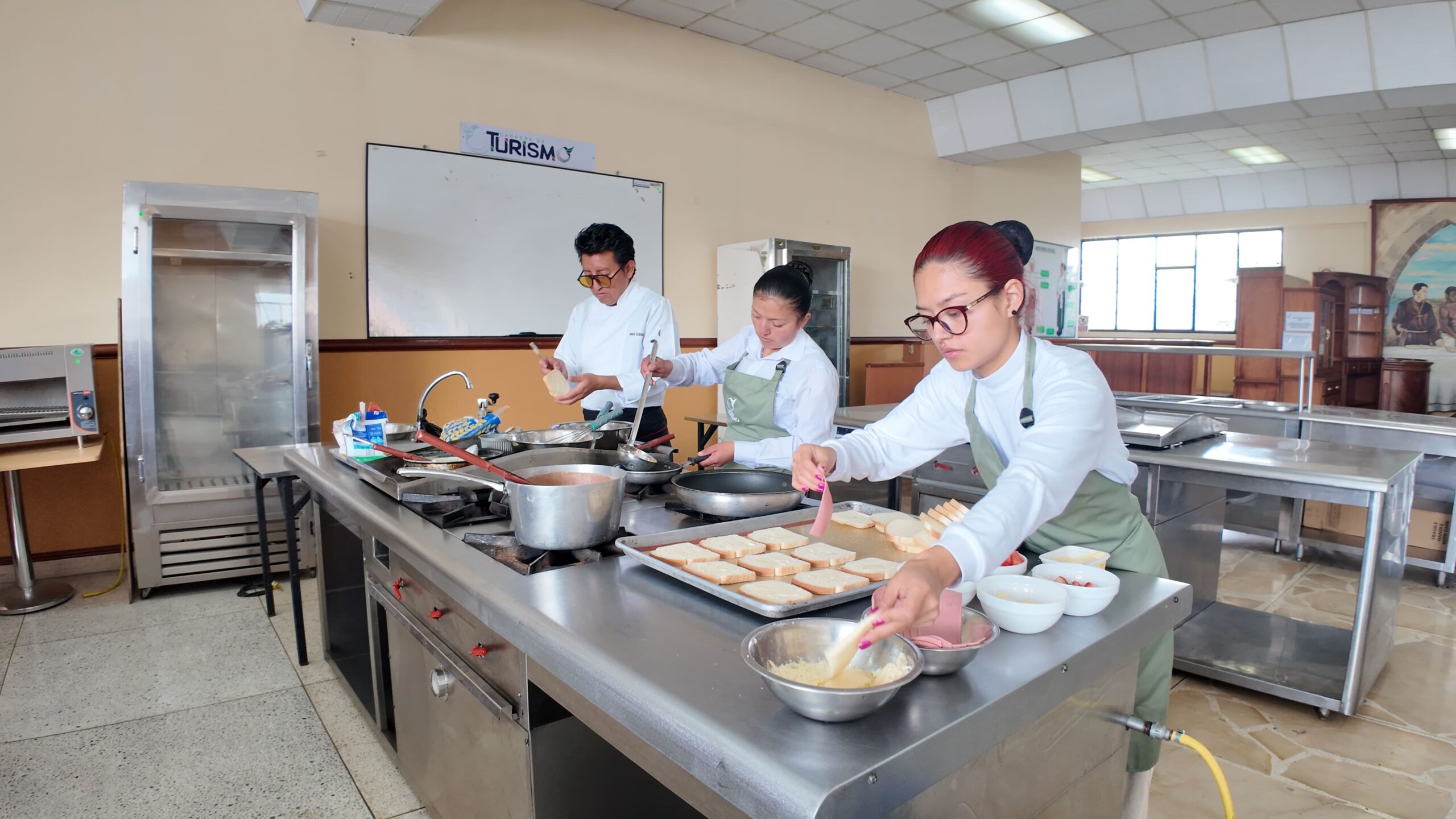
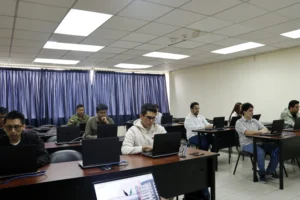
Experience studying Tourism

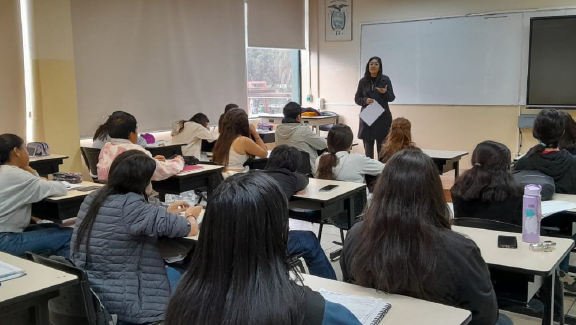
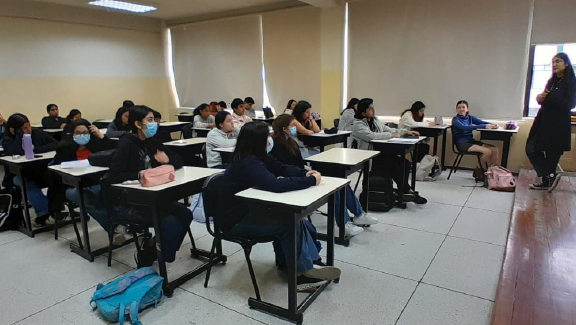
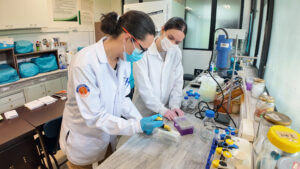
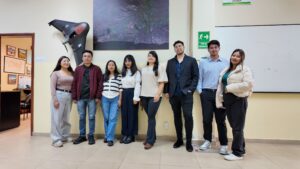
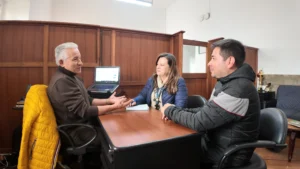
Discover daily life in our classrooms, laboratories, and academic spaces. Students, faculty, and researchers share their stories.

Learn about the foundations of the program

Profiles and outcomes

The professional we train and the competencies you will develop

The tourism professional is trained to plan, organize, direct, and evaluate tourism projects and services, promoting the responsible use of natural, cultural, and heritage resources, with the aim of fostering local, regional, and national development. They possess a strong ethical, analytical, and critical foundation, enabling them to design and manage innovative tourism products, as well as administer companies and/or organizations within the tourism sector with criteria of quality, competitiveness, and sustainability.

Based on their capacities, attitudes, and values:
Strengthens their personal and professional identity and cultivates self-esteem; develops critical thinking, deductive reasoning, and the use of analogies, thereby shaping cognitive structures and affective development.
– Applies ethical, spiritual, and humanistic principles, inclusive of diverse worldviews, diversity of abilities, and interculturality
-Respects knowledge within the ancestral and sustainable tourism context of different regions.
– Critically embraces historical changes and fosters openness to the new, the creative, and the diverse.
– Complies with the regulations established within the national and international legal framework governing tourism activities.
Operates within multidisciplinary teams with assertive communication, engaged in negotiation and conflict management to resolve problems in the tourism field.
– Manages tourism activities with ethics, leadership, responsibility, and quality.
Based on the theories, conceptual systems, methods, and languages for the integration of knowledge, the profession, and research:
-Organizes and integrates knowledge, identifying updated and specialized concepts and theories within their field of training. Possesses a general culture pertinent to their profession, including the use of ICTs and the application of information-gathering techniques for research.
-Develops, analyzes, and evaluates the quality of resources, services, ecosystems, and their components through applied research processes in tourism activities.
-Possesses knowledge of the social, cultural, economic, and political aspects of the community, enabling the management of innovative public–private projects for destination development.
– Applies principles of sustainability in sensitive natural areas through environmental interpretation and education; recognizes, respects, and values ancestral knowledge and the country’s heritage richness, and acknowledges their own identity.
– Understands the components of the tourism system through observation and characterizes tourism systems using techniques in tourism operations, management, entrepreneurship, and research, in compliance with sustainability standards.
-Identifies opportunities and shortcomings in tourism activity through characterization and diagnosis using technological tools, while respecting sustainability standards.
– Demonstrates skills and capacities for information management, research, and intervention in processes of tourism operations, management, and research.
– Integrates ancestral knowledge, interculturality, and gender equity of peoples in relation to different technological applications.
-Uses logical, critical, and creative thinking for the understanding, explanation, integration, and communication of knowledge within tourism.
-Undertakes entrepreneurship and innovation across diverse scenarios of tourism activity.
– Communicates, through a thesis, ethnography, or comprehensive examination, the design, development, and evaluation of a tourism management process or the creation of tourism products within the framework of sustainability.
– Systematically applies national and/or international policies, enabling them to manage global tourism trends.

In relation to the management of professional and research models, protocols, processes, and procedures:
Resolves problems arising within tourism operations through knowledge of the tourism potential of areas of influence; implements administrative and operational processes to ensure quality in the tourism system.
– Contributes to the development of new sustainable public policies with ethics and commitment, for the implementation of strategic tourism events and projects that support the positioning of the country’s tourist destinations.

1. Execute tourism activities considering criteria of quality, safety, and sustainability, in a planned, systematic, and reflective manner

2. Implement techniques and procedures for the operation of tourism services, ensuring efficiency, effectiveness, and regulatory compliance in their delivery.

3. Design innovative tourism proposals aligned with the territorial context that contribute to local development and can be implemented with tourism stakeholders.

4. Value economic, cultural, social, and environmental diversity in the tourism context, integrating ethical principles and sector knowledge for inclusive and responsible decision-making.

5. Develop sustainable tourism projects that respond to the real needs of the environment, integrating knowledge of planning, management, innovation, and sustainability; applying research and critical thinking to propose creative and viable solutions, with leadership, professional ethics, and commitment to the responsible development of tourism.

Curriculum Structure

Academic structure of the program

Current Curriculum

Non-Current Curriculum

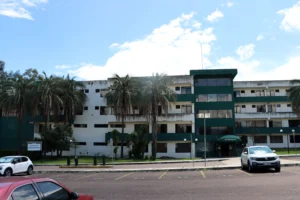
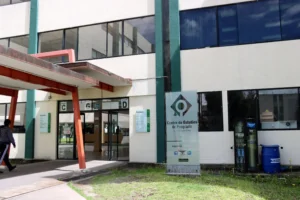
Gallery Gallery

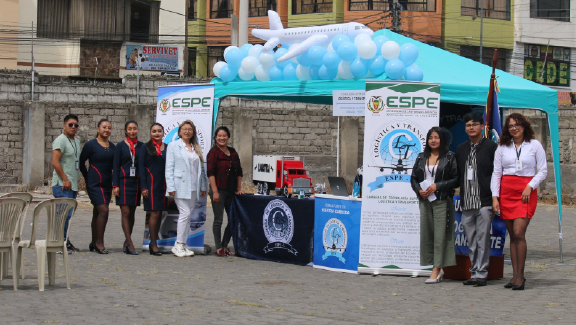
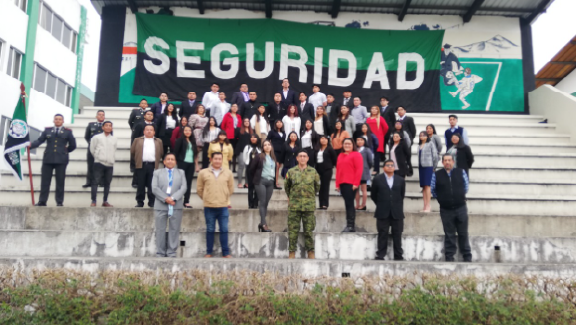
Spaces, moments, and experiences that bring the program to life
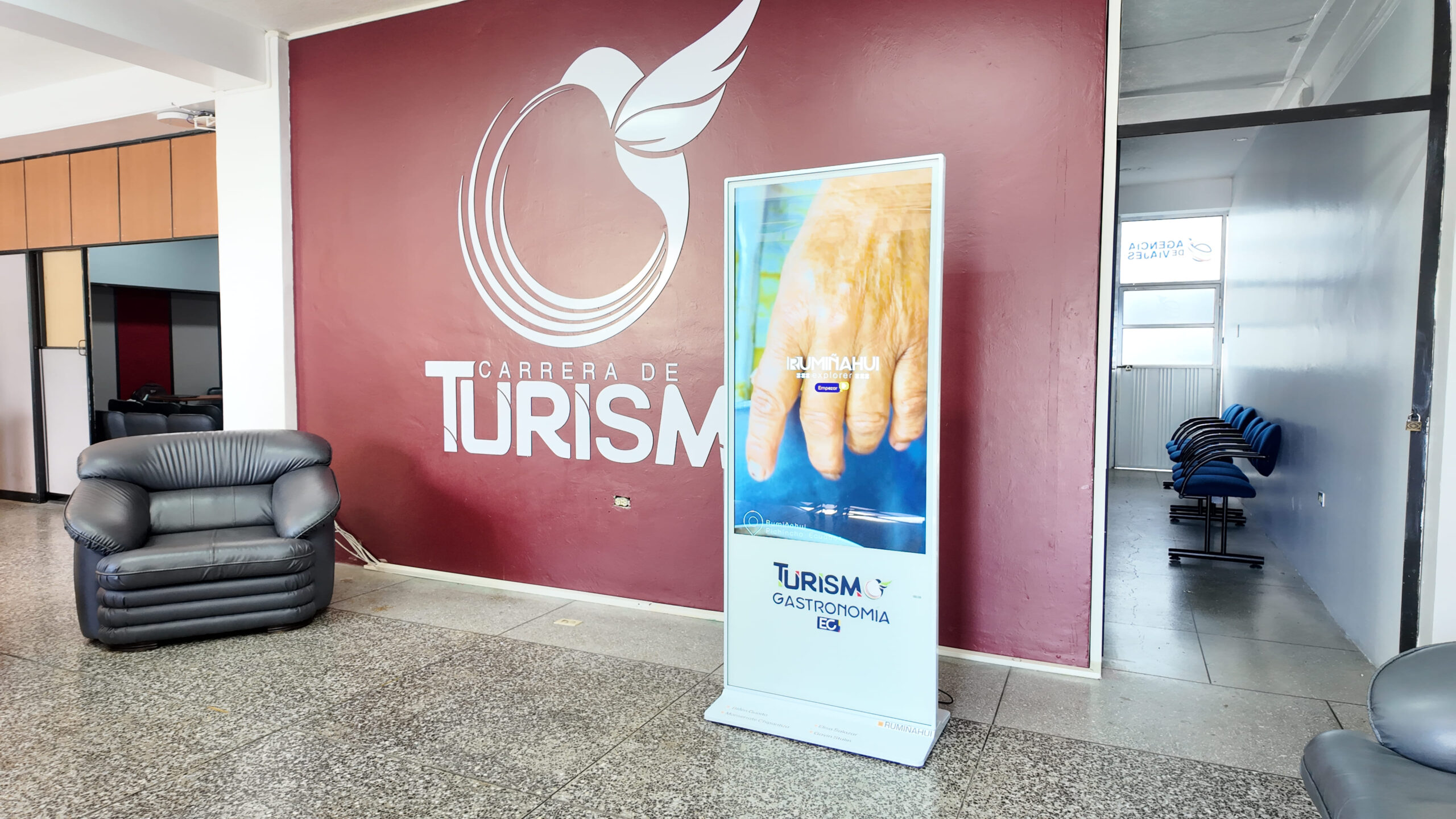
Admissions and costs

Spaces, moments, and experiences that bring the program to life

ACBSP Photoroom Accreditation

CES Resolution

RPC-SO-15-No 309-2020

Program Code

ISOF-SQ-2023

Accreditation

In process

Application Dates

March – April 2025 / August – September 2025

Program cost:

Article 356 of the Constitution of the Republic establishes, among other principles, that third-level public higher education shall be tuition-free, and that this gratuity is linked to the academic responsibility of students.

Begin your path in

Turism

Join Universidad de las Fuerzas Armadas ESPE and become part of an

academic community of excellence with international reach.

DEGREE

Higher Technology in Logistics and Transportation

Select a campus

DEGREE

Higher Technologist in Logistics and Transportation

CES Resolution

RPC-S0-15-No.302-2020

DURATION

2 years

MODALITY

On-campus

Academic Identity

Learn about the foundations of the program

To train ethical professionals with solid knowledge in integrated logistics to efficiently organize, implement, improve, and control business logistics processes, with an emphasis on transportation, fleet management, and distribution, with a clear focus on enhancing quality, productivity, competitiveness, and sustainable development, contributing to the progress of the region and the country.

A leader at the national and international levels in the training of technologists in Logistics and Transportation, aimed at promoting Ecuador’s productive sector in a comprehensive manner, with highly qualified technologists in knowledge management, and recognized as a benchmark in the practice of ethical, civic, and service-oriented values to society.

To train technologist professionals in occupational safety and risk prevention, with technical, scientific, and ethical competencies, capable of identifying, evaluating, controlling, and managing occupational risks across different productive sectors, contributing to the protection of workers’ health, the prevention of accidents, and compliance with current occupational safety and health regulations.

1. Foundation.

Develop theoretical and conceptual knowledge in industrial safety, occupational health, and risk management, enabling an understanding of the nature of hazards and their impact on work environments.

2. Identification and Evaluation.

Apply technical methodologies for the identification, analysis, and assessment of occupational risks (physical, chemical, biological, ergonomic, and psychosocial) across diverse productive contexts.

3. Intervention and Control.

Design and implement measures for the prevention, control, and mitigation of risks through the use of technical standards, management systems, and industrial safety tools.

4. Management and Continuous Improvement.

Manage occupational safety and health systems, promoting a preventive culture, legal compliance, and continuous improvement within organizations.

Program video

Experience studying Higher Technology in Logistics and Transportation

Discover daily life in our classrooms, laboratories, and academic spaces. Students, faculty, and researchers share their stories.

Learn about the foundations of the program

Profiles and outcomes

The professional we train and the competencies you will develop

The professional profile of the Higher Technology in Logistics and Transportation program is the set of specific competencies identified in the market study, which enables the professional to perform in the labor field through participation in community engagement projects and pre-professional internships in real environments within the technological area of logistics and transportation.

It is the set of specific attitudes and aptitudes that applicants to the Higher Technology in Logistics and Transportation program must possess, as outlined below.

– Numerical Reasoning: Ability, speed, and accuracy in calculation, enabling the manipulation of figures and the solution of quantifiable problems.

– Spatial Reasoning: Ability to visualize volumes and surfaces in two and three dimensions, and skill in interpreting graphs and maps.

– Logical Reasoning: Ability to understand relationships between facts, identify their causes, anticipate consequences, and solve problems in a coherent manner.

– Abstract Reasoning: Ability to extract input and output data from a problem situation and envision solutions. Capacity for observation and for perceiving details of objects, phenomena, or events, identifying particularities and recognizing differences.

– Perceptual Ability: Capacity to acquire knowledge of the surrounding world through sensory impressions, including the visual perception of shapes and details across different distances and spatial contexts.

– Attention and Concentration Capacity: Ability to voluntarily focus attention on an object or activity being performed, excluding external stimuli such as surrounding sounds and environmental noise.

– Rigorous Thinking. Think, reason, analyze, and argue in a logical, critical, and creative manner. Additionally: plan, solve problems, and make decisions.

– Communicate effectively. Understand and use language for communication and learning (both in the native language and in a foreign language). Express oneself orally and in writing in a correct, appropriate, and clear manner. Additionally, appreciate literature and other arts and recognize them as forms of expression.

– Reason numerically. Understand and apply mathematics in the formulation, analysis, and solution of theoretical and practical problems, as well as in the development of logical reasoning.

– Use technological tools in a reflective and pragmatic manner. Use Information and Communication Technologies (ICT) to explore and understand the surrounding reality, solve problems, access the information society, and express creativity, while avoiding the misappropriation and misuse of information.

– Understand the natural environment. Comprehend the natural environment through the explanation of physical, chemical, and biological phenomena supported by the scientific method, enabling the student to participate proactively and solve problems related to the natural domain, while respecting ecosystems and the environment.

Manages integrated logistics and foreign trade processes, adhering to international quality standards.

Proposes transportation systems to improve the mobility of people and facilitate the commercialization of products.

Designs transportation route systems through the application of methods and techniques, ensuring safety.

Executes logistics and transportation processes through the application of simulators for timely decision-making.

Curriculum Structure

Academic structure of the program

Current Curriculum

Non-Current Curriculum

Gallery Gallery

Spaces, moments, and experiences that bring the program to life

Admissions and costs

Spaces, moments, and experiences that bring the program to life

CES Resolution

RPC-SO-15-No 309-2020

Program Code

ISOF-SQ-2023

Accreditation

In process

Application Dates

March – April 2025 / August – September 2025

Program cost:

Article 356 of the Constitution of the Republic establishes, among other principles, that third-level public higher education shall be tuition-free, and that this gratuity is linked to the academic responsibility of students.

Begin your path in

Higher Technology in Logistics and Transportation

Join Universidad de las Fuerzas Armadas ESPE and become part of an

academic community of excellence with international reach.

DEGREE

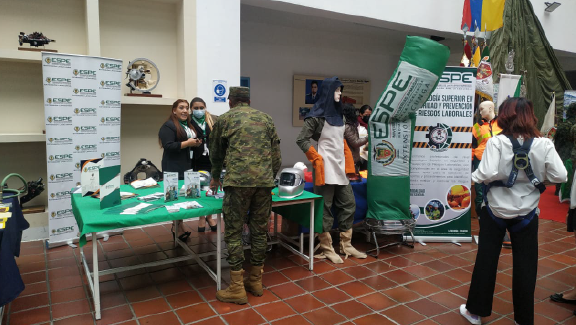
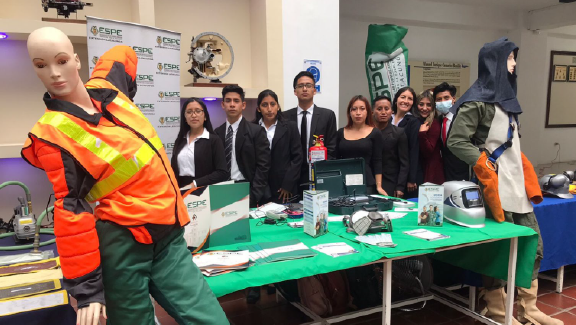
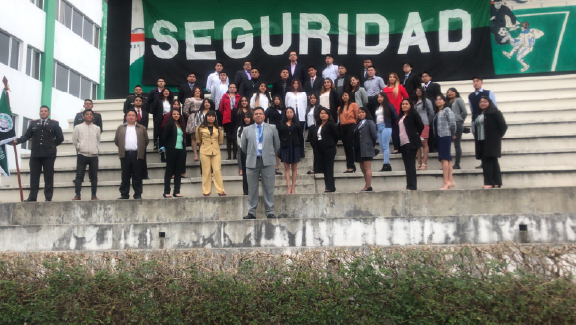
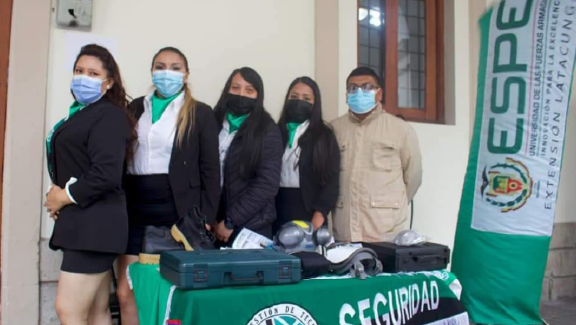
Higher Technology in Occupational Safety and Risk Prevention

Select a campus

DEGREE

Higher Technologist in Occupational Safety and Risk Prevention

CES Resolution

RPC-SO-15-No.302-2020

DURATION

2 years

MODALITY

On-campus

Academic Identity

Learn about the foundations of the program

To train outstanding technologists who are creative, humanistic, and possess leadership skills to solve problems in occupational safety and risk prevention, industrial hygiene, ergonomics, and psychosociology, with sound technical professional judgment and a strong sense of civic responsibility, contributing to regional and national development.

To be a benchmark in the training of technologists in occupational safety and risk prevention, recognized at the national level for their high technical expertise and for embodying ethical, civic, and community service values.

To train technologist professionals in occupational safety and risk prevention, with technical, scientific, and ethical competencies, capable of identifying, evaluating, controlling, and managing occupational risks across different productive sectors, contributing to the protection of workers’ health, the prevention of accidents, and compliance with current occupational safety and health regulations.

1. Foundation.

Develop theoretical and conceptual knowledge in industrial safety, occupational health, and risk management, enabling an understanding of the nature of hazards and their impact on work environments.

2. Identification and Evaluation.

Apply technical methodologies for the identification, analysis, and assessment of occupational risks (physical, chemical, biological, ergonomic, and psychosocial) across diverse productive contexts.

3. Intervention and Control.

Design and implement measures for the prevention, control, and mitigation of risks through the use of technical standards, management systems, and industrial safety tools.

4. Management and Continuous Improvement.

Manage occupational safety and health systems, promoting a preventive culture, legal compliance, and continuous improvement within organizations.

Program video

Experience studying Higher Technology in Occupational Safety and Risk Prevention

Discover daily life in our classrooms, laboratories, and academic spaces. Students, faculty, and researchers share their stories.

Learn about the foundations of the program

Profiles and outcomes

The professional we train and the competencies you will develop

The professional profile of the Higher Technology in Aeronautical Mechanics program is the set of specific competencies identified in the market study, enabling graduates to perform in the labor field through participation in community engagement projects and pre-professional internships in real environments within the aeronautical field.

The Higher Technologist graduated in Aeronautical Mechanics develops the following competencies as part of their professional profile:

  • Performs preventive maintenance on reciprocating engines and jet engines, as well as their systems.
  • Performs minor structural repairs.
  • Performs external and internal inspection of engines and reports findings.
  • Performs rigging, trimming, preventive maintenance, and overhaul of propellers.
  • Performs rigging, trimming, calibration, and operational checks of engines.
  • Performs preventive maintenance on aircraft and their systems in accordance with the manufacturer’s specifications.
  • Replaces minor defective parts.
  • Conducts systematic inspections of aircraft, their systems, and structures.
  • Analyzes and provides solutions to faults (troubleshooting).

The graduate profile of the Higher Technology in Aeronautical Mechanics program comprises the set of integrated and coherently organized knowledge oriented toward understanding the various problems and thematic axes of the professional field. To this end, the knowledge and competencies that students must deepen are selected within a theoretical–practical framework, with the aim of developing competencies to be applied in the labor field, as detailed below:

  • Identify and diagnose faults that occur in aircraft and engine systems;
  • Use technical documentation and maintenance manuals for aircraft and engine systems specific to each aircraft;
  • Apply precautionary measures and operational safety practices in accordance with the Safety Management System in all maintenance activities;
  • Apply preventive, corrective, and line maintenance on aircraft and engines efficiently, using technical documentation and maintenance manuals;
  • Perform functional tests of aircraft and engine systems to ensure proper operation.

Identifies hazards and risk factors present in workplace environments, applying technical criteria and current occupational safety and health regulations.

Evaluates occupational risks using qualitative and quantitative methodologies, employing tools such as risk matrices, risk maps, and statistical analysis.

Designs and implements prevention and control measures aimed at minimizing workplace accidents and occupational diseases, considering principles of industrial hygiene and ergonomics.

Manages occupational safety and health systems, ensuring compliance with current legislation and international standards (ISO 45001 or others).

Promotes a culture of prevention within organizations through training, effective communication, and the active participation of workers.

Curriculum Structure

Academic structure of the program

Current Curriculum

Gallery Gallery

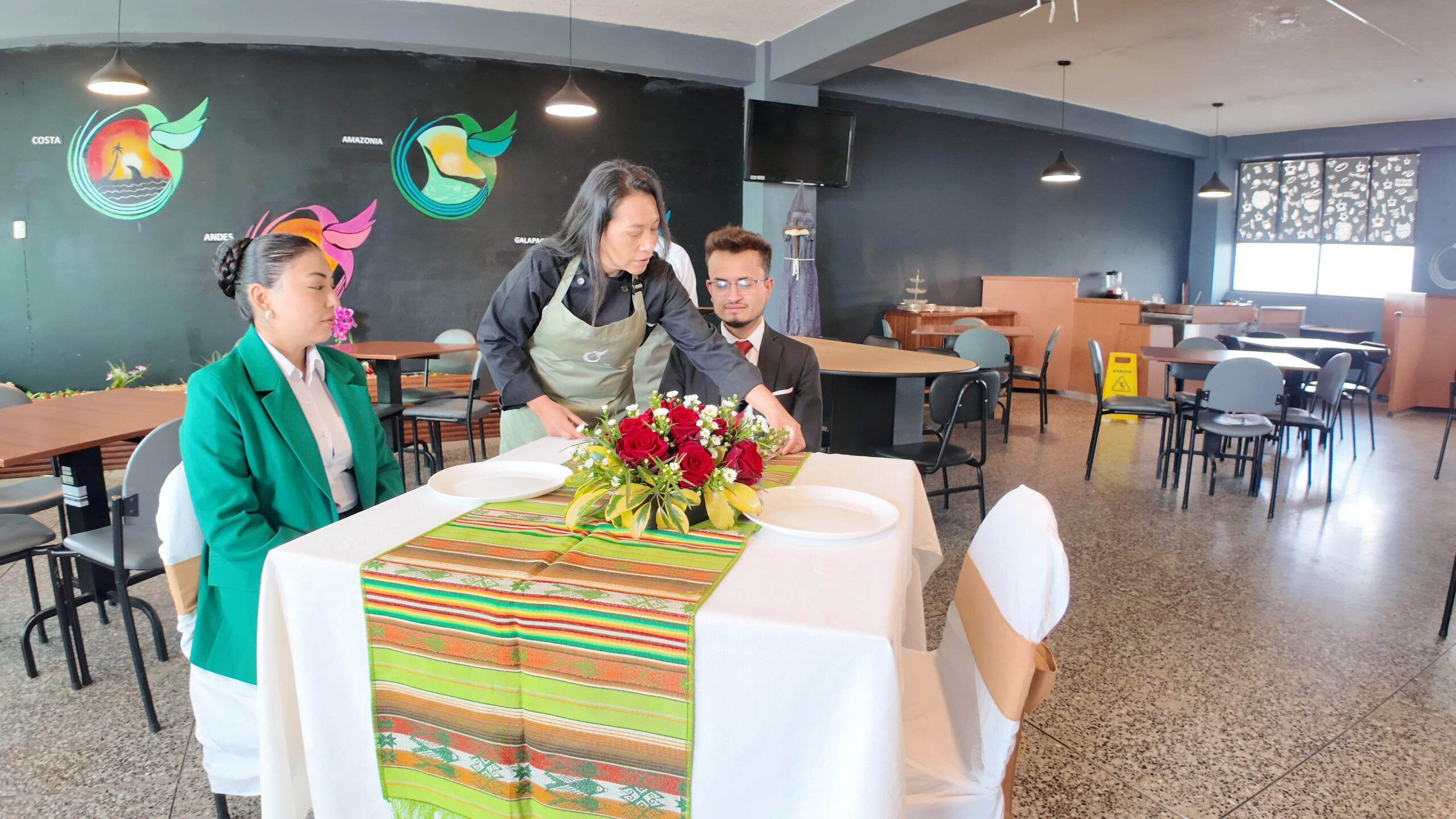
Spaces, moments, and experiences that bring the program to life
Admissions and costs

Spaces, moments, and experiences that bring the program to life

CES Resolution

RPC-SO-15-No 309-2020

Program Code

ISOF-SQ-2023

Accreditation

In process

Application Dates

March – April 2025 / August – September 2025

Program cost:

Article 356 of the Constitution of the Republic establishes, among other principles, that third-level public higher education shall be tuition-free, and that this gratuity is linked to the academic responsibility of students.

Begin your path in

Higher Technology in Safety and

Occupational Risk Prevention

Join Universidad de las Fuerzas Armadas ESPE and become part of an

academic community of excellence with international reach.

DEGREE

Turism

Select a campus

DEGREE

Bachelor’s Degree in Tourism

CES Resolution

RPC-SO-15-No.309-2020

DURATION

4 Years

MODALITY

On-campus

Academic Identity

Learn about the foundations of the program

To train professionals of excellence capable of efficiently managing and facing the challenges of sustainable tourism development, with observance of global processes and the consequent intercultural integration, with humanistic, ethical and moral values committed to society, articulating the public and private sectors to turn the country into a tourist destination of excellence.

To be leaders at the national and Latin American levels in the comprehensive training of professionals in tourism management, contributing to the new demands of the global environment through research and innovation, within the parameters of ethical sustainability and governance.

To train tourism professionals with comprehensive competencies, capable of managing tourist destinations in a sustainable way, through strategic planning, innovation and the articulation of public and private actors, contributing to economic, social and environmental development.

1. To develop in students competencies for the planning and sustainable management of tourist destinations, considering the social, economic and environmental axes.

2. To promote research capacity and entrepreneurial spirit for the generation of innovative projects in the field of tourism.

3. Promote the articulation between the public and private sectors in the management of tourist destinations.

4. To encourage the revaluation of tangible and intangible cultural heritage, as well as the strengthening of national identity and interculturality.

5. Integrate the use of technological tools that allow analyzing global tourism trends and identifying business opportunities.

Program video

Experience studying Tourism

Discover daily life in our classrooms, laboratories, and academic spaces. Students, faculty, and researchers share their stories.

Learn about the foundations of the program

Profiles and outcomes

The professional we train and the competencies you will develop

The tourism professional is trained to plan, organize, direct, and evaluate tourism projects and services, promoting the responsible use of natural, cultural, and heritage resources, with the aim of fostering local, regional, and national development. They possess a strong ethical, analytical, and critical foundation, enabling them to design and manage innovative tourism products, as well as administer companies and/or organizations within the tourism sector with criteria of quality, competitiveness, and sustainability.

Based on their capacities, attitudes, and values:
Strengthens their personal and professional identity and cultivates self-esteem; develops critical thinking, deductive reasoning, and the use of analogies, thereby shaping cognitive structures and affective development.
– Applies ethical, spiritual, and humanistic principles, inclusive of diverse worldviews, diversity of abilities, and interculturality
-Respects knowledge within the ancestral and sustainable tourism context of different regions.
– Critically embraces historical changes and fosters openness to the new, the creative, and the diverse.
– Complies with the regulations established within the national and international legal framework governing tourism activities.
Operates within multidisciplinary teams with assertive communication, engaged in negotiation and conflict management to resolve problems in the tourism field.
– Manages tourism activities with ethics, leadership, responsibility, and quality.
Based on the theories, conceptual systems, methods, and languages for the integration of knowledge, the profession, and research:
-Organizes and integrates knowledge, identifying updated and specialized concepts and theories within their field of training. Possesses a general culture pertinent to their profession, including the use of ICTs and the application of information-gathering techniques for research.
-Develops, analyzes, and evaluates the quality of resources, services, ecosystems, and their components through applied research processes in tourism activities.
-Possesses knowledge of the social, cultural, economic, and political aspects of the community, enabling the management of innovative public–private projects for destination development.
– Applies principles of sustainability in sensitive natural areas through environmental interpretation and education; recognizes, respects, and values ancestral knowledge and the country’s heritage richness, and acknowledges their own identity.
– Understands the components of the tourism system through observation and characterizes tourism systems using techniques in tourism operations, management, entrepreneurship, and research, in compliance with sustainability standards.
-Identifies opportunities and shortcomings in tourism activity through characterization and diagnosis using technological tools, while respecting sustainability standards.
– Demonstrates skills and capacities for information management, research, and intervention in processes of tourism operations, management, and research.
– Integrates ancestral knowledge, interculturality, and gender equity of peoples in relation to different technological applications.
-Uses logical, critical, and creative thinking for the understanding, explanation, integration, and communication of knowledge within tourism.
-Undertakes entrepreneurship and innovation across diverse scenarios of tourism activity.
– Communicates, through a thesis, ethnography, or comprehensive examination, the design, development, and evaluation of a tourism management process or the creation of tourism products within the framework of sustainability.
– Systematically applies national and/or international policies, enabling them to manage global tourism trends.

In relation to the management of professional and research models, protocols, processes, and procedures:
Resolves problems arising within tourism operations through knowledge of the tourism potential of areas of influence; implements administrative and operational processes to ensure quality in the tourism system.
– Contributes to the development of new sustainable public policies with ethics and commitment, for the implementation of strategic tourism events and projects that support the positioning of the country’s tourist destinations.

1. Execute tourism activities considering criteria of quality, safety, and sustainability, in a planned, systematic, and reflective manner

2. Implement techniques and procedures for the operation of tourism services, ensuring efficiency, effectiveness, and regulatory compliance in their delivery.

3. Design innovative tourism proposals aligned with the territorial context that contribute to local development and can be implemented with tourism stakeholders.

4. Value economic, cultural, social, and environmental diversity in the tourism context, integrating ethical principles and sector knowledge for inclusive and responsible decision-making.

5. Develop sustainable tourism projects that respond to the real needs of the environment, integrating knowledge of planning, management, innovation, and sustainability; applying research and critical thinking to propose creative and viable solutions, with leadership, professional ethics, and commitment to the responsible development of tourism.

Curriculum Structure

Academic structure of the program

Current Curriculum

Non-Current Curriculum

Gallery Gallery

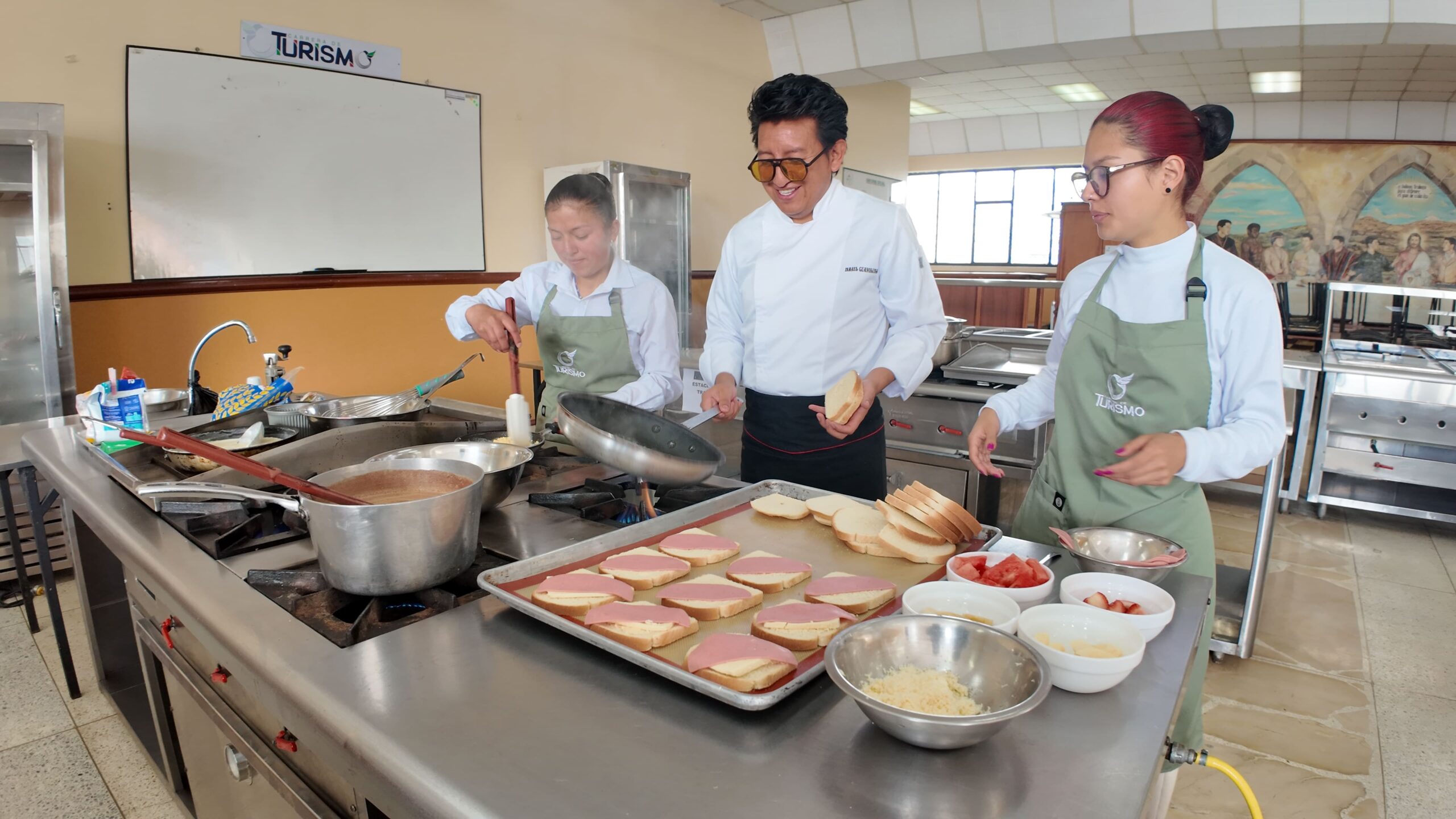
Spaces, moments, and experiences that bring the program to life
Admissions and costs

Spaces, moments, and experiences that bring the program to life

ACBSP Photoroom Accreditation

CES Resolution

RPC-SO-15-No 309-2020

Program Code

ISOF-SQ-2023

Accreditation

In process

Application Dates

March – April 2025 / August – September 2025

Program cost:

Article 356 of the Constitution of the Republic establishes, among other principles, that third-level public higher education shall be tuition-free, and that this gratuity is linked to the academic responsibility of students.

Begin your path in

Turism

Join Universidad de las Fuerzas Armadas ESPE and become part of an

academic community of excellence with international reach.

DEGREE

Bachelor’s Degree in Tourism

CES Resolution

RPC-SO-15-No.309-2020

DURATION

4 Years

MODALITY

On-campus

Academic Identity

Learn about the foundations of the program

To train professionals of excellence capable of efficiently managing and facing the challenges of sustainable tourism development, with observance of global processes and the consequent intercultural integration, with humanistic, ethical and moral values committed to society, articulating the public and private sectors to turn the country into a tourist destination of excellence.

To be leaders at the national and Latin American levels in the comprehensive training of professionals in tourism management, contributing to the new demands of the global environment through research and innovation, within the parameters of ethical sustainability and governance.

To train professionals in the area of Tourism, who manage the activity in an organized manner, as an important axis within the strengthening of the country’s productive system, generating programs and projects, which articulate the public and private sectors in terms of sustainable development and positioning of Ecuador as a quality tourist destination.

a. Related to knowledge:

Recognize the different components involved in the formulation of tourism projects, with criteria of sustainability and strengthening of national identity that are consistent with public policy for the development of the tourism sector.

b. Related to relevance:

Respond to the needs and problems that arise in zone two, related to the service sector and that seek to promote the change of the productive matrix.

c. Related to learning:

To generate technical and scientific knowledge through research that allows the incorporation of technological tools and innovation in the offer of quality tourism products and services. Related to citizenship: Promote community participation in the planning and execution processes of tourism activities, with a systemic approach and articulation between public and private management.

Program video

Experience studying Tourism

Discover daily life in our classrooms, laboratories, and academic spaces. Students, faculty, and researchers share their stories.

Learn about the foundations of the program

Profiles and outcomes

The professional we train and the competencies you will develop

Professional trained to plan, manage and evaluate sustainable tourism projects and destinations

Graduated with a solid scientific, technical and humanistic background, oriented to innovation and research in the tourism sector.

1. Manage tourist destinations with sustainability and competitiveness criteria.

2. Design and evaluate innovative tourism projects.

3. Apply technological tools in tourism management.

4. Value natural and cultural heritage.

5. Make strategic decisions based on global tourism trends

Curriculum Structure

Academic structure of the program

Current Curriculum

Non-Current Curriculum

Gallery Gallery

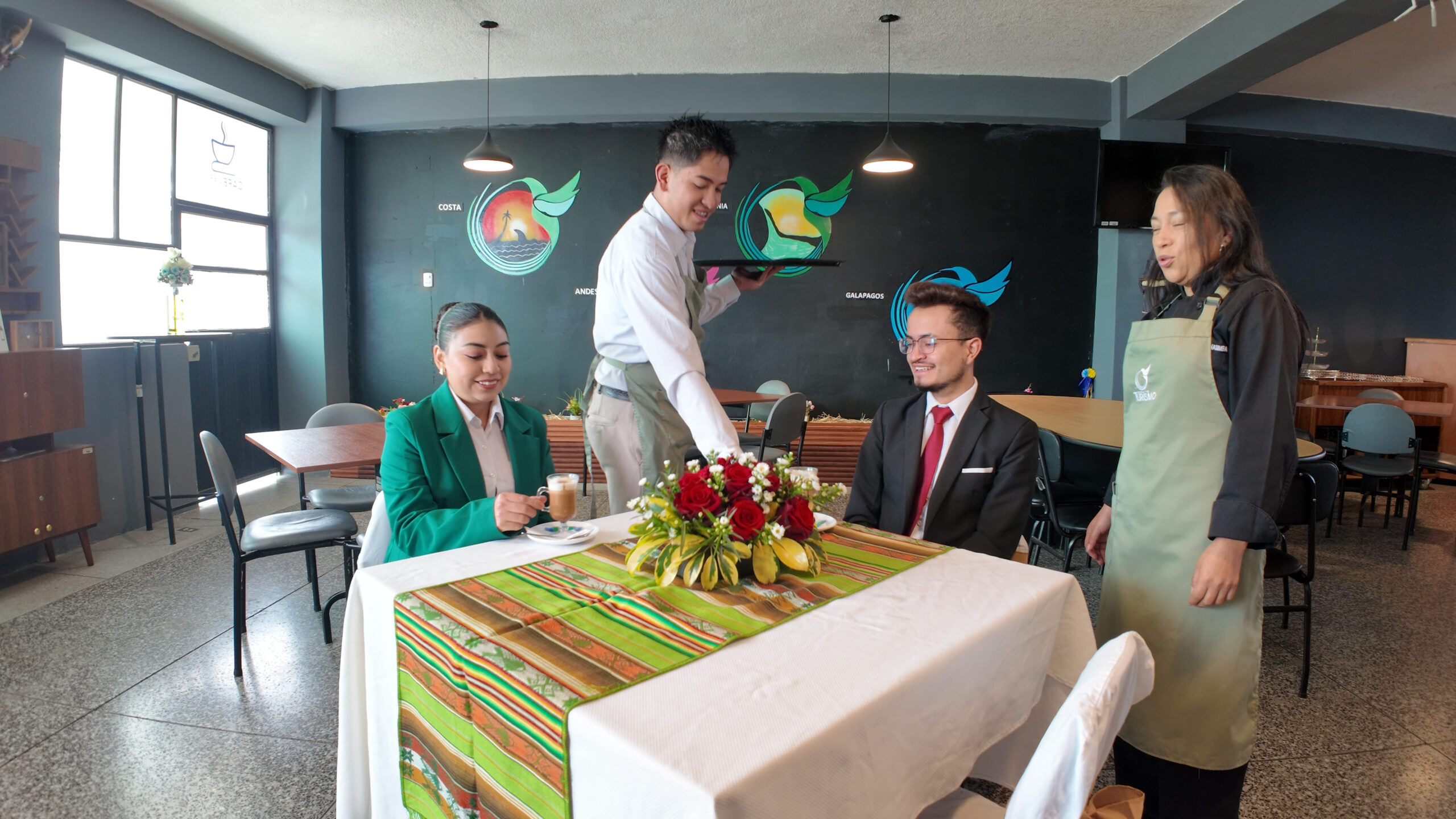
Spaces, moments, and experiences that bring the program to life
Admissions and costs

Spaces, moments, and experiences that bring the program to life
ACBSP Photoroom Accreditation

CES Resolution

RPC-SO-15-No 309-2020

Program Code

ISOF-SQ-2023

Accreditation

In process

Application Dates

March – April 2025 / August – September 2025

Program cost:

Article 356 of the Constitution of the Republic establishes, among other principles, that third-level public higher education shall be tuition-free, and that this gratuity is linked to the academic responsibility of students.

Begin your path in

Turism

Join Universidad de las Fuerzas Armadas ESPE and become part of an

academic community of excellence with international reach.
This site is registered on wpml.org as a development site. Switch to a production site key to remove this banner.