



























DEGREE
Higher University Technology Degree in Information Systems and Cybersecurity
DEGREE
Associate of Science in Information Systems and Cybersecurity
CES Resolution
RPC-SO-38-No.584-2025
DURATION
3 years
MODALITY
On-campus
Academic Identity
Learn about the program’s foundations
- Mission
To train university-level information systems and cybersecurity professionals of the highest practical and operational caliber, within a framework of ethics, discipline, and social responsibility, who are capable of implementing technological solutions, managing incidents, and protecting critical information, thereby contributing to the digital security of the country’s strategic and productive sectors.
- Vision
To be a national leader in technology education, recognized for the technical expertise and leadership of its graduates in the protection of technological infrastructure and data management, driving innovation and technological sovereignty in the face of global challenges in cyber defense and digital transformatio
- Program Objectives
- General objective
To train university-level information systems and cybersecurity professionals by developing technical and operational skills in the implementation, maintenance, and management of secure information systems; web and mobile application programming; and operating system administration and virtualization. Likewise, to develop capabilities for the application of security protocols, risk identification and mitigation, and ethical information management, contributing to data protection, technological modernization, digital transformation, and the country’s sustainable development in the public and private sectors, in accordance with national policies on security, innovation, and technological development.
To train cybersecurity professionals capable of identifying vulnerabilities, protecting critical data, and implementing measures to prevent and mitigate threats that affect organizations.
To train technical professionals in the development of secure web and mobile applications, with a focus on solving practical problems and improving the user experience.
To prepare professionals for the implementation and operational management of information systems that optimize information flow and organizational processes.
To train technical professionals in the management of technology infrastructure, networks, and cloud services, ensuring their continuous operation and minimizing technical failures.
To train technical professionals with skills that enhance their employability, with a focus on meeting the needs of the private sector in the fields of information technology and cybersecurity.
Program video
Vive la experiencia de estudiar Tecnología Superior Universitaria en Sistemas de Información y Ciberseguridad
Discover daily life in our classrooms, laboratories, and academic spaces. Students, faculty, and researchers share their stories.
Learn about the program’s foundations
Profiles and outcomes
The professionals we educate and the competencies you will develop
- Professional Profile
What kind of professional will you become?
A Senior University Technologist in Information Systems and Cybersecurity is a professional with technical and operational training who is qualified to implement information systems and deploy cybersecurity solutions aimed at protecting digital assets and ensuring the operational continuity of organizations.
You will play a role in IT security management, systems administration, and specialized technical support, applying tools, protocols, and best practices to prevent, detect, and mitigate security incidents in organizational environments.
Areas of expertise
- Information Systems: Implementation and operational management of systems that optimize organizational processes and data management.
- Offensive Cybersecurity: Support for conducting security tests, identifying vulnerabilities, and applying ethical hacking techniques.
- Defense and Forensics: Security incident management, event analysis, and basic digital evidence handling for information protection.
Functions and roles
- Information Systems Management
- Application of ethical hacking techniques
- Implementation of IT security controls
- Computer Forensics Support
- Security Incident Management and Response
- Implementation of best practices and regulations in IT security
Field of work
You will be able to work in public and private organizations such as:
- Cybersecurity Technician
- Junior IT Security Analyst
- IT Technical Support
- Systems Administration Assistant
- Technology Services Provider
- Graduate Profile
The Bachelor of Science in Information Systems and Cybersecurity is a professional qualified to:
- Implement security controls and tools to protect critical infrastructure, applying cybersecurity defense procedures. Support cybersecurity risk management by identifying, assessing, and mitigating threats. Implement and support security controls in technology systems, in accordance with standards and best practices. Provide technical support for the implementation of information security policies based on standards such as the ISO/IEC 27000 series, contributing to the protection of digital assets.
- Apply best security practices in system development, contributing to the creation of secure applications. Assist in resolving cybersecurity issues within organizations. Implement and monitor network and security protocols, ensuring the protection of data and communications.
- Contribute to the protection of critical digital infrastructure by supporting the operational continuity of strategic sectors. Implement security systems that strengthen trust in technological services and promote digital inclusion. Apply security technologies to protect data and facilitate secure access to information. Support innovation in cybersecurity and disseminate knowledge to bridge the digital divide.
- Foster critical and creative thinking to propose cybersecurity solutions. Apply ethical principles and social responsibility in data protection. Develop collaborative work in multidisciplinary teams and integrate cultural perspectives to contribute to the democratization of technology.
- Learning Outcomes
Applies ethical hacking techniques to simulate intrusions, identify vulnerabilities, and fix flaws in computer systems.
Configure and monitor computer networks using firewalls and monitoring tools to detect and block unauthorized access.
Recopila y procesa evidencias digitales mediante técnicas de informática forense, para la atención de incidentes de seguridad.
Installs and configures IT infrastructure, including servers and structured cabling, ensuring that it is fully operational.
Manages virtualized environments and cloud services, optimizing the use of technological resources.
Diagnostica y soluciona fallos de hardware y software, asegurando la continuidad operativa de los sistemas informáticos.
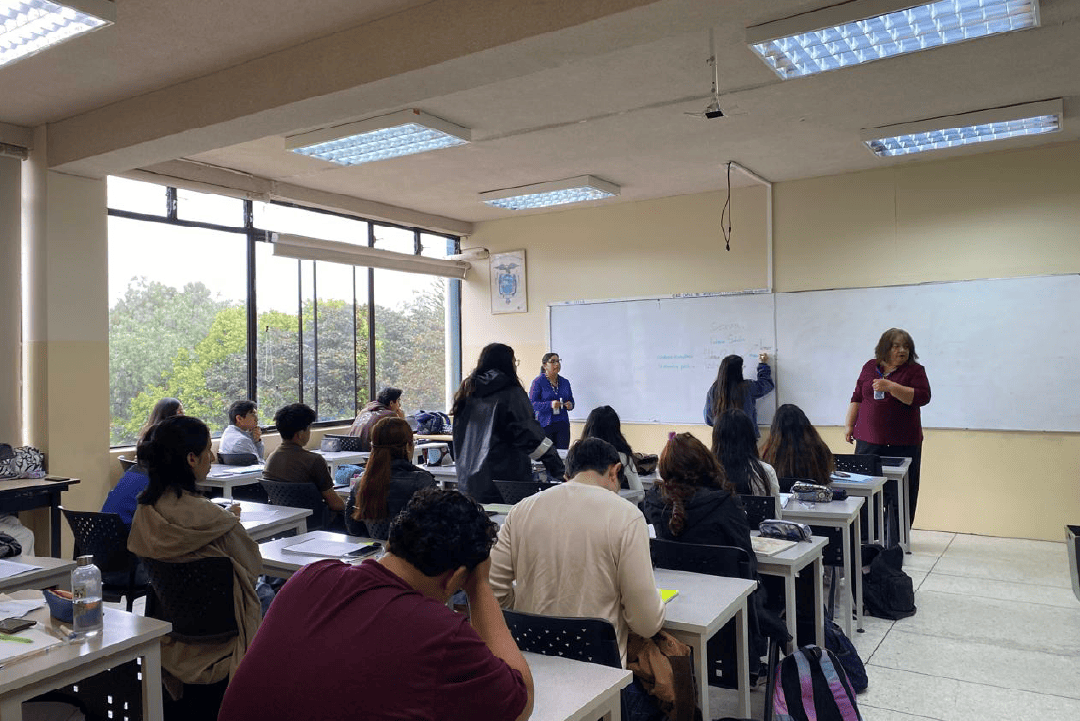
Gallery Gallery
Spaces, moments, and experiences that bring the program to life



Admissions and costs
Information about admission requirements and program costs.
CES Resolution
RPC-SO-15-No 309-2020
Program Code
ISOF-SQ-2023
Accreditation
In process
Application Dates
March – April 2025 / August – September 2025
Program cost:
Article 356 of the Constitution of the Republic establishes, among other principles, that third-level public higher education shall be tuition-free, and that this tuition-free policy is linked to students’ academic responsibility.
Begin your journey in
Higher University Technology in
Information Systems and Cybersecurity
Join Universidad de las Fuerzas Armadas ESPE and become part of an
academic community of excellence with international reach.