


























DEGREE
Electronics and Automation Engineer
CES Resolution
RPC-SO-16-No.322-2020
DURATION
4.5 years
MODALITY
On-campus

ACCREDITATION
Academic Identity
Learn about the program’s foundations
- Mission
To train professionals and researchers of excellence, creative and humanistic, with leadership skills, critical thinking, ethics and with a high citizen awareness; that generate, apply and disseminate knowledge and provide and implement alternative solutions to the problems of the community in the field of Electronics Engineering and Automation to promote the integral development of Ecuador.
- Vision
In the next 5 years to be among the 5 best technical careers in Ecuador in the training of Electronics and Automation Engineers.
- Program Objectives
- General objective
To train professionals in the Electronics and Automation career capable of modeling, analyzing, designing, simulating and implementing electronically automated systems, based on the knowledge and application of electronics, control and automation techniques and technologies; committed to the transformation and improvement of production processes, with effectiveness, efficiency, research and innovation, to increase productivity and quality in the industrial, manufacturing and service sectors of the country, respecting the environment.
1. Develop capacities to apply scientific, theoretical, and technical-instrumental methodologies, which use mathematical thinking in the modeling, analysis, design, and implementation of electrical, electronic, classical, modern, and automated control systems, integrating intercultural knowledge and experiences.
2. To respond to the problem of low competitiveness of the country's industrial, manufacturing and service sectors, through research, innovation, technology transfer, efficient use of resources and the development of engineering solutions in the field of electronics and automation.
3. To apply university educational processes that link theory and practice in teaching, research and linkage; through multidisciplinary projects with a training, holistic and comprehensive approach; that promotes creativity, innovation, research and technological management, complying with national and international standards and regulations.
4. To train professionals in an environment that promotes leadership, social responsibility, respect for intellectual property, entrepreneurial spirit, perseverance, ethics; for the development and management of multidisciplinary projects, in the field of electronics and automation, which respond to the needs of society.
Program video
Live the experience of studying Engineering in Electronics and Automation
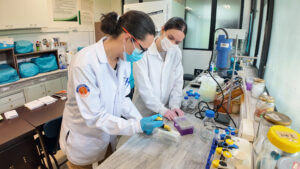
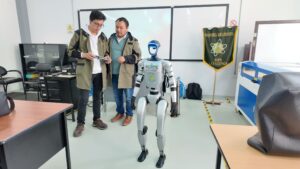
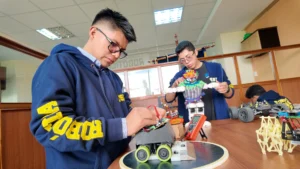
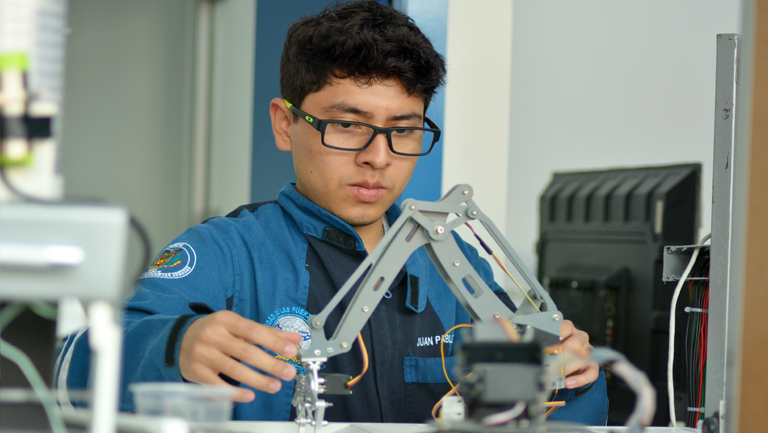
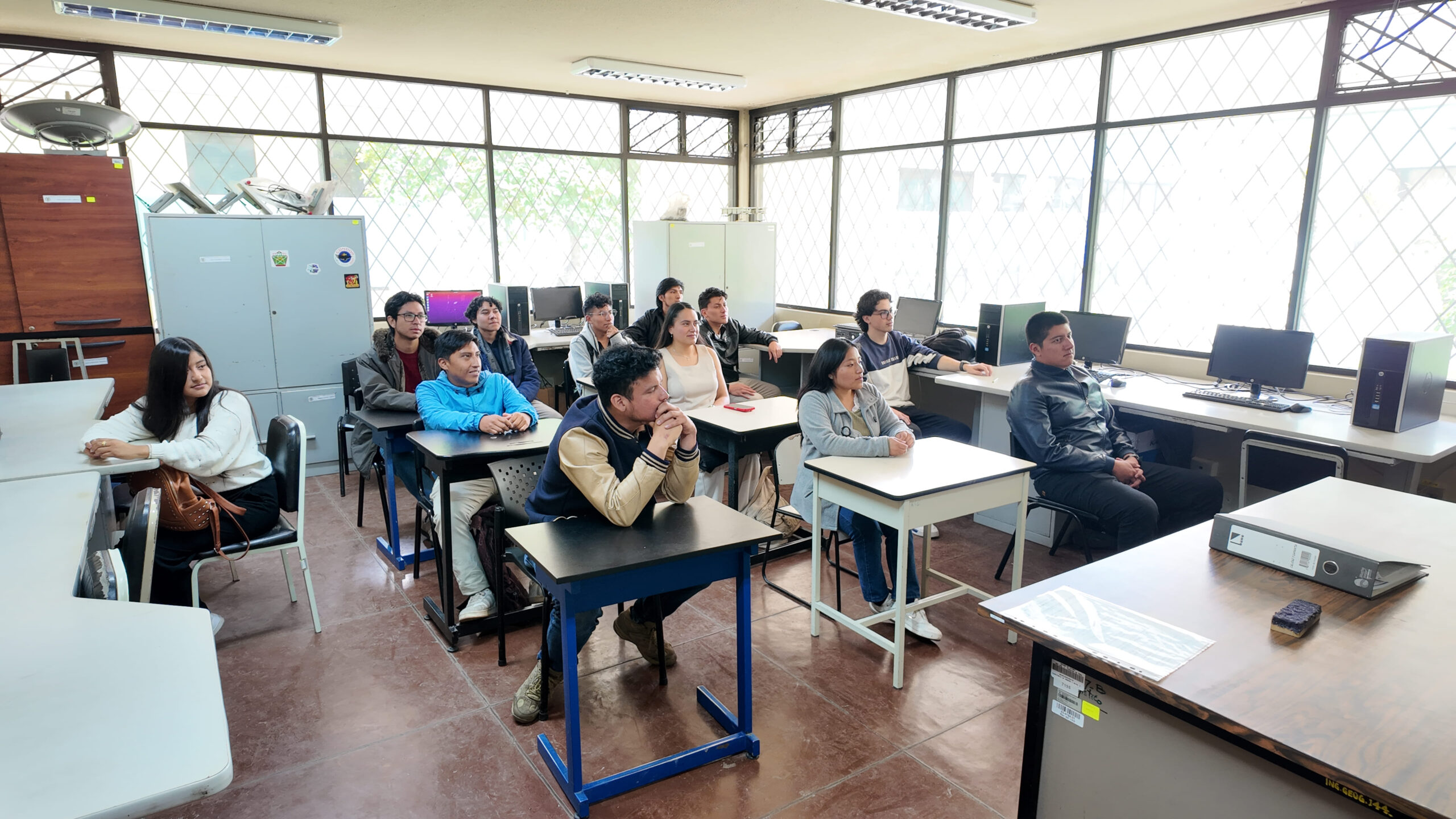
Discover daily life in our classrooms, laboratories, and academic spaces. Students, faculty, and researchers share their stories.
Learn about the program’s foundations
Profiles and outcomes
The professionals we educate and the competencies you will develop
- Professional Profile
It transforms the production processes of goods and services, through the generation and application of automation tools, based on electrical and electronic systems to increase the efficiency, effectiveness and productivity of the industrial and manufacturing sectors and the technological innovation of the country with critical, proactive thinking; respecting the ethical principles and national and international standards related to its scope of application.
- Graduate Profile
It studies automation systems based on electronics through the fundamentals of engineering, with the application of electrical and electronic technologies to increase the productivity and quality of goods and services in the productive sector of Ecuador, with social and environmental responsibility, sustainability and technological autonomy.
It is oriented to the application of electronic automation techniques and technologies, in addition to contributing to the development of theories and technologies to locate and strengthen the different production processes. The basis for such application is based on the transversality of engineering in Electronics and Automation in the different productive sectors of the country, which includes innovation for its continuous improvement, with an orientation to technological independence.
- Learning Outcomes
1. Analyzes and identifies engineering problems, recognizes their specifications, establishes different resolution methods and selects the most appropriate one for their solution, taking into account ethical, legal, safety and professional responsibility aspects; as well as the social, human health, environmental, and commercial limitations applicable in each case.
2. Possesses effective work skills, both individually and in teams, showing communication, coordination and leadership skills.
3. Demonstrates awareness of the responsibility of engineering practice, social and environmental impact, and commitment to professional ethics, and standards of engineering practice.
4. Use different methods to communicate effectively with the engineering community and society at large.
5. Demonstrates awareness of business and project management practices, as well as risk management and control, and understands their limitations.
6. Recognizes the need and has the ability to develop learning on a permanent basis.
7. Characterizes physical systems based on principles, physical and mathematical laws, in an objective and critical way, for decision-making and problem solving.
8. Model electrical circuits, combining theoretical-practical procedures and the measurement of variables in an objective way to solve problems related to electrical systems.
9. Identify the basic principles of the components of electronic systems, through measurement and characterization, for the analysis of the variables involved.
10. Design, implement, and analyze the different parts of a system, using electrical, electronic, and digital elements, to determine the behavior of the entire system.
11. Apply the theory of feedback analog control systems by integrating industrial devices to offer technological solutions with a high degree of commitment to compliance with technical standards, which improve the quality of the products that are made in the local industry.
12. Design, simulate and implement automated service systems integrating advanced control techniques and strategies, electronic hardware and specialized software, demonstrating in their actions universal values of the profession.
13. Design, simulate and implement systems for the automatic control of industrial processes integrating advanced control techniques and strategies, electronic hardware and specialized software, demonstrating in their actions universal values typical of the profession.
14. Develop total automation projects for industrial, commercial or domestic processes, using advanced automation methodologies and techniques to integrate different technologies on the market.
15. Develop total automation projects for industrial, commercial or domestic processes, using advanced automation methodologies and techniques to integrate different technologies on the market.
16. Formulate proposals for improving business productivity, based on the design of automation and automated production systems, to improve the quality of life of society with sensitivity and with sustainability criteria, interdisciplinary integrating projects are developed for modeling, simulation and design of automations aimed at the automation of production systems.
17. Demonstrates in their professional actions universal values and typical of the profession, acting with emotional intelligence, creativity and entrepreneurship in the development of the sciences, arts, respect for cultural diversity and gender equality.
18. Interpret and solve problems of reality by applying research methods, scientific methods, technological tools and various sources of information in national and foreign languages, with honesty, responsibility, teamwork and respect for intellectual property.
19. Demonstrates leadership qualities and entrepreneurial spirit for the management of business and social projects in the public and private sectors.
20. Promotes the culture of environmental conservation in professional and social practice.
21. Recognize the stages of the scientific method, formulate research projects, design basic experiments, apply referential writing standards, protocols, and structure of the final report of the research or degree project.
22. Design research projects, in accordance with the provisions of the regulations in the field of professional careers, through the use of conceptual and methodological aspects of scientific research, in order to propose solutions to problems.
23. Communicates through a scientific report or article, the solution to problems identified in the processes, respecting the current national and international regulations.
24. Apply the concepts, rules and processes studied in research applied to automation, in correlation and integration to industrial, commercial or domestic processes, to generate.
25. Apply mathematical optimization methods for decision-making related to production processes.
Curriculum Structure
Academic structure of the program
Current Curriculum
Non-Current Curriculum
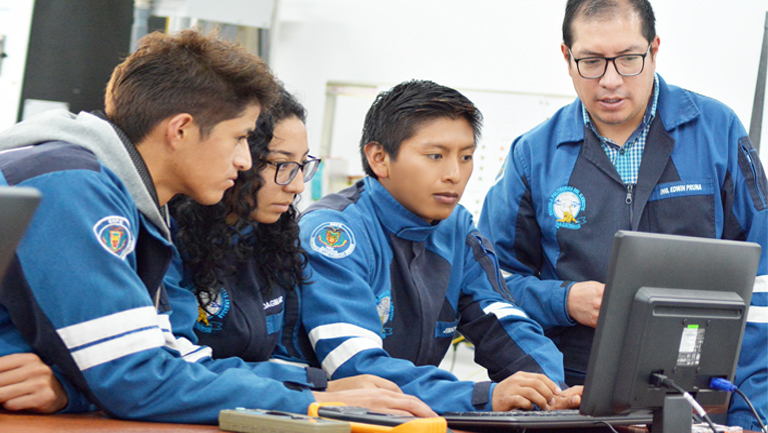
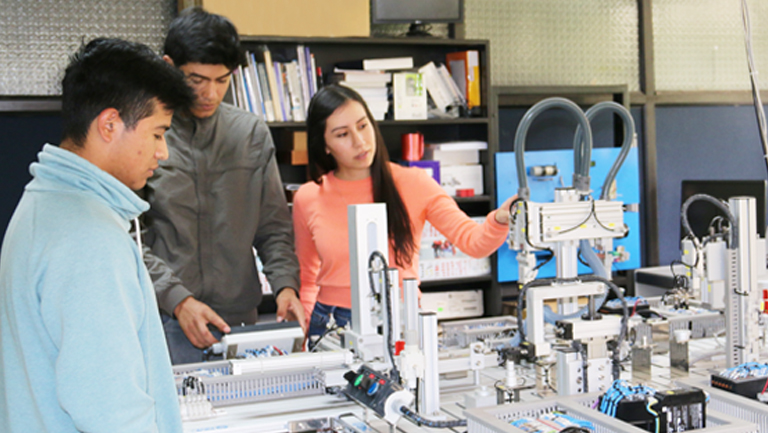
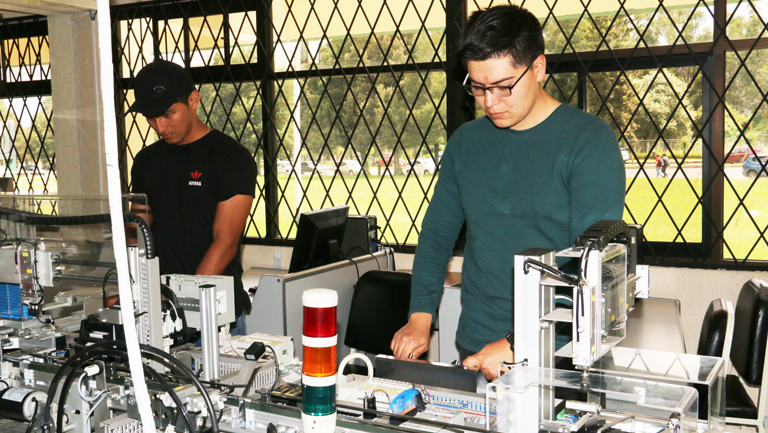
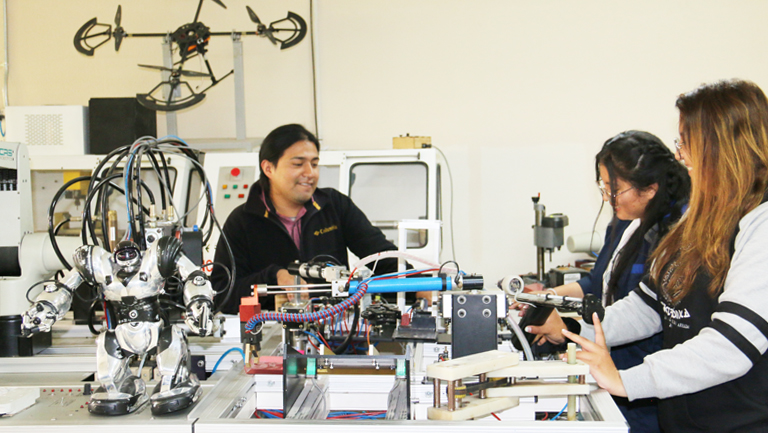
Gallery Gallery
Spaces, moments, and experiences that bring the program to life
Admissions and costs
Spaces, moments, and experiences that bring the program to life
CES Resolution
RPC-SO-15-No 309-2020
Program Code
ISOF-SQ-2023
Accreditation
In process
Application Dates
March – April 2025 / August – September 2025
Program cost:
Article 356 of the Constitution of the Republic establishes, among other principles, that third-level public higher education shall be tuition-free, and that this tuition-free policy is linked to students’ academic responsibility.
Begin your journey in
Electronics and Automation Engineering
Join Universidad de las Fuerzas Armadas ESPE and become part of an
academic community of excellence with international reach.
DEGREE
Electronics and Automation Engineer
CES Resolution
RPC-SO-16-No.322-2020
DURATION
4.5 years
MODALITY
On-campus
ACCREDITATION
Academic Identity
Learn about the program’s foundations
- Mission
To train professionals and researchers of excellence, creative and humanistic, with leadership skills, critical thinking, ethics and with a high citizen awareness; that generate, apply and disseminate knowledge and provide and implement alternative solutions to the problems of the community in the field of Electronics Engineering and Automation to promote the integral development of Ecuador.
- Vision
In the next 5 years to be among the 5 best technical careers in Ecuador in the training of Electronics and Automation Engineers.
- Program Objectives
- General objective
To train professionals in the Electronics and Automation career capable of modeling, analyzing, designing, simulating and implementing electronically automated systems, based on the knowledge and application of electronics, control and automation techniques and technologies; committed to the transformation and improvement of production processes, with effectiveness, efficiency, research and innovation, to increase productivity and quality in the industrial, manufacturing and service sectors of the country, respecting the environment.
1. Develop capacities to apply scientific, theoretical, and technical-instrumental methodologies, which use mathematical thinking in the modeling, analysis, design, and implementation of electrical, electronic, classical, modern, and automated control systems, integrating intercultural knowledge and experiences.
2. To respond to the problem of low competitiveness of the country's industrial, manufacturing and service sectors, through research, innovation, technology transfer, efficient use of resources and the development of engineering solutions in the field of electronics and automation.
3. To apply university educational processes that link theory and practice in teaching, research and linkage; through multidisciplinary projects with a training, holistic and comprehensive approach; that promotes creativity, innovation, research and technological management, complying with national and international standards and regulations.
4. To train professionals in an environment that promotes leadership, social responsibility, respect for intellectual property, entrepreneurial spirit, perseverance, ethics; for the development and management of multidisciplinary projects, in the field of electronics and automation, which respond to the needs of society.
Program video
Live the experience of studying Engineering in Electronics and Automation
Discover daily life in our classrooms, laboratories, and academic spaces. Students, faculty, and researchers share their stories.
Learn about the program’s foundations
Profiles and outcomes
The professionals we educate and the competencies you will develop
- Professional Profile
It transforms the production processes of goods and services, through the generation and application of automation tools, based on electrical and electronic systems to increase the efficiency, effectiveness and productivity of the industrial and manufacturing sectors and the technological innovation of the country with critical, proactive thinking; respecting the ethical principles and national and international standards related to its scope of application.
- Graduate Profile
It studies automation systems based on electronics through the fundamentals of engineering, with the application of electrical and electronic technologies to increase the productivity and quality of goods and services in the productive sector of Ecuador, with social and environmental responsibility, sustainability and technological autonomy.
It is oriented to the application of electronic automation techniques and technologies, in addition to contributing to the development of theories and technologies to locate and strengthen the different production processes. The basis for such application is based on the transversality of engineering in Electronics and Automation in the different productive sectors of the country, which includes innovation for its continuous improvement, with an orientation to technological independence.
- Learning Outcomes
1. Analyzes and identifies engineering problems, recognizes their specifications, establishes different resolution methods and selects the most appropriate one for their solution, taking into account ethical, legal, safety and professional responsibility aspects; as well as the social, human health, environmental, and commercial limitations applicable in each case.
2. Possesses effective work skills, both individually and in teams, showing communication, coordination and leadership skills.
3. Demonstrates awareness of the responsibility of engineering practice, social and environmental impact, and commitment to professional ethics, and standards of engineering practice.
4. Use different methods to communicate effectively with the engineering community and society at large.
5. Demonstrates awareness of business and project management practices, as well as risk management and control, and understands their limitations.
6. Recognizes the need and has the ability to develop learning on a permanent basis.
7. Characterizes physical systems based on principles, physical and mathematical laws, in an objective and critical way, for decision-making and problem solving.
8. Model electrical circuits, combining theoretical-practical procedures and the measurement of variables in an objective way to solve problems related to electrical systems.
9. Identify the basic principles of the components of electronic systems, through measurement and characterization, for the analysis of the variables involved.
10. Design, implement, and analyze the different parts of a system, using electrical, electronic, and digital elements, to determine the behavior of the entire system.
11. Apply the theory of feedback analog control systems by integrating industrial devices to offer technological solutions with a high degree of commitment to compliance with technical standards, which improve the quality of the products that are made in the local industry.
12. Design, simulate and implement automated service systems integrating advanced control techniques and strategies, electronic hardware and specialized software, demonstrating in their actions universal values of the profession.
13. Design, simulate and implement systems for the automatic control of industrial processes integrating advanced control techniques and strategies, electronic hardware and specialized software, demonstrating in their actions universal values typical of the profession.
14. Develop total automation projects for industrial, commercial or domestic processes, using advanced automation methodologies and techniques to integrate different technologies on the market.
15. Develop total automation projects for industrial, commercial or domestic processes, using advanced automation methodologies and techniques to integrate different technologies on the market.
16. Formulate proposals for improving business productivity, based on the design of automation and automated production systems, to improve the quality of life of society with sensitivity and with sustainability criteria, interdisciplinary integrating projects are developed for modeling, simulation and design of automations aimed at the automation of production systems.
17. Demonstrates in their professional actions universal values and typical of the profession, acting with emotional intelligence, creativity and entrepreneurship in the development of the sciences, arts, respect for cultural diversity and gender equality.
18. Interpret and solve problems of reality by applying research methods, scientific methods, technological tools and various sources of information in national and foreign languages, with honesty, responsibility, teamwork and respect for intellectual property.
19. Demonstrates leadership qualities and entrepreneurial spirit for the management of business and social projects in the public and private sectors.
20. Promotes the culture of environmental conservation in professional and social practice.
21. Recognize the stages of the scientific method, formulate research projects, design basic experiments, apply referential writing standards, protocols, and structure of the final report of the research or degree project.
22. Design research projects, in accordance with the provisions of the regulations in the field of professional careers, through the use of conceptual and methodological aspects of scientific research, in order to propose solutions to problems.
23. Communicates through a scientific report or article, the solution to problems identified in the processes, respecting the current national and international regulations.
24. Apply the concepts, rules and processes studied in research applied to automation, in correlation and integration to industrial, commercial or domestic processes, to generate.
25. Apply mathematical optimization methods for decision-making related to production processes.
Curriculum Structure
Academic structure of the program
Current Curriculum
Non-Current Curriculum
Gallery Gallery
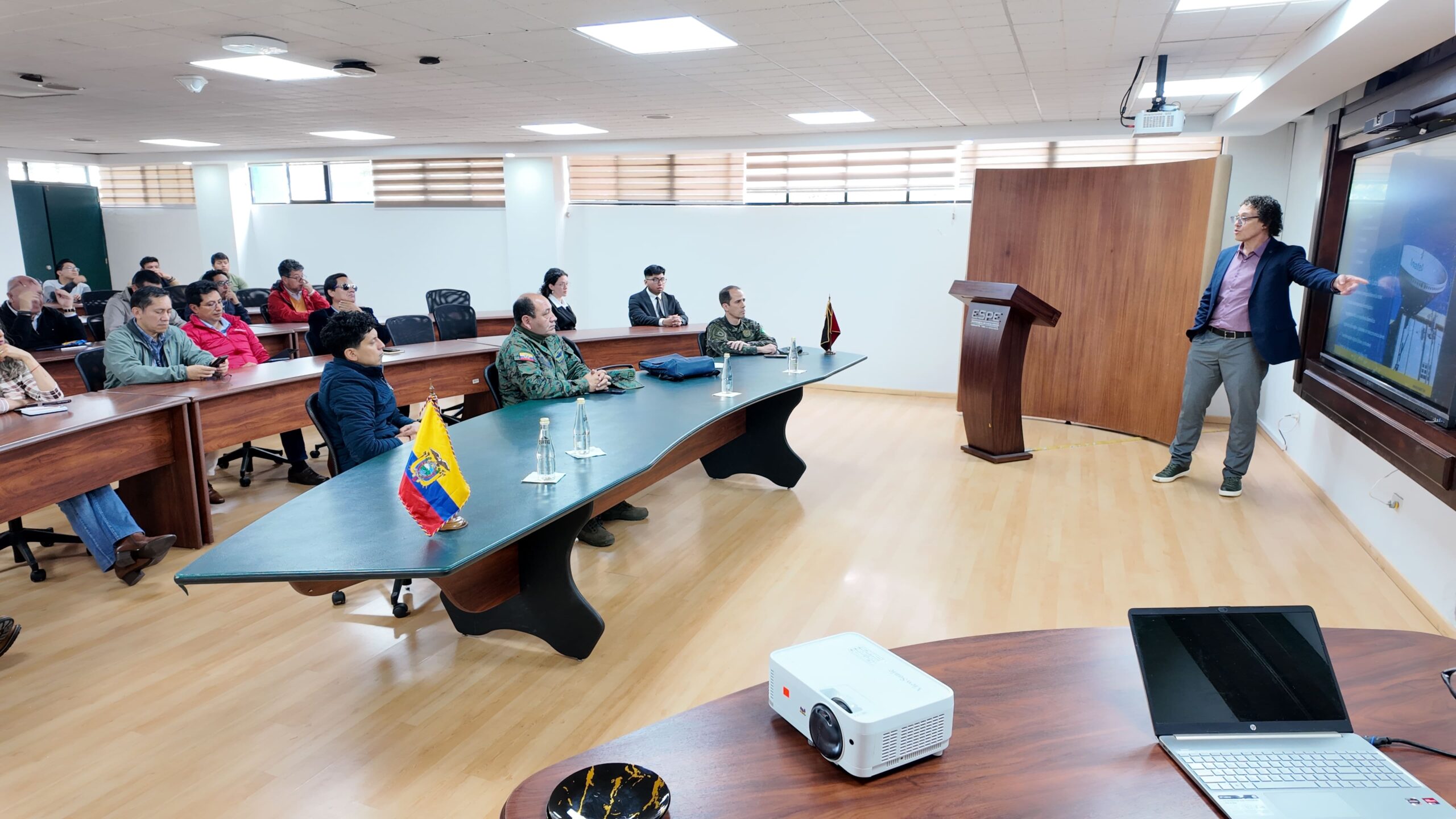
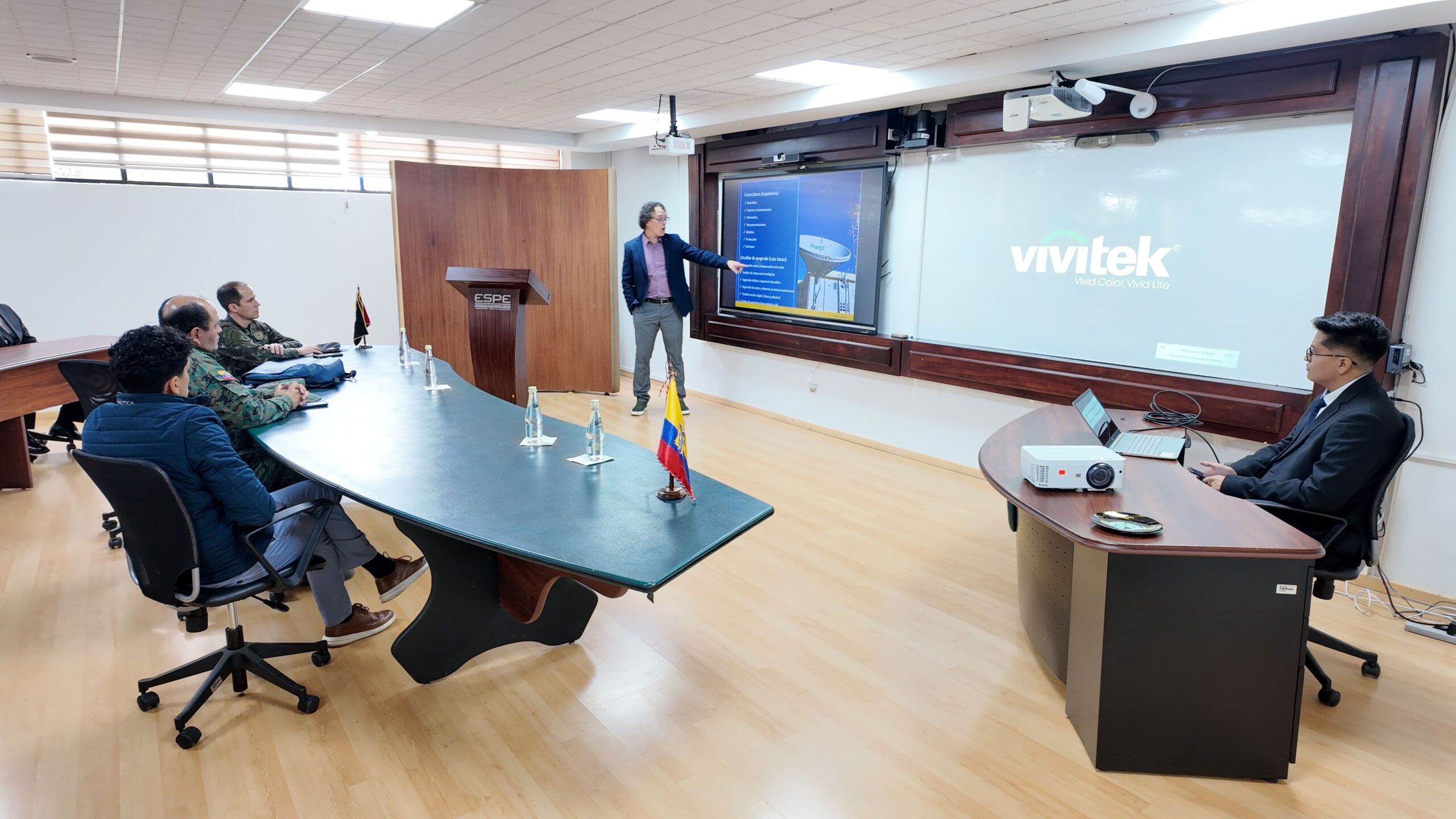
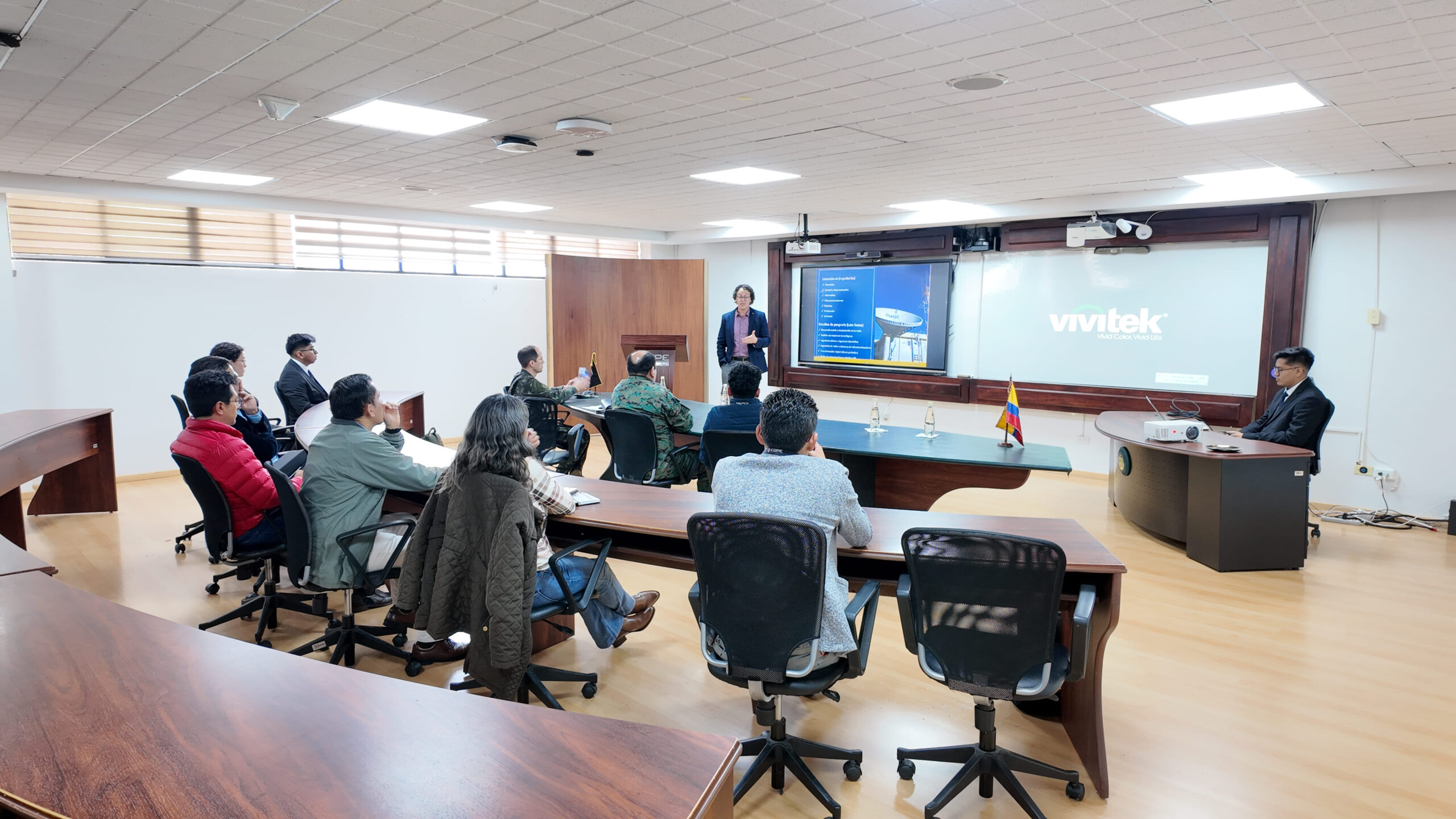
Spaces, moments, and experiences that bring the program to life
Admissions and costs
Information about admission requirements and program costs.
CES Resolution
RPC-SO-15-No 309-2020
Program Code
ISOF-SQ-2023
Accreditation
In process
Application Dates
March – April 2025 / August – September 2025
Program cost:
Article 356 of the Constitution of the Republic establishes, among other principles, that third-level public higher education shall be tuition-free, and that this tuition-free policy is linked to students’ academic responsibility.
Begin your journey in
Electronics and Automation Engineering
Join Universidad de las Fuerzas Armadas ESPE and become part of an
academic community of excellence with international reach.